
You're probably here because you've seen a beautifully styled ear with a tiny gold rook piece tucked into that upper inner ridge, and now you want the same look. That makes sense. A rook piercing can look refined, sharp, and a bit different from the usual helix or lobe stack.
The part that often gets missed is this. Gold rook piercing jewellery is not just a style choice. It's also a fit, timing, and material choice. The rook sits in cartilage, and cartilage is much less forgiving than a lobe. If you buy the wrong shape, the wrong alloy, or switch too early, you can turn a lovely idea into a very annoying healing experience.
Most confusion comes from one simple question. Is gold suitable for a fresh rook piercing, or is it better as an upgrade once the piercing has healed? That's the question worth answering properly.
An Introduction to Rook Piercings and Gold Jewellery
Many clients come in with a clear picture in mind. They have a few healed lobe piercings, a saved folder of ear styling photos, and one detail keeps showing up. A small gold piece tucked into the rook, adding shine without taking over the whole ear.
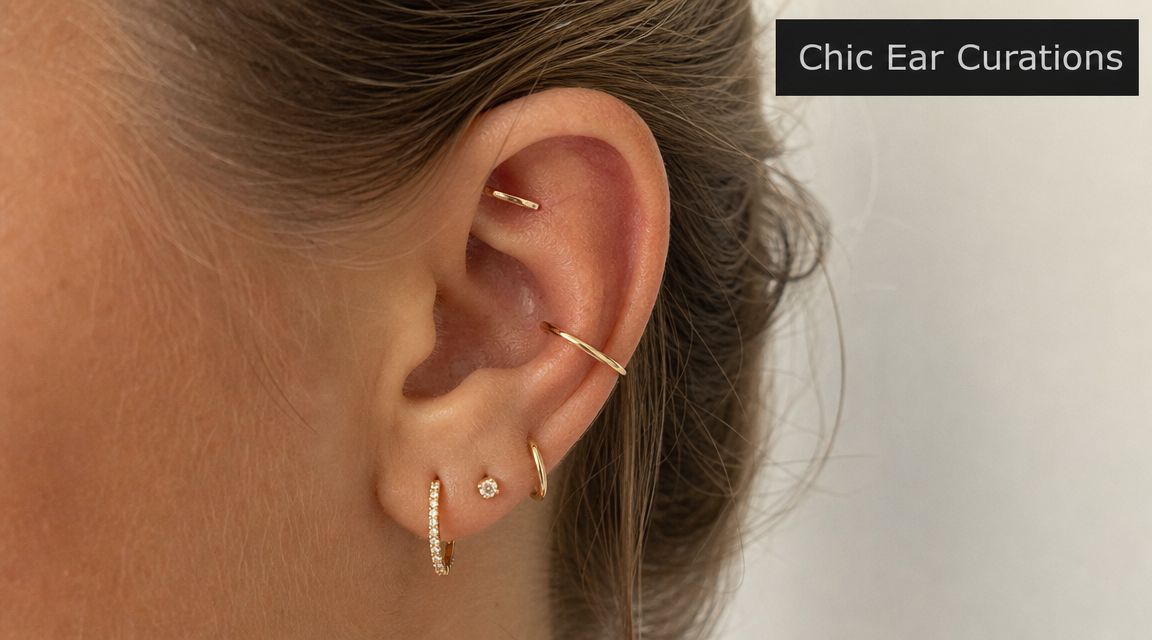
That appeal makes sense. Modern ear styling and earring placement has moved well beyond a single lobe piercing, and the rook has become part of that more curated look. But a rook is not an uncomplicated spot to place a pretty earring. It sits in cartilage, in a tight fold, and that makes jewellery choice much more specific.
Gold also carries a long history in jewellery, which is part of why people are drawn to it. It looks warm, polished, and timeless. In a healed rook, the right gold piece can look excellent.
For a fresh rook, though, safety has to lead the decision.
The point that often gets missed is timing. Beyond personal taste for gold, the primary questions are whether the piece suits the placement, whether the alloy is appropriate, and whether the piercing is fresh or fully healed. Those are not small details in a rook. They often determine whether healing stays calm or becomes difficult.
Practical rule: Gold is often best treated as an upgrade for later, not the automatic starting point for a new rook piercing.
That surprises some people, especially when shops label jewellery as "gold" and leave it at that. The label may not tell you whether the piece is solid gold or plated, what the underlying metal is, or whether the design is suitable for a healing cartilage piercing.
A good way to approach it is to separate two stages. For an initial rook piercing, many reputable piercers in the UK will guide clients toward implant-grade materials chosen for healing stability. Once the rook has healed well, solid gold jewellery becomes a more realistic option for style.
That distinction helps you buy with confidence. It also helps you avoid paying premium prices for a piece that looks right in a photo but is wrong for a healing rook.
What Makes a Rook Piercing Unique
The rook is the fold of cartilage above the daith. If you run a finger along the inner upper ridge of your ear, that small raised fold is the area a piercer is working with. It's not flat, and it's not roomy.
That one detail changes everything.
It sits in a tight cartilage fold
A lobe piercing gives jewellery space to sit quite naturally. A rook does the opposite. The jewellery has to pass through a curved ridge, then sit comfortably without pressing too hard into the surrounding tissue.
A simple way to think about it is this:
- A lobe is like hanging something on a soft fabric panel
- A rook is like fitting a curved hook onto a narrow shelf
- If the shape is wrong, the pressure points show up quickly
That's why rook jewellery isn't chosen by style first. It's chosen by anatomy first.
Shape matters more than people expect
When clients say they want a hoop straight away, I understand the appeal. Hoops can look delicate and polished, especially in gold. But in the rook, jewellery that moves too much or presses at the wrong angle can irritate the piercing.
The rook usually does best with jewellery that follows the natural curve of the tissue rather than fighting it. That's why piercers commonly steer people toward a curved shape at the start instead of something circular and decorative.
If your piercer says a certain piece “doesn't suit your rook”, they usually mean it doesn't suit your anatomy, not your taste.
The jewellery has a job to do
In a rook piercing, jewellery isn't just decoration. It has to:
- Sit in the fold without digging in
- Allow room for the tissue to settle
- Stay stable enough that it doesn't shift constantly
- Reduce unnecessary friction while you heal
That's why two people can both have rook piercings and wear completely different pieces once healed. Their ear shape may need different lengths, different curves, or a different hoop diameter. There isn't one universal “best rook earring”.
Solid Gold Versus Gold-Plated A Critical Safety Choice
Here, people make the most expensive mistakes.
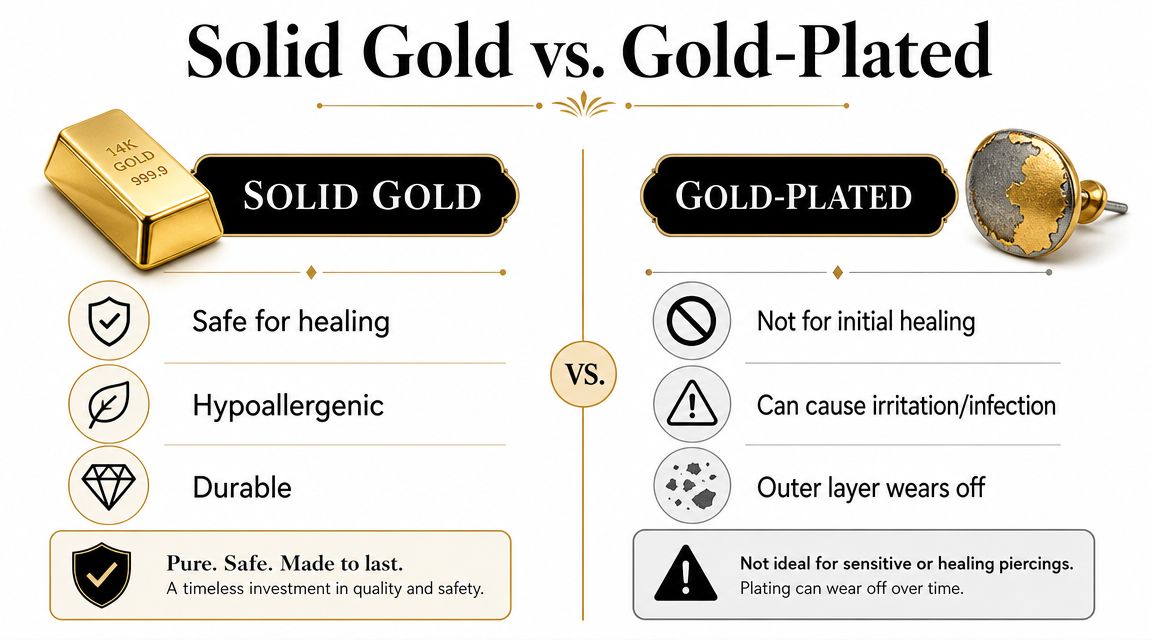
If you're shopping for gold rook piercing jewellery, you need to separate appearance from material safety. A piece can look like gold and still be the wrong choice for a rook. For a fresh cartilage piercing, Lynn Loheide's rook piercing guidance is clear that initial piercings should use implant-grade titanium or niobium, while high-karat, nickel-safe gold is generally more appropriate after full healing.
What the labels usually mean
Some jewellery descriptions sound reassuring but don't tell you enough. Here's the practical version.
| Jewellery Type | Material Composition | Safe for Fresh Piercing? | Best For |
|---|---|---|---|
| Solid high-karat gold | Gold alloy, ideally high-karat and nickel-safe | Usually not the first choice for a fresh rook | Healed rook upgrades |
| Gold-plated | Base metal with a thin gold surface layer | No | Fashion wear in non-healing situations |
| Gold vermeil | Gold plating over sterling silver | No | Occasional wear, not healing cartilage |
| Gold-filled | Base metal mechanically bonded with gold layer | No | Decorative wear after healing, with caution |
| Implant-grade titanium or niobium | Professional body jewellery materials | Yes | Fresh rook piercings |
Why plated jewellery is risky
Plated jewellery creates two problems in cartilage. First, the outer gold layer can wear down. Second, once that happens, the base metal underneath matters a lot. If that underlying metal isn't suitable, your piercing deals with the consequences.
That's why “gold look” isn't enough.
If you like the warm colour of gold but you're still healing, ask whether the piece is solid gold, what karat it is, and whether the alloy is nickel-safe. If the seller can't explain that clearly, I wouldn't trust it in a rook.
The UK-specific issue with 9ct gold
In the UK, 9ct gold is common in mainstream jewellery. That doesn't automatically make it wrong for all wear, but it does make the alloy question more important. Lower-karat gold contains more non-gold metals, so the word “gold” by itself doesn't tell you much about how the piece may behave in a sensitive cartilage piercing.
A fresh rook needs a healing-friendly material first. Gold usually becomes the style upgrade later.
If you're comparing options for future jewellery, it can help to look at other placement guides too, such as these solid gold nose rings, because they highlight the same bigger lesson. Material quality matters more than marketing words.
Common Jewellery Styles and Sizing for Your Rook
You book a rook piercing because you love the look of a tiny gold curve tucked into that ridge. Then the piercer brings out a plain curved barbell instead of a decorative hoop. That can feel underwhelming, but there is a good reason for it.
A rook sits in a tight fold of cartilage, so jewellery shape and fit matter as much as colour. For a fresh piercing, the goal is simple. Give the tissue enough room to swell, while keeping movement low. According to this rook piercing size guide, many professional piercers start with 16G (1.2 mm) jewellery, usually a curved barbell in the 6 mm to 8 mm range.
Curved barbells come first for a reason
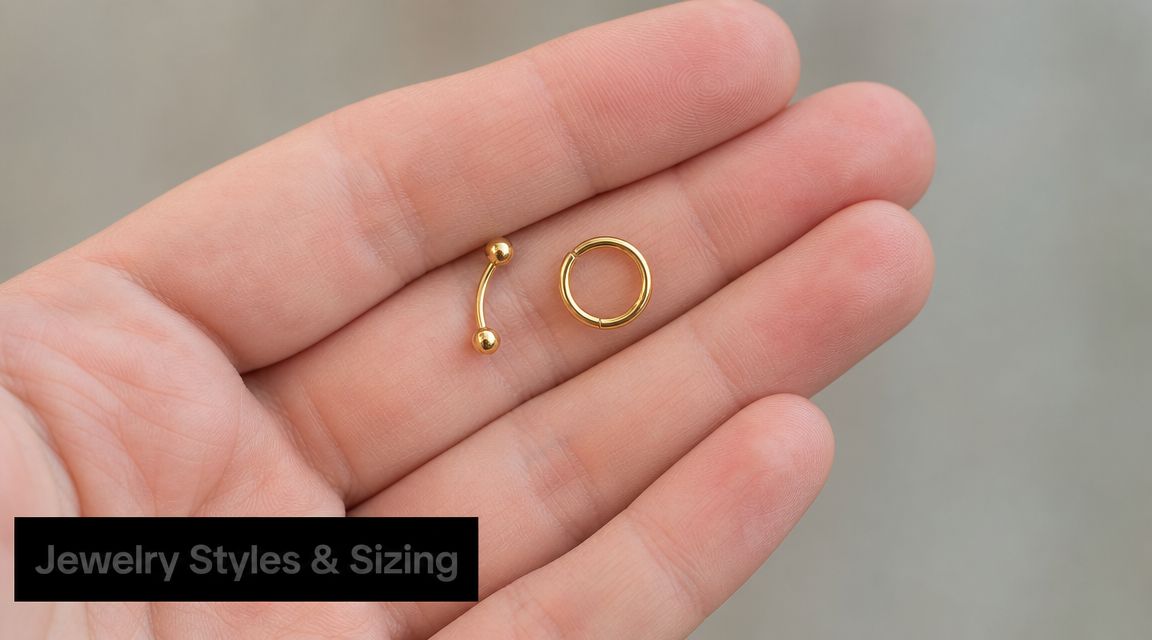
A curved barbell works with the natural line of the rook. It sits more predictably and usually gets knocked less than a ring. In a fresh piercing, that calmer fit often matters more than choosing the prettiest shape on day one.
Hoops and rings usually make more sense once the rook is healed and stable. They can look great, but they also move more, and small fit errors are less forgiving in cartilage.
Three sizing terms worth knowing
Sizing sounds technical until you break it into parts:
- Gauge is the thickness of the post. For many rooks, 16G (1.2 mm) is the standard starting size.
- Length is the wearable space on the barbell. Fresh piercings need a little extra room for early swelling.
- Downsizing is the follow-up change to a shorter bar once that swelling has settled.
If you remember only one thing, remember this: your first bar is not always your forever bar.
Why fit changes after the first few weeks
Starter jewellery is chosen for healing, not for the final look. A slightly longer bar helps avoid pressure in the early stage, but after swelling drops, that same extra length can become the problem. It can catch on hair, tilt while you sleep, or shift enough to keep the piercing irritated.
That is the point where many people start asking about gold. Once the angle is stable and the correct length is confirmed, a solid gold piece can be a much safer style upgrade than it would have been at the start. This fresh-versus-healed difference gets missed all the time, especially when online shops show decorative rook jewellery without explaining when it should be worn.
For UK buyers, the safest route is usually straightforward. Start with professional jewellery that suits a fresh cartilage piercing. Then switch to well-made gold once your piercer confirms the rook is ready and the size is right.
If you want a useful comparison, this gold daith jewellery guide shows how curved cartilage placements can need different shapes even when the jewellery looks similar at first glance.
The Healing Process and Aftercare Essentials
A rook piercing asks for patience. It isn't the kind of piercing you get on Saturday and forget about by next week.
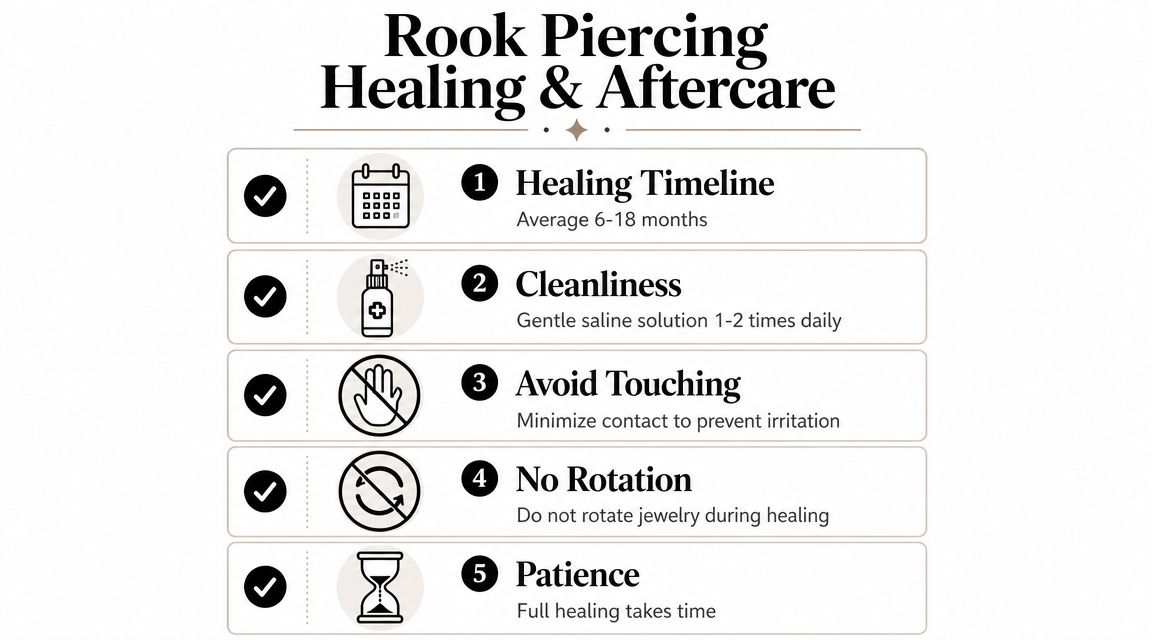
A video guide discussing rook healing notes that a rook piercing typically takes 6 to 18 months to fully heal, depending on anatomy and aftercare. That long healing window is exactly why the initial jewellery choice matters so much.
What good aftercare actually looks like
Individuals generally don't need a complicated routine. They need a calm one.
- Clean gently: Use sterile saline solution and keep the routine simple.
- Leave it alone: Don't twist or rotate the jewellery.
- Protect it from pressure: Be careful with sleep, headphones, hats, and hair brushing.
- Watch for irritation: Snagging and pressure usually cause more trouble than people expect.
What slows healing down
Rook piercings often become irritated because people treat them like lobe piercings. Cartilage doesn't like rough handling.
Common problems include:
- Changing jewellery too early
- Sleeping directly on the piercing
- Touching it constantly to “check” it
- Wearing decorative jewellery before the piercing is ready
Healing goes more smoothly when the jewellery fits well, the material is appropriate, and you stop giving the piercing new reasons to be annoyed.
Gold is the reward, not the shortcut
This is the part I wish more clients heard early on. If your dream rook look is a delicate gold hoop or a polished curved gold barbell, the fastest way to get there is not to rush into gold. It's to heal the piercing properly first.
Once you're through the healing stage and a piercer confirms the tissue is stable, your options open up. If you want more background on cartilage healing in general, this guide to cartilage piercings healing is a helpful next read.
Find Your Perfect Gold Jewellery in Croydon or Bournemouth
The best gold rook piercing jewellery for one person can be the wrong piece for someone else. That's not a sales line. It's just how rook anatomy works.
A rook jewellery guide from Monster Piercing points out that rook anatomy is highly individual, and that a piercer can advise on the correct internal diameter for a hoop or the right length for a downsized barbell to avoid irritation or angle changes. That's especially important after such a long healing period.
What a professional consultation helps with
A good piercer can assess things that online shopping can't:
- Placement suitability: Not every ear has the same rook ridge.
- Fit for healed jewellery: A hoop that looks tiny online may press too tightly in your ear.
- Gold quality questions: You can ask about karat, alloy, and whether a piece is appropriate for your stage of healing.
- Safe timing: The right moment to upgrade matters almost as much as the jewellery itself.
If you're in Croydon or Bournemouth
If you're planning a rook piercing or thinking about switching to gold after healing, it's worth speaking to a studio that understands cartilage fit, implant-grade starter jewellery, and safe upgrades.
For appointments or advice, call 01202 900050 (Bournemouth) / 020 8686 7730 (Croydon) or message 07752 913846 (Bournemouth) / 07902 490584 (Croydon) on WhatsApp.
The safest rook clients aren't the ones who buy the fanciest jewellery first. They're the ones who get the fit, material, and timing right.
If you'd like help finding a trusted studio, booking a consultation, or learning more about safe jewellery choices for cartilage piercings, visit Piercing Near Me. It's a straightforward way to explore professional piercing options in the UK, including support for clients in Croydon and Bournemouth who want safe, well-planned results.
Trackbacks/Pingbacks