
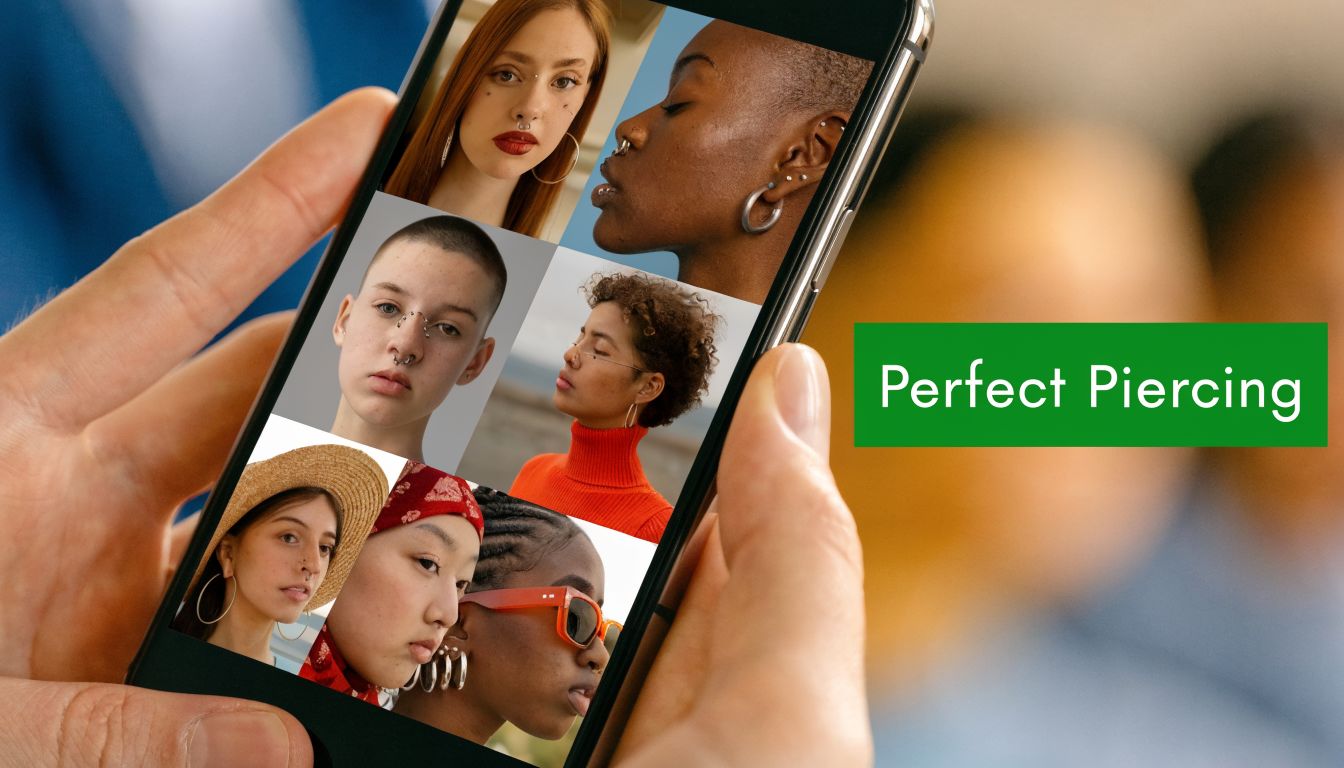
You're probably doing what most first-time nose piercing clients do. You've found a few photos you love, saved a mix of tiny studs and neat little hoops, and then hit the confusing bit. What counts as real gold, what's safe for a fresh piercing, and why do some pieces look identical online but feel wildly different in price?
That confusion is normal. A solid gold nose ring isn't just a style choice. In a piercing, the metal matters because it sits inside healing tissue. Good jewellery can make the whole process calmer and easier. Poor jewellery can turn a simple piercing into weeks of irritation.
I've spent years talking clients through this at Timebomb Tattoo & Piercing, and the same questions come up again and again. Is 14k better than 18k? Is gold-plated okay? What does a hallmark mean? If you want something that looks refined, heals well, and won't leave you second-guessing your purchase, solid gold nose rings are worth understanding properly.
Why Choose Solid Gold for Your Nose Piercing
One of the most common situations in the studio goes like this. A client comes in wanting a nostril piercing, shows me a few screenshots, and says they want “something gold, but safe.” That last word is the important one.
Solid gold nose rings have been valued for a very long time. The tradition goes back over 4,000 years to the Middle East, where gold nose rings were linked with status and wealth. In the UK today, the appeal is still there, but there's also a practical reason to choose them. Modern piercing standards favour implant-grade materials for fresh piercings, and solid 14k gold is commonly recommended because gold's hypoallergenic properties help reduce problems linked to nickel sensitivity, which affects up to 10% of the UK population according to the information summarised in this history of nose piercing.
Why clients trust it
A fresh nostril piercing is a wound. It needs clean technique, correct placement, and jewellery that won't fight your body while it heals. Solid gold is popular because it gives you both appearance and wearability. It looks polished from day one, and it doesn't rely on a surface coating that can wear away.
That matters more than people think. If the gold is only on the outside, the inside metal can become a genuine problem.
Practical rule: If you want a gold look in a fresh piercing, ask whether the piece is solid gold all the way through, not just gold on the surface.
Why it's more than a luxury
Clients sometimes think solid gold is only for special occasions or long-term upgrades. In reality, many people choose it from the start because they want fewer unknowns. They don't want mystery alloys. They don't want flaky plating. They want jewellery that's meant to stay stable against skin.
There's also the timeless side of it. A well-made solid gold nostril stud looks good with almost everything. It doesn't date quickly, and it doesn't need to shout to stand out.
Understanding Gold Karats and Alloys
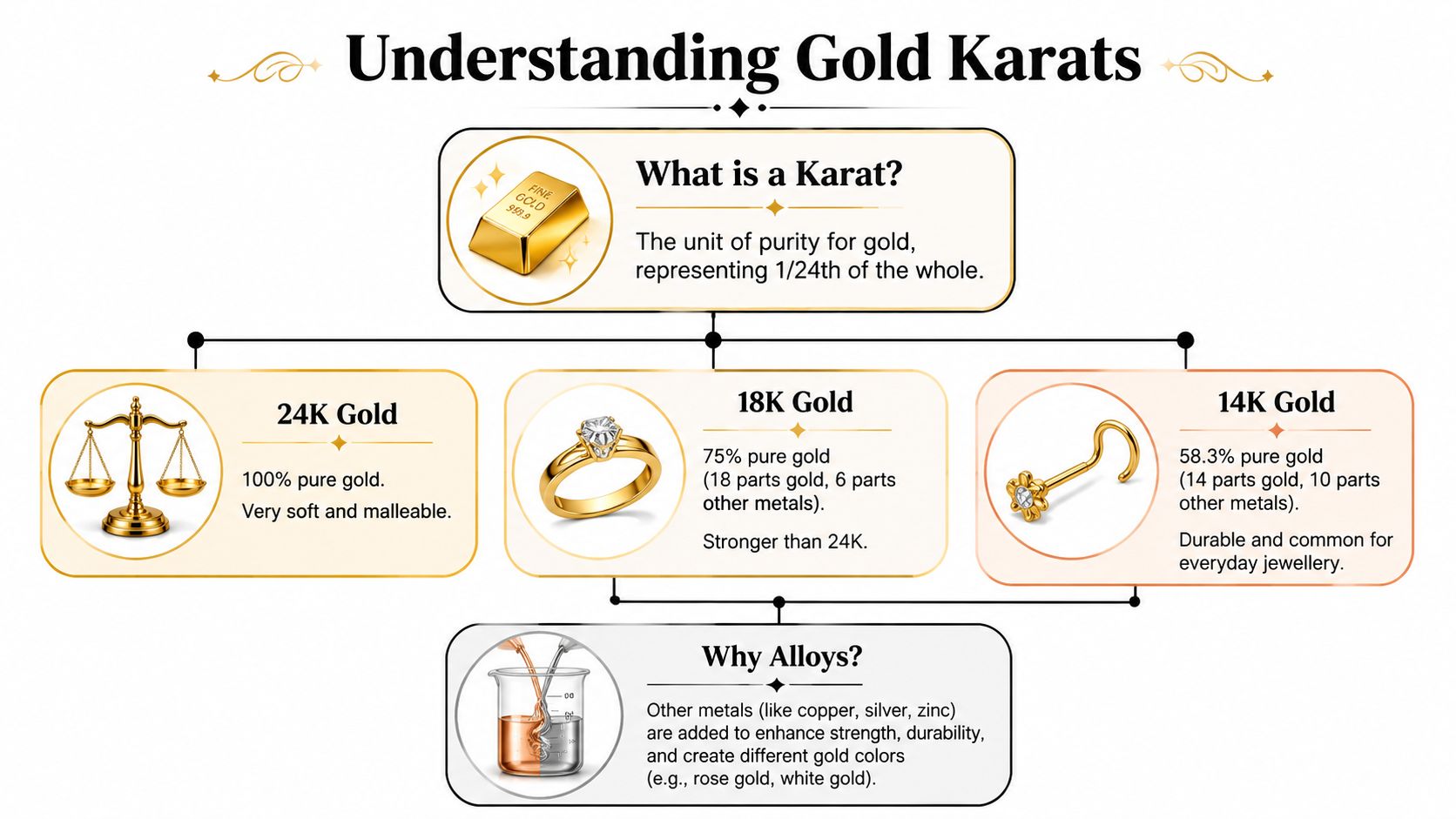
Understanding gold purity is simpler when viewed as a recipe. Karat indicates the specific amount of actual gold within 24 parts. The remaining portion consists of other metals, known as alloys, which are included to modify strength, colour, and wear.
What the karat number actually means
24k gold is the purest form.
18k gold is 75% pure gold.
14k gold is 58.3% pure gold.
Pure gold is beautiful, but it's soft. That softness is why body jewellery usually uses an alloy rather than pure 24k. A nose ring needs to keep its shape and cope with day-to-day wear.
Gold Karat Suitability for Nose Piercings
| Karat | Pure Gold (%) | Best For | Notes |
|---|---|---|---|
| 24k | 99.9% | Occasional wear and cultural jewellery | Very soft, so not usually the first choice for everyday piercing wear |
| 18k | 75% | Long-term wear in healed piercings | Higher gold content and a premium finish |
| 14k | 58.3% | Fresh nostril piercings and everyday wear | Strong balance of durability and gold content |
| 9k | 37.5% | Budget jewellery outside healing | Lower gold content means more alloy metal in the mix |
Why alloys matter
The extra metals in 14k and 18k gold aren't there to cheapen the piece. They're there to make the jewellery practical. Depending on the mix, they can improve strength and also create yellow, white, or rose tones.
For piercing clients, the primary decision sits here. You want enough gold for comfort and biocompatibility, but enough structure for the piece to stay reliable.
A good piercing ring isn't judged by colour alone. It's judged by what that colour is made from.
Which karat makes sense for which stage
For initial piercings, 14k often hits the sweet spot. It gives you genuine gold with better day-to-day toughness than higher-purity options.
For long-term wear, especially once the piercing is settled, higher-purity gold can be a great choice. That's why many healed-piercing clients upgrade later for comfort and finish.
A simple way to think about it is this:
- Choose 14k if you want a dependable material for the piercing stage.
- Choose 18k or higher if your piercing is healed and you want premium long-term wear.
- Avoid judging by colour alone because a bright gold tone doesn't tell you whether the piece is solid, plated, or suitable.
Solid Gold vs Plated Filled and Titanium
Most expensive mistakes often start right here. A client buys something online because it says “gold nose ring,” then arrives with redness, tenderness, or a ring that already looks dull. The wording sounded reassuring, but the material wasn't what they thought.
Solid gold means gold throughout
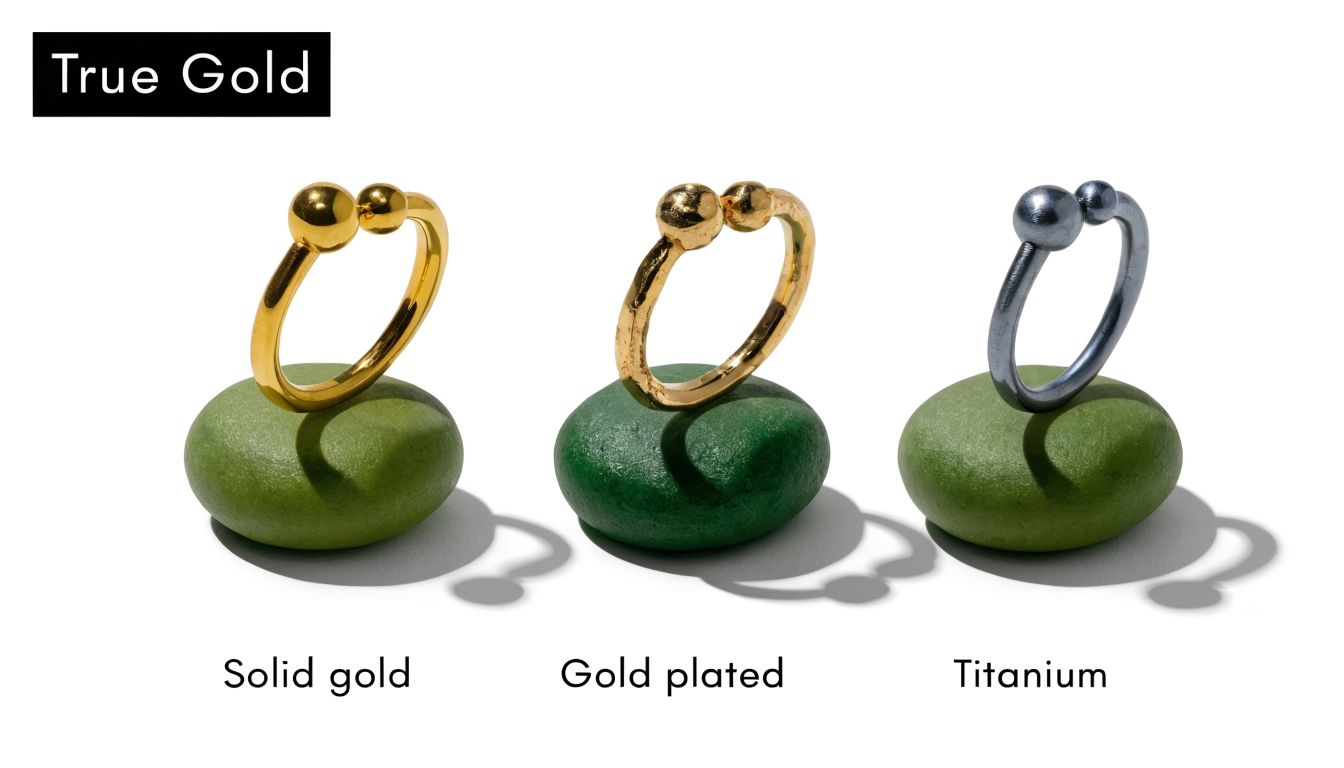
A solid gold nose ring is made of gold alloy all the way through. If you polish it, wear it daily, or clean it regularly, the material underneath is still the same material on the surface.
That consistency is what makes it reassuring in a piercing. There's no thin decorative layer hiding a different core.
Plated and filled are not the same thing
Gold-plated jewellery has a very thin layer of gold on top of another metal. In piercing terms, I explain it like paint on a wall. It can look great when it's fresh, but that top layer is still only a surface.
Once plating wears, chips, or thins out, the base metal underneath gets exposed. In a nostril piercing, that can mean irritation from a material your skin never agreed to in the first place.
Gold-filled jewellery has a thicker outer layer of gold than plated jewellery. It's generally more durable than plating, but it still isn't the same as solid gold. For body jewellery, that difference matters because the piercing channel cares about the actual material in contact with it over time.
Where titanium fits in
Titanium is one of the best materials in piercing. It's lightweight, very well tolerated, and often ideal for clients with a history of metal sensitivity. If someone wants a simple, reliable start and isn't set on gold, I'm happy to discuss titanium.
If you want to compare the two in more detail, this guide to titanium piercing jewellery is useful.
The choice often comes down to priority:
- Pick solid gold if you want warmth, classic appearance, and a premium jewellery finish.
- Pick titanium if you want a very lightweight option with a strong reputation for sensitivity-friendly wear.
- Skip plated jewellery for healing because appearance alone doesn't make it body safe.
Why 14k solid gold stands out for fresh piercings
For initial nostril piercings, solid 14k gold is often an excellent balance of quality and practicality. Solid 14k gold is less likely than lower-karat gold or base metals to cause a reaction.
That doesn't mean gold magically heals the piercing for you. You still need proper placement, hygiene, and aftercare. But it does mean the jewellery is less likely to create extra problems.
The safest-looking jewellery online isn't always the safest jewellery in a fresh piercing. Material beats marketing every time.
The Importance of UK Hallmarking for Piercings
This is the part most online guides miss, and for UK clients it matters a lot. If you're buying gold jewellery for a piercing, you shouldn't only ask, “Is it solid gold?” You should also ask, “Is it properly hallmarked?”
What a hallmark does
A hallmark is an official mark showing that the metal has been tested and confirmed. It isn't a fancy logo. It's a legal quality check.
Under the UK Hallmarking Act 1973, gold items over 1g must be officially hallmarked. That gives you a clear layer of protection when you're buying precious metal jewellery for wear inside the body.
Why this matters in real life
The problem with unregulated online jewellery is simple. It can look convincing. The photos are polished, the wording sounds premium, and the listing may use phrases like “real gold” or “gold nose ring” without giving you proper assurance.
That is a significant concern. Not all gold jewellery sold online is properly hallmarked, which raises obvious questions about what clients are putting into their piercings. That finding is discussed in this summary of hallmarking and online gold jewellery compliance.
What to look for when you buy
If you're choosing solid gold nose rings in the UK, check for:
- Official hallmarking that confirms the item meets legal standards.
- Clear fineness information so you know whether you're buying 9ct, 14ct, or 18ct.
- A professional studio or reputable supplier that can answer material questions directly.
- Jewellery chosen for piercing use, not jewellery that happens to fit through a hole.
This is one of the biggest advantages of buying through a proper piercing studio. You're not left trying to decode vague product descriptions on your own.
Choosing the Right Style and Size for Your Nose
Once the material is sorted, the next question is shape. Clients often arrive thinking they want “a nose ring,” but that can mean several different styles. The right one depends on whether the piercing is fresh or healed, how secure you want it to feel, and the look you prefer.
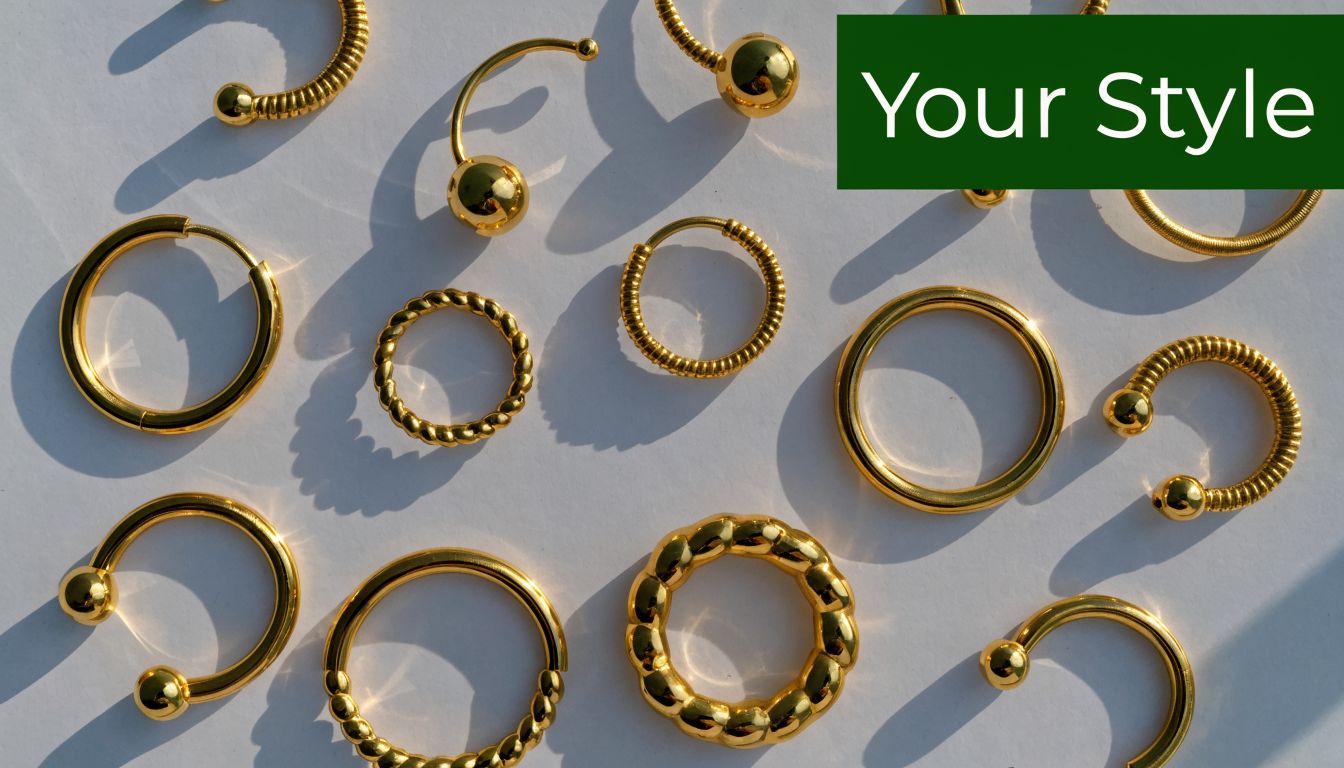
Studs and hoops wear differently
A stud is often the simpler starting point. It sits neatly, is usually less likely to catch, and gives a clean everyday look. Depending on the design, it may be an L-bend, screw, or another fitted style chosen by your piercer.
A hoop gives a softer outline and can look brilliant once fitted correctly. The catch is that a hoop has to match your anatomy well. Too tight and it puts pressure on the piercing. Too loose and it can sit awkwardly or move more than you'd like.
Common options clients ask for
- Simple gold stud for a minimal look that works in almost any setting
- Smooth hoop for a clean circle with no obvious decorative break
- Statement ring for a bolder style once the piercing is established
- Cultural designs that carry family, ceremonial, or personal meaning
That last point matters. Nose jewellery isn't only fashion. In Indian traditions, nose rings have deep cultural significance, with styles such as the Maharashtrian Nath often crafted in 22k gold, as noted in this overview of the history behind nose jewellery. Many UK clients choose solid gold nose rings because they want jewellery that respects both the piercing and the tradition behind it.
If you enjoy more decorative gold jewellery styles across other placements, this page on gold daith jewelry gives a sense of how gold design varies by anatomy.
Size is about comfort, not guesswork
Two terms matter here:
Gauge means the thickness of the jewellery.
Diameter usually matters for hoops and tells you how wide the ring is.
Clients often try to choose size from photos, but noses vary a lot. The angle of the piercing, the curve of the nostril, and the thickness of your tissue all affect what will sit well.
A ring that looks perfect in a photo can feel completely wrong if the diameter doesn't suit your anatomy.
A good fitting appointment should cover
Placement
Even a millimetre changes how a stud or hoop sits on the face.Lifestyle
If you wear makeup, glasses, masks, or work in a hands-on job, some styles behave better than others.Future plans
Some clients want to heal with a stud and move to a hoop later. That's a sensible route and often the easiest one.
The neatest jewellery is usually the jewellery that fits your nose properly, not the jewellery that looked best on someone else.
Care Cleaning and Price Expectations
Aftercare doesn't need to be complicated. It needs to be consistent. The cleaner and calmer you keep a fresh piercing, the better your jewellery can do its job.
How to clean it without overdoing it
Use a sterile saline product recommended by your piercer and keep your hands off the jewellery unless you're cleaning it. Don't twist it, don't spin it, and don't try to “work it loose.” A fresh nostril piercing heals better when it's left alone.
A simple routine usually looks like this:
- Clean gently with sterile saline as advised by your piercer
- Dry carefully with clean disposable paper rather than a shared towel
- Avoid harsh products such as alcohol, peroxide, tea tree oil, or random home remedies
- Watch for snagging on clothing, towels, or face coverings
Looking after solid gold long term
Once healed, solid gold is straightforward to maintain. Keep the piece clean, remove any built-up residue carefully, and have the fit checked if it starts to feel tight or awkward. High-quality gold keeps its appeal because the material itself is valuable, not because it's pretending to be something else.
What to expect on price
Solid gold nose rings cost more than plated jewellery. That's normal. You're paying for the actual metal, the workmanship, and the reassurance that the piece is suitable for a piercing.
Price varies depending on karat, design, size, and whether you choose a plain polished piece or a more decorative setting. The helpful way to think about it is this: cheap jewellery often becomes expensive once it causes irritation, needs replacing, or turns out not to be what it claimed to be in the first place.
If you want a clearer idea of studio pricing, this guide on how much a nose piercing costs can help you compare the piercing itself with the jewellery options you choose.
Book Your Safe Piercing in Croydon or Bournemouth
When a client wants solid gold nose rings, I always come back to the same core point. The jewellery should be beautiful, but it also has to be appropriate for a piercing. That means correct material, proper fit, sterile handling, and a piercer who can answer questions without guessing.
At Timebomb Tattoo & Piercing, that standard starts with professional technique and clean practice. We use single-use sterile needles, work with implant-grade jewellery, and help clients choose pieces that make sense for both healing and long-term wear. If you want solid gold, we'll talk you through what's suitable, what's hallmarked, and what will sit well on your anatomy.
Why clients choose a studio instead of gambling online
A proper piercing appointment gives you things a product listing can't:
- Anatomy assessment so the jewellery suits your nose
- Professional fitting so the piece sits correctly from the start
- Material clarity so you know what you're wearing
- Aftercare support if you have questions once you leave
That's a much safer route than hoping an online marketplace has described the metal accurately.
Get in touch
If you're ready to book or just want to ask about jewellery options, contact the studio directly.
- Phone: 01202 900050 (Bournemouth) / 020 8686 7730 (Croydon)
- WhatsApp: 07752 913846 (Bournemouth) / 07902 490584 (Croydon)
We welcome first-timers, nervous clients, and anyone who wants a more polished gold look without cutting corners on hygiene or quality. If you're choosing between titanium and gold, between a stud and a hoop, or between 14k and 18k, we'll help you make a decision that fits your face and your healing process.
If you're looking for a trusted place to compare options and book with confidence, Piercing Near Me makes it easy to find safe, professional piercing support for Croydon and Bournemouth clients, with clear guidance, experienced studios, and a straightforward route from inspiration to appointment.