
You're standing in front of the mirror, lifting your top to inspect a new navel piercing. It looks a little redder than yesterday, and there's a faint crust around the jewellery that you don't remember seeing before. You may be wondering whether you've disturbed the piercing, used the wrong product, or missed the first sign of an infection.
A healing navel piercing can look untidy without being infected. The important question isn't whether the area looks perfectly calm today. It's whether the symptoms are localised and improving, or whether they're spreading, intensifying, and accompanied by abnormal discharge or feeling unwell. This guide explains the main navel piercing infection signs, how UK health guidance applies, and what to do if something doesn't look right.
Why Navel Piercings Need Extra Attention
A navel piercing sits in a naturally folded area of skin. The shape can retain sweat and moisture, while clothing, waistbands, belts, and seatbelts repeatedly brush against the jewellery. That combination creates more opportunities for irritation than a piercing in an exposed, easily cleaned area.
The piercing also moves whenever you bend, sit, stretch, or twist. A small snag from a towel or waistband can irritate the channel, even if the jewellery hasn't visibly moved. Irritation doesn't automatically mean infection, but repeated irritation can make healing less predictable and can make genuine warning signs harder to recognise.
Practical rule: A little redness after friction should settle. Redness that keeps expanding deserves attention.
The navel is also prominent in UK complication discussions. In a Welsh look-back investigation involving a poorly run piercing premises, 36.3% of 579 respondents reported a subsequent skin infection after their piercing, according to Patient.info's account of the investigation. Navel piercings were heavily represented in the complaint data. The published table recorded 242 navel piercing cases, with 73 linked to complications, shown as about 30.2% in that dataset, and navel piercings made up about one-third of all reported complications.
That historical evidence doesn't mean every navel piercing will become infected. It does show why hygiene, placement, jewellery choice, and aftercare shouldn't be treated as cosmetic details. Poor systems at a studio can introduce problems before you even leave the premises, while unsuitable jewellery or constant friction can keep a clean piercing irritated.
For an overview of the placement, jewellery, and healing process, see this guide to what a navel piercing involves. You should finish this article with a practical way to read what you're seeing, recognise when symptoms have moved beyond ordinary irritation, and choose the right next step without panicking.
Normal Healing Versus Infection Signs
The easiest way to assess a healing piercing is to look for a pattern over time. Normal healing tends to fluctuate, especially after pressure or activity, but the overall direction is gradually calmer. Infection tends to become more intense, more painful, and more extensive.
| Symptom | Normal Healing | Possible Infection |
|---|---|---|
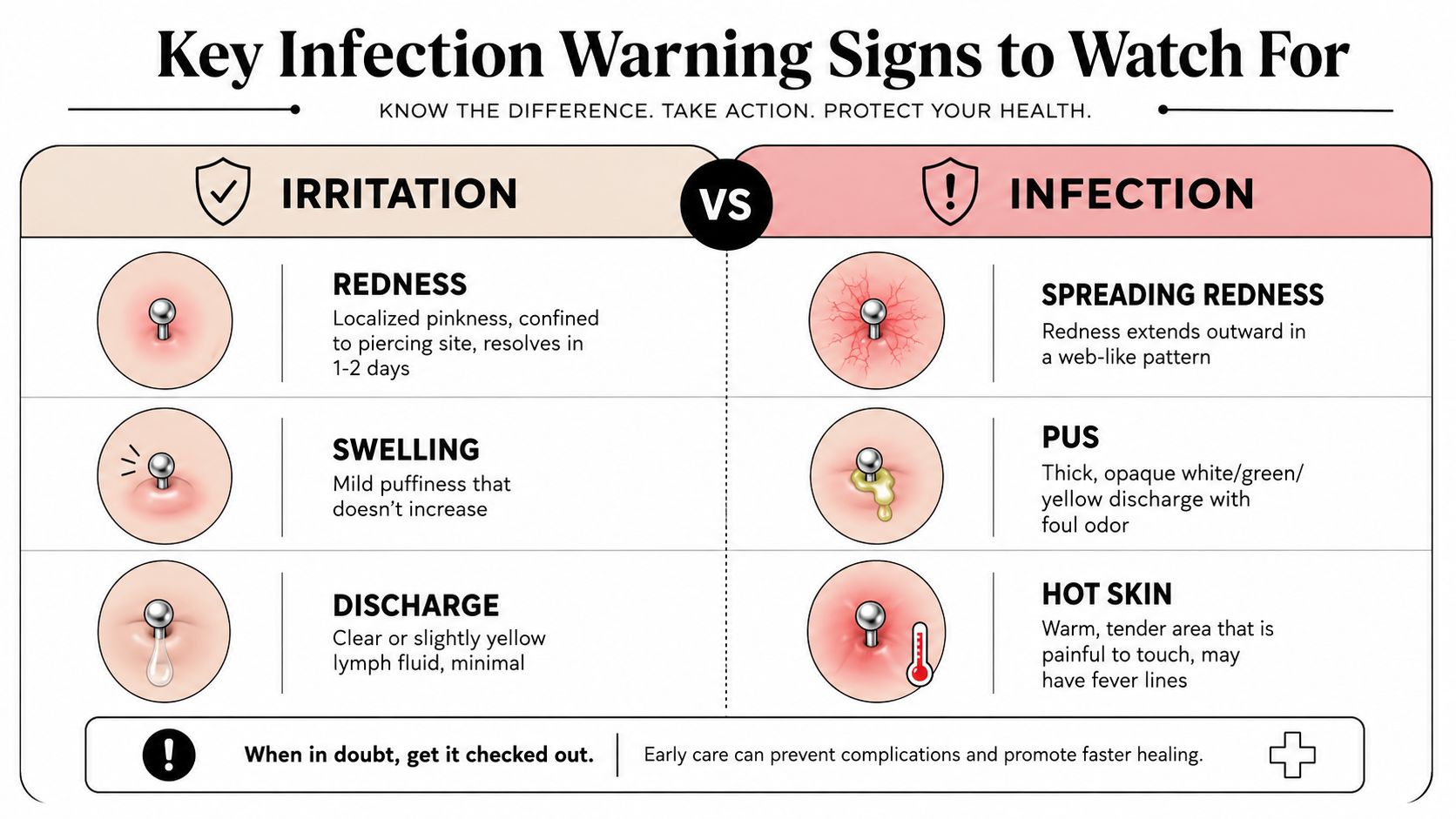
| Redness | Light pinkness close to the entry and exit points | Marked redness or darkening, especially when it spreads outward |
| Swelling | Mild puffiness that settles after irritation is removed | Swelling that increases, becomes pronounced, or extends beyond the site |
| Fluid | Clear or pale lymph fluid that dries into a light crust | Thick, opaque white, green, or yellow discharge, particularly with an unpleasant odour |
| Pain | Mild tenderness after movement or accidental pressure | Persistent, throbbing, increasingly tender, or severe pain |
| Heat | Slight warmth near a fresh piercing | Skin that feels distinctly hot, especially beyond the immediate channel |
| General health | You otherwise feel well | Feeling hot, cold, shivery, or generally unwell |
The NHS guidance on infected piercings lists swelling, pain, heat, and marked redness or darkening around the site as key warning signs. It also identifies blood or pus that may be white, green, or yellow, and says that feeling hot, cold, shivery, or generally unwell can indicate a more serious infection.
Crusting and fluid
A small amount of clear or pale fluid can dry around the jewellery and form what piercers often call a crust. This is usually dried lymph, not pus. Don't pick it off while it's dry, because pulling at the crust can reopen delicate tissue and create fresh irritation.
Pus is different. It's generally thicker and more opaque, and it may be yellow, green, grey, or offensive-smelling. UK local-authority aftercare guidance treats unusual colour or odour, spreading redness, and increasing tenderness as reasons to take infection seriously.
Time is useful, but it isn't a diagnosis
Mild swelling can appear during the early healing period and may flare after exercise, pressure, or a snag. A piercing can also remain sensitive while the deeper channel heals, so a tender moment alone doesn't prove infection. The navel piercing healing guide can help you understand why the outside may look settled before the inside has fully strengthened.
Avoid using a rigid timetable as your only test. Skin type, immune response, jewellery material, placement, and daily friction all influence what normal healing looks like for you. A better question is, “Is this becoming less intense and staying close to the piercing, or is it worsening and moving outward?”
Key Infection Warning Signs to Watch For
The main warning signs become more meaningful when they appear together or worsen progressively. A single episode of pinkness after a waistband catches the jewellery is different from expanding redness accompanied by heat, throbbing pain, and thick discharge.
Redness and spreading colour
Light pinkness directly around the holes can occur during healing or after friction. It becomes more concerning when the red or darkened area expands beyond the immediate piercing site, develops a web-like appearance, or continues to spread rather than settling.
Red streaks travelling away from the piercing need prompt medical attention. They can indicate that the infection is affecting surrounding tissue rather than remaining confined to the jewellery channel.
Swelling and lumps
Early swelling may be part of the inflammatory response to piercing. It should not steadily increase without an obvious cause. A swollen, hard, or increasingly tender lump can suggest a collection of infected fluid and needs assessment rather than repeated squeezing.
At one week, mild puffiness may still occur after pressure. At four weeks, worsening swelling is less reassuring, particularly if it's paired with heat or discharge. Months into healing, new swelling after a snag may be irritation, but swelling that persists or escalates still warrants professional advice.
Discharge, colour, and smell
Clear or pale lymph can dry into a thin crust. Thick yellow, green, grey, or foul-smelling discharge is more concerning, especially if it keeps returning after gentle cleaning. The colour alone isn't a complete diagnosis, but opacity, odour, and increasing quantity create a stronger infection pattern.
A small amount of fluid during the first week can be part of healing. At four weeks, persistent abnormal discharge deserves attention. At three months, new discharge should be considered alongside recent friction, jewellery changes, and the other symptoms rather than dismissed as normal.
Pain and heat
Tenderness that gradually fades is expected. Pain that becomes sharp, throbbing, radiating, or increasingly intense is not a pattern to ignore. The same applies to heat. A fresh piercing may feel slightly warm close to the channel, but skin that feels hot days later, particularly when the warmth extends beyond the piercing, is more concerning.
Further guidance on identifying an infected piercing can help you compare several symptoms instead of judging one visual change in isolation.
Symptoms beyond the skin
The NHS advises that feeling hot, cold, shivery, or generally unwell may mean the infection is more serious. Swollen or tender lymph nodes, feverishness, nausea, and marked fatigue add urgency because they suggest your body may be responding beyond the immediate wound.
Don't wait for every possible symptom to appear. Spreading redness, escalating pain, abnormal discharge, pronounced heat, or systemic symptoms are enough to seek medical advice.
Immediate Steps When You Suspect Infection
Start by reducing irritation and avoiding anything that can damage the healing channel. If symptoms are mild and remain localised, careful aftercare can prevent you from making the situation worse while you arrange advice.
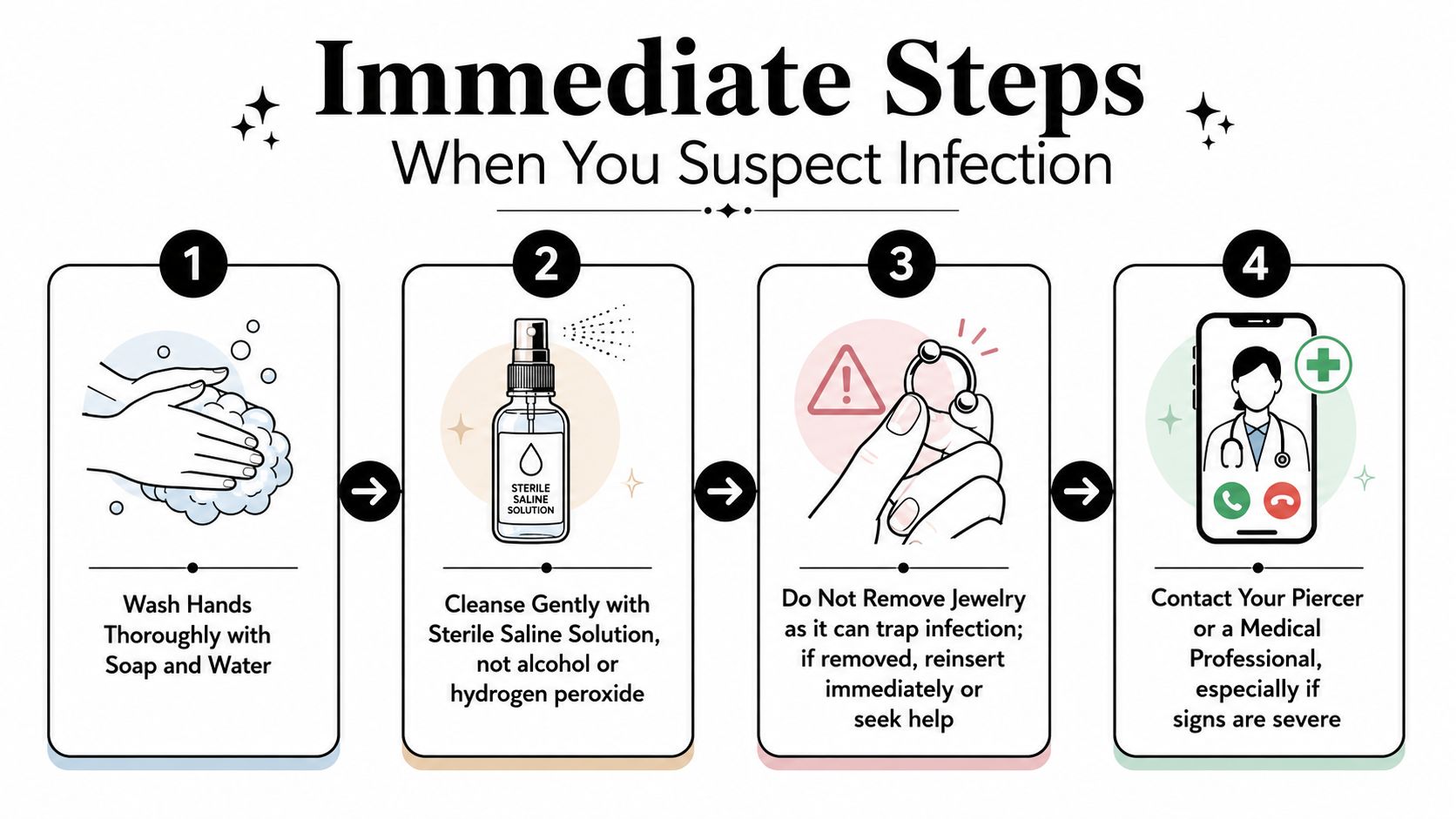
Wash your hands first. Use soap and water before going anywhere near the jewellery. Unwashed fingers can transfer contaminants into an already irritated channel.
Use sterile saline wound wash. Spray a pharmacy-bought sterile saline product over the area and let it loosen surface residue. Don't scrub, twist, or rotate the jewellery. Avoid surgical spirit, hydrogen peroxide, and other harsh antiseptics because they can damage healing tissue and prolong irritation.
Keep the area dry and protected. After cleansing, allow the site to dry gently, or pat it with a disposable paper product. Choose loose clothing and avoid high-waisted trousers, tight belts, and fabric that catches on the barbell. A warm, clean compress may provide comfort and encourage natural drainage, but don't press hard or attempt to drain a lump yourself.
Leave the jewellery in place unless a clinician tells you otherwise. Removing it during an active infection can allow the channel to close and may trap infected material inside. If the jewellery is embedded, excessively tight, or causing a separate problem, ask a piercer or medical professional to assess it rather than forcing it out.
Choosing the right level of help
Contact your piercer for a localised problem such as mild redness, slight swelling, or clear or pale discharge that isn't improving after 48 hours of careful aftercare. A reputable piercer can check whether the jewellery is too tight, the angle is under pressure, or friction is causing irritation. They can't diagnose or prescribe for a medical infection, so don't use a studio appointment as a substitute for medical care when symptoms are severe.
Seek medical help immediately if you notice redness spreading beyond the piercing, thick yellow or green pus, a fever above 38°C, red streaks, or severe escalating pain. The NHS also says systemic symptoms such as feeling hot, cold, shivery, or generally unwell shouldn't be ignored.
When speaking to your GP or another healthcare professional, explain when the piercing was done, when the change began, whether the redness is spreading, what the discharge looks and smells like, whether you have a temperature, and which products you've applied. Mention any jewellery change, snag, swimming exposure, or known health condition that could affect healing.
Understanding the Root Causes of Infection
A navel infection doesn't always begin with one dramatic mistake. It can develop from several small pressures acting together, including the shape of the navel, repeated friction, unsuitable jewellery, poor technique, or contaminated hands.
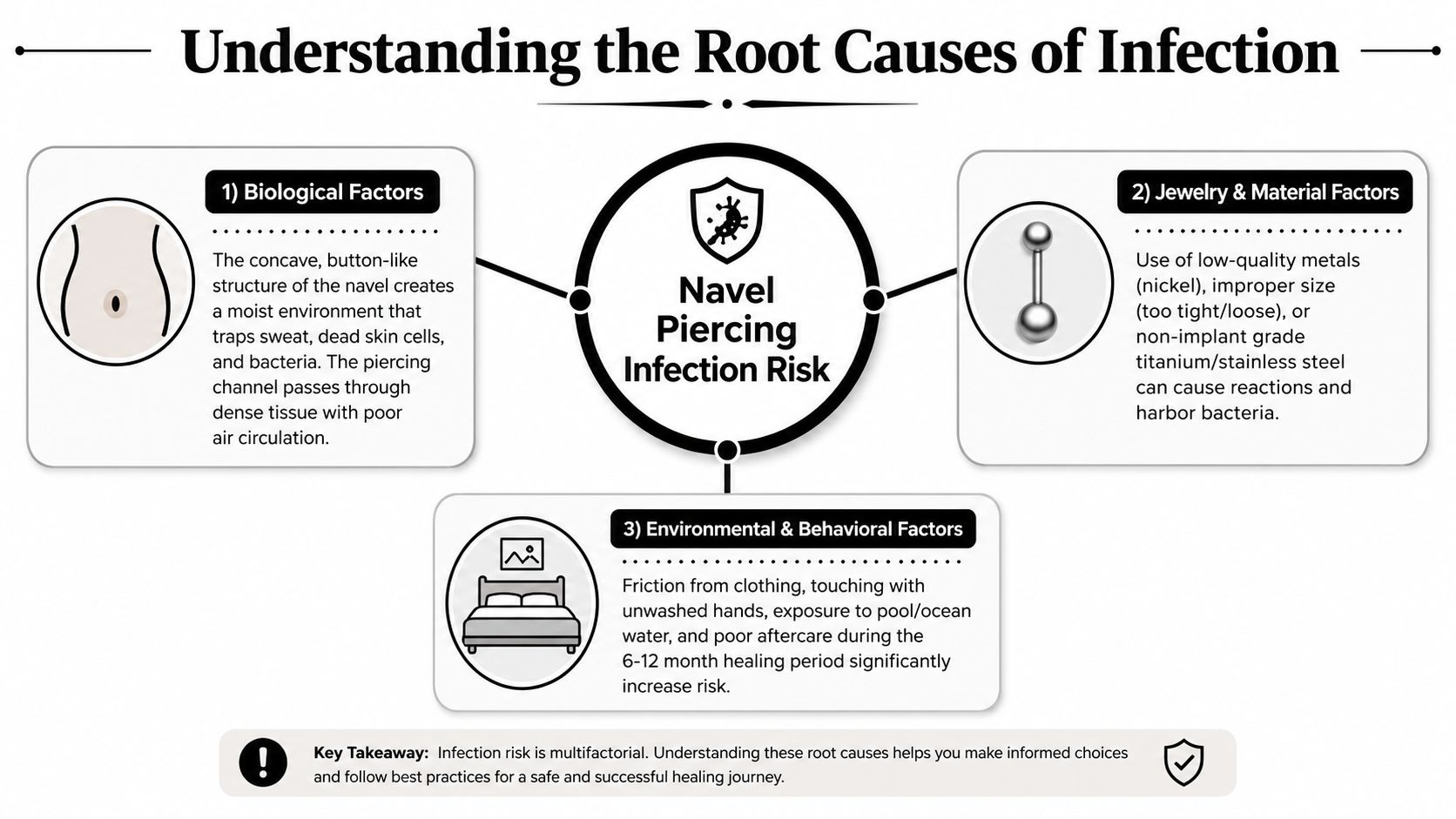
The anatomy matters because a concave navel can remain warm and damp. Sweat, dead skin, and residue may collect around the jewellery, while limited airflow makes the area harder to keep comfortable. Waistbands and belts add repeated pressure, and a snag can create tiny breaks in tissue.
Technique and studio hygiene matter before aftercare even begins. A professional setup should use a sterile, single-use needle, clean gloves, properly processed equipment, and suitable jewellery. Poorly managed premises can introduce contamination into the wound, which is why UK local-authority oversight and infection-prevention standards are relevant to a client's decision, not just administrative concerns.
Jewellery can create a different problem that resembles infection. Nickel-containing or low-quality materials may trigger itching, rash, redness, or flaky skin. A reaction isn't the same as a bacterial infection, but continued irritation can compromise the area and make assessment more difficult. Implant-grade materials, correct sizing, and a smooth finish reduce unnecessary mechanical stress.
Placement also affects healing. Jewellery that sits too shallow, too deep, or under constant pressure may remain irritated because the tissue is being compressed or pulled. Add unwashed hands, tight clothing, swimming in pools or natural water, and changing jewellery before the channel is ready, and the risk becomes cumulative.
The Welsh incident data is a reminder that hygiene failures can have consequences beyond a minor cosmetic inconvenience. Recurrent redness, swelling, or discharge should prompt a closer look at both aftercare and the original piercing environment.
Prevention Strategies for a Safe Healing Journey
Prevention starts before the needle touches your skin. Ask how the studio processes equipment, check whether the local authority requirements are met, and expect a single-use sterile needle to be opened in front of you. The room should look organised and clean, and the piercer should explain placement, jewellery, risks, and aftercare without rushing you.
Choose appropriate initial jewellery. Implant-grade titanium, including titanium made to ASTM F136, or niobium are commonly selected for fresh piercings because material quality and surface finish matter during healing. Internally threaded or threadless jewellery can reduce unnecessary tissue trauma compared with rough external threading.
A simple routine
- Clean gently: Use sterile saline spray as part of a consistent routine, rather than repeatedly scrubbing the area.
- Dry carefully: Use disposable paper products instead of a reusable towel that may carry residue or snag the jewellery.
- Keep your hands away: Touch only when cleaning, and never twist or rotate the barbell to “help” it heal.
- Reduce pressure: Wear loose, breathable clothing and watch for waistbands, belts, towels, and seatbelts that catch.
- Avoid unclean water: Stay away from pools, hot tubs, lakes, and other questionable water exposure while the piercing heals.
- Attend follow-up checks: Ask your piercer to review swelling, fit, placement, and jewellery length if the area remains irritated.
Healing requires patience beyond the first few calm-looking weeks. A navel piercing commonly needs a prolonged healing period, so changing jewellery as soon as the surface appears settled can disturb tissue that's still vulnerable underneath. Keep the original aftercare routine going for the full period advised by your piercer, and seek medical guidance if genuine infection signs appear.
Piercing Near Me helps people find professional piercing services and practical aftercare information, including options connected with studios in Croydon and Bournemouth. Visit Piercing Near Me to explore safe navel piercing services, discuss jewellery and placement, and arrange support if you're concerned about healing.
Trackbacks/Pingbacks