
A lot of people arrive at this question the same way.
A teenager has been thinking about a nose stud for months. A parent is not against it, but wants to know what is legal, what is studio policy, and what keeps the whole thing safe. Then the searching starts, and most of what comes up is either too vague, too American, or too focused on trends instead of real UK practice.
That is where confusion usually begins. The law says one thing. A studio may say something stricter. One friend says 16 is fine. Another says you need a parent. Someone else says their local shop would only pierce over 18s. If you live in Bournemouth or Croydon, that gap between the law and the studio counter matters more than people realise.
Thinking About a Nose Piercing
For many first-time clients, a nose piercing feels like a big step because it sits right in the centre of your face. It is visible, personal, and often tied to identity as much as style. For parents, it can feel like the first body modification decision that carries a bit more weight than an ear lobe.
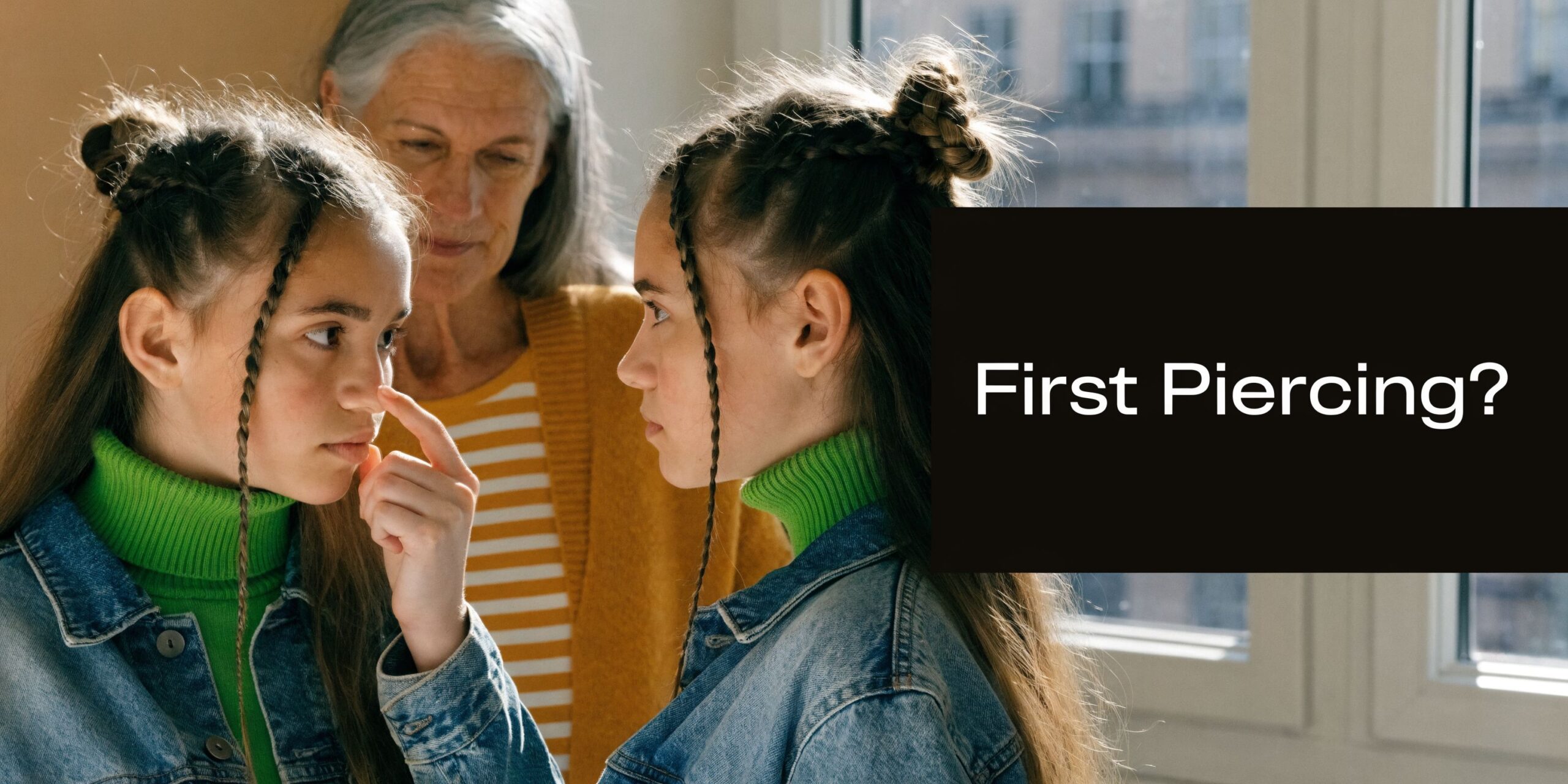
That does not make it unusual. In England, 46% of women aged 16 to 24 had piercings in places other than the earlobe, and the nose ranked among the top three most popular sites alongside the navel and ear cartilage, showing how mainstream nose piercings became among young people (survey summary).
Why this piercing stays popular
A nostril piercing can be subtle with a tiny titanium stud. It can also become more expressive later with a ring or a different gem once healed. That flexibility is a big reason people keep coming back to it.
For some, it is a style choice. For others, it marks a moment. Finishing exams, turning 16, starting college, changing jobs, or just feeling ready are all common reasons people book one.
Where people get stuck
Most readers asking about nose piercing age are not really asking one question. They are asking several at once:
- Is it legal at 16
- Will my local studio do it
- Do I need a parent with me
- What ID should I bring
- Is a nostril piercing treated differently from a septum
- How do I know the studio is safe
A good piercing decision is not just about age. It is about age, anatomy, maturity, jewellery quality, and whether the client is ready to heal it properly.
That is why a simple answer from a search result often misses the point. A safe studio does not work from one rule alone. It looks at the person in front of them, the piercing they want, and whether the conditions are right for it to heal well.
Understanding the UK Legal Age for Nose Piercings
The legal starting point is simple. In the UK, 16 is the minimum age for a nose piercing without parental consent, and many studios in places such as Croydon and Bournemouth enforce this with ID checks (UK age overview).
That is the baseline. It is not the whole story.
What the legal minimum means
If you are 16 or 17, the first thing to understand is that the legal minimum does not force every studio to pierce you. It means the law allows that age threshold. A studio can still decide to set a stricter rule.
If you are under 16, the answer is much simpler. A professional studio will not treat a facial piercing as a casual walk-in decision. Age checks matter, and reputable staff will ask before discussing booking options.
What counts as valid ID
Studios commonly ask for government-issued photo ID. That usually means one of the following:
- Passport
- Driving licence
- National identity card
The aim is straightforward. The piercer needs to confirm who you are and how old you are before carrying out a facial piercing.
Why studios ask for ID even when you look old enough
Good studios do not guess age. They verify it.
That protects the client, the parent, the piercer, and the business. It also helps avoid awkward situations at the counter, especially when one family has been told one thing online and another family has heard something different from friends.
Consent can be misunderstood
People often use the word “consent” loosely. In piercing, it means more than saying yes.
It can involve the client understanding placement, jewellery, healing, and aftercare. If a parent is involved because of the client’s age or the studio’s own rules, it also means the studio has clear records of who approved the procedure and under what conditions.
The practical takeaway
If you are planning a booking in Bournemouth or Croydon, treat the legal minimum as your starting point, not your finish line.
Before you travel, check:
- The studio’s minimum age for a nostril piercing
- Whether a parent must attend for 16 to 17-year-olds
- Which photo ID they accept
- Whether they need written consent in advance or completed in person
The law sets the floor. A professional studio sets the safety standard it is willing to stand behind.
That difference is exactly why two studios in the same town can answer the same age question differently.
Why Studio Policies Are Often Stricter Than the Law
This is the part most guides skip.
A client reads that a nose piercing is legal at 16, arrives at the studio, and then hears that the studio only performs facial piercings for over 18s, or only allows them for 16 to 17-year-olds with a parent present. That can feel inconsistent until you understand how professional studios make decisions.
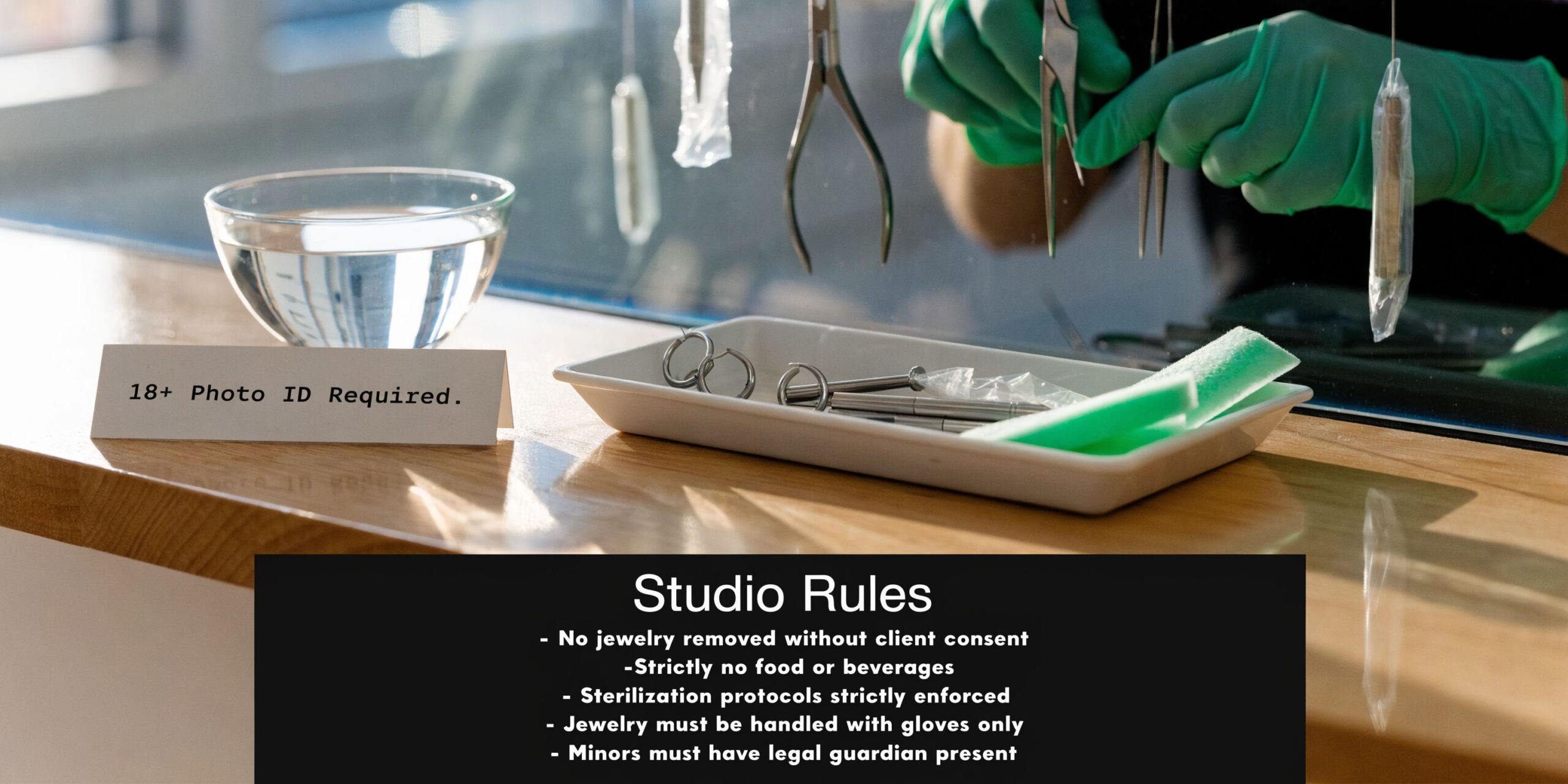
According to this age and ID guidance, while UK law may permit nose piercings for a 16-year-old, many studios require clients to be 18+ for facial piercings due to higher infection risks. That is one of the main reasons parents of 16 to 17-year-olds often get mixed messages in places like Croydon and Bournemouth.
Why reputable studios make tighter rules
A good studio thinks beyond whether something is technically allowed.
It asks whether the client is likely to heal well, follow instructions, keep the area clean, avoid touching the jewellery, and come back if anything needs checking. Facial piercings ask for more discipline than many people expect.
A nostril piercing can catch on towels, hoodies, makeup brushes, or clothing. Some younger clients do brilliantly with aftercare. Some adults do not. Age is not the only factor, but it does affect how cautious a studio may choose to be.
Insurance and accountability matter
Studios also have to think about liability. If a business knows a particular piercing can create more healing problems in younger clients, it may decide that its safest policy is to limit who it accepts.
That is not a sign of poor service. Usually, it is the opposite. It means the studio would rather lose a booking than take on a piercing it does not feel is the best fit for that client.
“But another studio said yes”
That happens all the time.
One studio may pierce a 16-year-old’s nostril with a parent present. Another may only do facial piercings for over 18s. A third may review each case individually after checking anatomy, ID, and whether the client understands aftercare.
None of that changes the law. It reflects the studio’s own standard.
Stricter policy often signals better practice
Professional studios tend to be particular about everything, not just age. They are also the ones most likely to care about jewellery material, placement accuracy, hygiene, and piercing method.
If you are still learning the difference, this guide on piercing gun vs needle helps explain why reputable studios insist on proper tools for tissue safety.
Questions worth asking before you book
Use these before travelling to a studio:
- Do you pierce nostrils for 16 to 17-year-olds
- Does a parent or guardian need to be present
- What ID does the client need
- Do you have different rules for nostril and septum
- What jewellery material do you use for first piercings
If a studio gives clear answers without getting defensive, that is usually a good sign. Good piercers expect these questions.
The key point is simple. Legal does not always mean available at every studio. For nose piercing age in the UK, that gap is normal, and in many cases it is there for sensible safety reasons.
Nostril and Septum Piercings Age and Healing Compared
When people say “nose piercing,” they usually mean one of two things. A nostril piercing sits through the side of the nose. A septum piercing passes through the soft tissue beneath the septum, not through the thick cartilage people often assume.
Those details matter because age policy, jewellery choice, healing commitment, and lifestyle fit can feel different depending on which one you want.
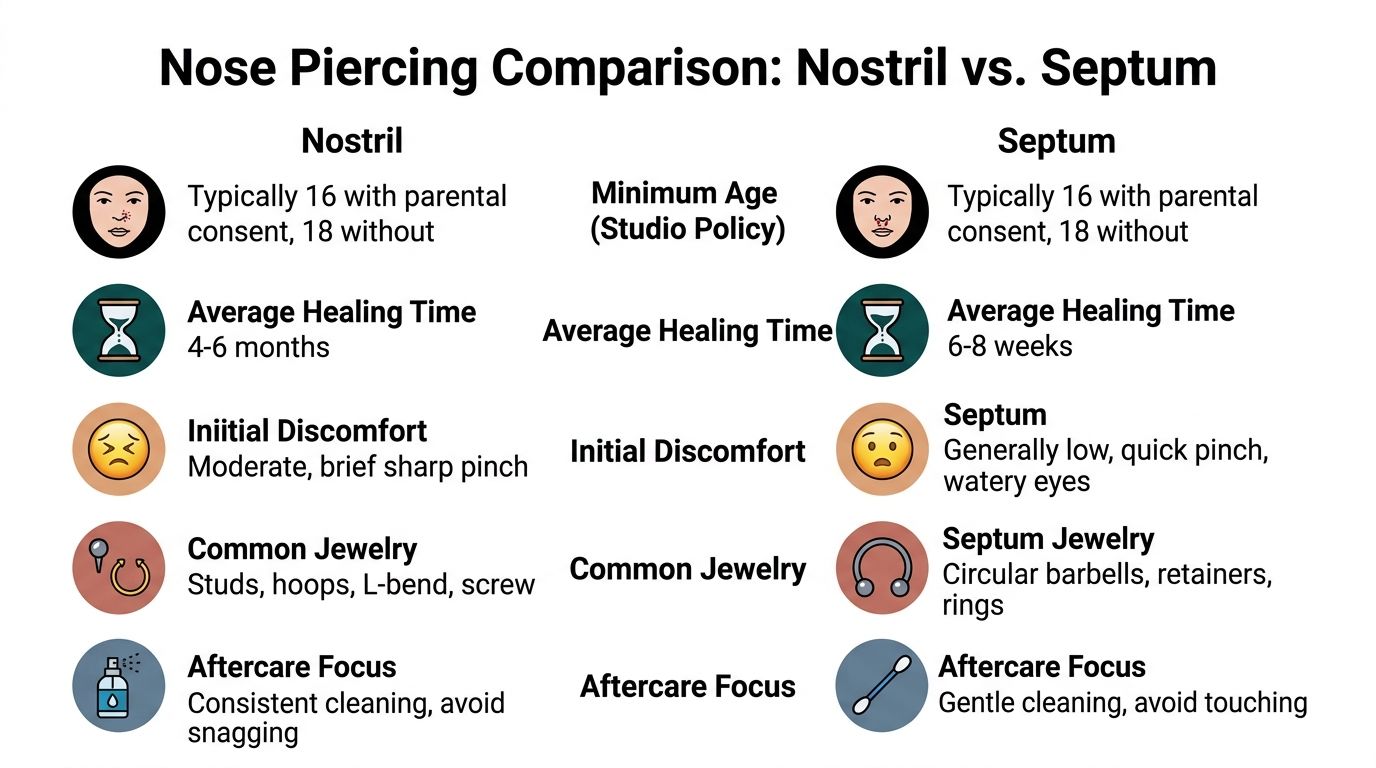
Nostril Piercing vs. Septum Piercing at a Glance
| Feature | Nostril Piercing | Septum Piercing |
|---|---|---|
| Placement | Through the side of the nostril | Through the soft tissue beneath the septum |
| Look | Small and subtle or dressed up later | More noticeable, but can be tucked away with suitable jewellery |
| First jewellery | Studs are common for fresh piercings | Circular barbells and retainers are common |
| Healing style | More vulnerable to knocks and snags | Often easier to leave alone if correctly placed |
| Daily routine | Can be affected by skincare, makeup, and towels | Can be affected by nose blowing and frequent touching |
| Why age policy may vary | Visibility and aftercare discipline matter | Anatomy and client readiness matter |
Nostril piercing basics
A nostril piercing is usually the more familiar choice. It suits clients who want something visible but not too bold. It is often chosen as a first facial piercing because the jewellery can be delicate and understated.
Fresh nostrils need patience. The area is exposed to everyday movement, face washing, and accidental bumps. That is one reason some studios are cautious with younger clients. The piercing itself may be simple, but healing takes commitment.
If you want a closer look at jewellery options and placement styles, this page on a stud piercing on nose is useful for visualising what a fresh nostril piercing usually looks like.
Septum piercing basics
A septum piercing can be a very smooth heal when it is placed correctly in the right anatomical spot. It is often less likely to catch on clothing than a nostril, though it still needs careful cleaning and hands-off healing.
It can also be hidden more easily with the right jewellery in some cases, which appeals to students and clients navigating school, college, or work dress expectations.
Why age policy can differ by piercing type
A studio may treat these piercings differently for practical reasons.
For a nostril, the concern is often whether the client can manage visible jewellery, external irritation, and the temptation to fiddle with it. For a septum, the concern is more often anatomy, placement suitability, and whether the client understands that not every nose has an ideal piercing point.
Which one is easier for a first-timer
There is no universal answer. It depends on the client.
A careful teen who wants one tiny stud and will follow aftercare exactly may suit a nostril perfectly. Another client may prefer a septum because they like the jewellery options and are less likely to snag it.
Nostril may suit you if
- You want a subtle everyday look
- You are happy to avoid changing jewellery early
- You can be patient with healing
Septum may suit you if
- You like ring-style jewellery
- You want an option that can be less visible in some situations
- Your anatomy is suitable and your studio confirms that
Choosing between nostril and septum is not just about fashion. It is about which piercing matches your routine, your anatomy, and your ability to heal it properly.
If you are unsure, the best conversations happen in person. A skilled piercer can look at your nose shape, ask about your routine, and explain which option is realistic for you right now.
Your Health and Safety Checklist Before Getting Pierced
A nose piercing is not major surgery, but it should be approached with the same respect you would give any procedure that breaks the skin. The safest clients are the ones who slow down, ask questions, and pay attention to the details before they ever sit in the chair.
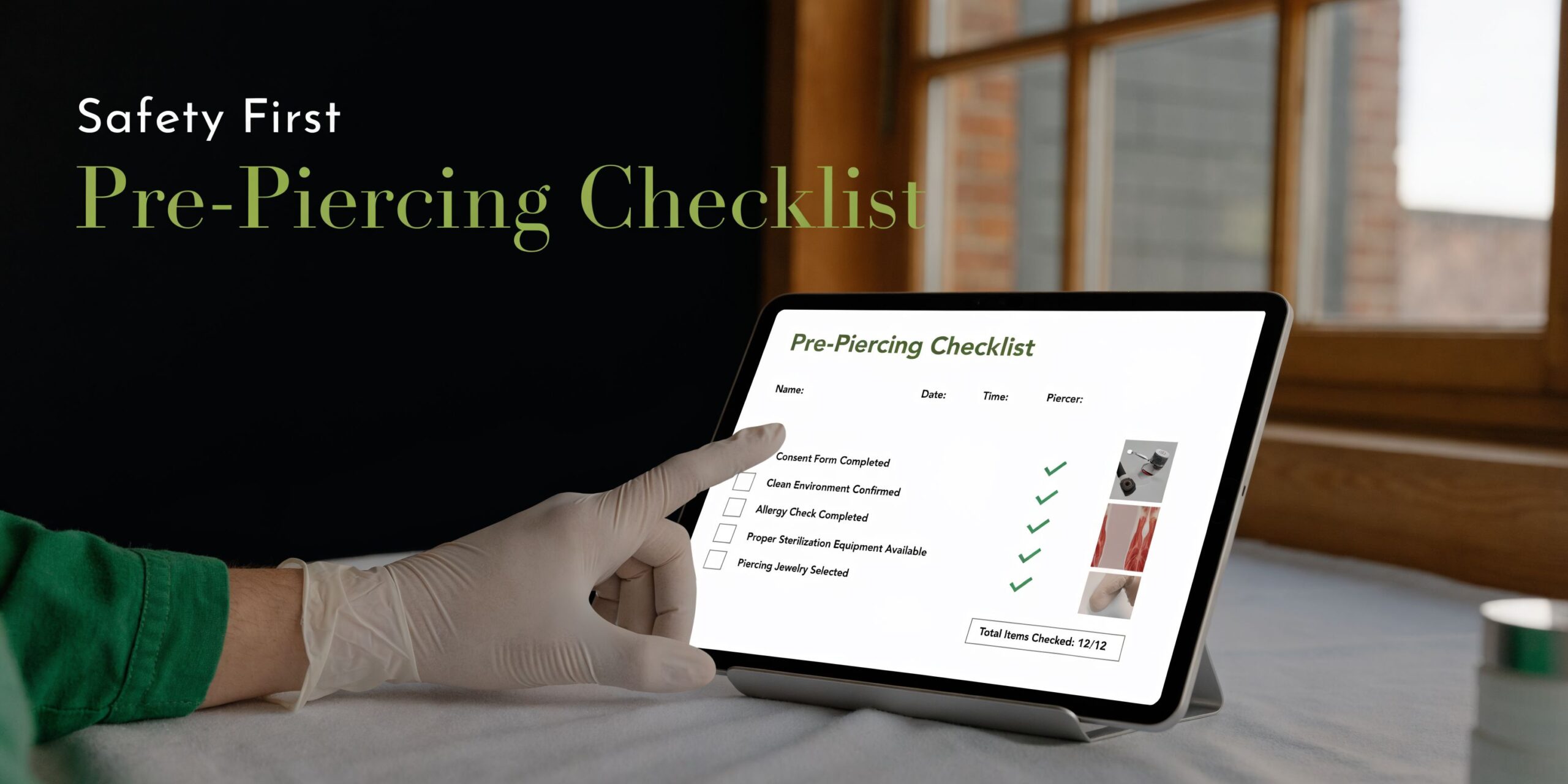
One useful clinical point is that at age 16, sebum production stabilises after puberty, reducing clogged pore risks during the 2 to 4 month nostril healing period, and professional piercers assess that maturity alongside nasal anatomy, using ASTM F136 implant-grade titanium to reduce the 15 to 20% infection rates linked to non-compliance (clinical overview).
What to look for before the piercing starts
Do not focus only on the jewellery display. Watch how the studio works.
Essential Practices
Single-use sterile needles
A professional studio should use a sterile needle for the piercing itself. Not a gun. Not a reusable shortcut.Implant-grade jewellery
Ask for implant-grade titanium, especially for a first nostril piercing. It is a strong starting material for fresh piercings and is widely used in professional studios.Gloves and clean setup
The piercer should wash hands, wear fresh gloves, and set up tools in a clean, organised way.Calm consultation
A proper consultation matters. The piercer should check anatomy, discuss placement, and make sure you understand healing.
Questions clients should feel comfortable asking
If you feel awkward asking safety questions, remind yourself that a good studio hears them every day.
Try these:
- What material is the initial jewellery
- Do you pierce with a needle
- How should I clean it at home
- When can jewellery be changed
- What should make me contact the studio
What aftercare involves
The simplest aftercare is usually the best aftercare.
Keep the area clean. Avoid twisting or turning the jewellery. Do not sleep on it if that puts pressure on the piercing. Be careful with towels, jumpers, makeup, face cleansers, and anything that can rub or snag.
Healing problems often come from irritation, not just poor hygiene. A piercing can look “infected” to a worried client when it is angry because it has been bumped, over-cleaned, or handled too much.
Common mistakes first-timers make
These are the ones I see most often in new clients:
Touching it to check if it is okay
That usually makes it less okay.Changing the jewellery too early
Fresh piercings need stability.Using harsh products
Strong antiseptics, creams, and home remedies often create more irritation.Forgetting lifestyle details
Sports, makeup, work uniforms, and sleeping habits all affect healing.
The cleanest piercing routine is usually a gentle one. Good jewellery, correct placement, and leaving it alone do a lot of the heavy lifting.
Why maturity matters in healing
Nose piercing age then becomes more than a legal topic. A client may be old enough by law, but still not ready for the maintenance.
A successful heal usually comes down to simple behaviour. Showing up with clean skin, listening carefully, not touching it, returning for help if something looks wrong, and waiting for the right time to change jewellery.
That is why experienced piercers look at the whole picture. They are not only asking, “Can I pierce this today?” They are asking, “Is this likely to heal well on this person?”
A Practical Guide for Parents and Teens
The best nose piercing appointments for younger clients usually happen when both sides treat it as a shared decision.
Teens do better when they show they have thought beyond the look of the jewellery. Parents feel more comfortable when they can see the studio has a proper process and the teen understands the responsibility that comes after the appointment.
There is also a legal reason to take this seriously. According to this piercing FAQ reference, parental liabilities for piercings on 16 to 17-year-olds are often misunderstood, and UK law mandates parental presence and written consent. The same verified guidance states that a 2025 HSE survey found 15% of minor facial piercings led to GP visits, with parents potentially liable for costs if studio negligence is not proven.
For teens who want to ask responsibly
A better conversation usually starts with preparation.
Instead of saying, “Everyone else has one,” try showing that you understand the practical side. Know what piercing you want, what jewellery is suitable for healing, and how you will care for it day to day.
A strong approach sounds like this
Be specific
Say whether you want a nostril or septum piercing, and why.Show you understand aftercare
Explain how you will clean it, what you will avoid, and that you know you cannot swap jewellery straight away.Be realistic
If you play contact sports, wear heavy makeup most days, or have school rules to think about, acknowledge that.
Parents tend to respond better when they can see the request is organised rather than impulsive.
For parents who want to make a careful decision
You do not need to know everything about piercing. You only need to ask the right questions and pay attention to the answers.
Good questions at the studio
- What is your policy for 16 to 17-year-olds
- Do you require parental attendance and written consent
- What ID should we both bring
- What jewellery do you use for a fresh piercing
- What support do you offer if healing becomes difficult
If the answers feel rushed or vague, pause. A reputable studio should be comfortable discussing process, hygiene, consent, and follow-up.
What consent should look like in practice
Consent should not feel like signing something you have not had time to read.
A parent should know what piercing is being done, what jewellery is being inserted, what normal healing looks like, and what signs mean the client should contact the studio or a healthcare professional. The teen should hear the same information directly, not just through the parent.
Shared responsibilities after the appointment
This part often gets overlooked. The piercing does not end when you leave the chair.
Teen responsibilities
- Follow aftercare exactly
- Avoid touching or changing jewellery early
- Say something quickly if the area becomes unusually sore or irritated
Parent responsibilities
- Help keep aftercare supplies organised
- Watch for signs the teen is struggling to leave it alone
- Keep the studio’s contact details handy
The safest under-18 piercing is one where the parent and teen understand the same aftercare plan and follow the same expectations at home.
A simple booking checklist
Before you set off to Croydon or Bournemouth, make sure you have:
- The correct photo ID
- Any documents the studio has asked for
- A parent or guardian if the studio requires attendance
- Time to stay for a proper consultation
- No pressure to rush into a decision
If either side still feels unsure, a consultation first is often the smartest move. It gives everyone space to ask questions without the pressure of making the piercing happen on the spot.
If you want to speak to someone directly before arranging a visit, call 01202 9000 50 or message 07752913846 on WhatsApp to ask about age policy, ID, and what to bring.
Making Your Final Decision with Confidence
A good decision about nose piercing age in the UK comes down to four things. Law, studio policy, safety, and readiness.
The law gives you the national baseline. The studio tells you what that specific business is prepared to do. Safety depends on clean technique, proper jewellery, and honest advice. Readiness depends on the person wearing the piercing and caring for it every day while it heals.
That is why the “right age” is not just a number on its own. A 16-year-old with realistic expectations, proper ID, a supportive parent, and a solid aftercare plan may be a far better candidate than an older client who wants to rush through the process and ignore healing advice.
A final check before you book
Ask yourself these questions:
- Do I know my studio’s exact age policy
- Do I know what ID I need
- Am I choosing a nostril or septum for the right reasons
- Am I ready to keep the jewellery in place and heal it properly
- If I am under 18, does my parent understand the consent and aftercare side too
If the answer to those is yes, you are approaching it the right way.
For some people, the best next step is a booking. For others, it is a consultation and a few more questions. Both are sensible. The best piercings usually begin with a calm decision, not a rushed one.
If you also want to factor in budgeting before you choose, this guide on how much does nose piercing cost can help you think through the practical side.
If you want personal advice before making the call, you can speak to the Bournemouth studio on 01202 9000 50 or message the Croydon studio on WhatsApp at 07752913846.
If you want help finding a safe, professional studio, Piercing Near Me makes it easy to explore trusted options, understand piercing policies, and book with confidence in Croydon, Bournemouth, and beyond.