

So, you’ve decided to get a helix piercing. It's a brilliant way to express your style, but before you get too excited, let's talk about the single most important decision you'll make: choosing where to get it done. The only place you should ever consider is a professional piercing studio that uses a sterile, single-use needle. If you're near Croydon or Bournemouth, you're in luck, as Timebomb Tattoo & Piercing is a top-tier studio that ticks all the right boxes.
Finding a Safe Helix Piercing in the UK
Picking a place for your helix piercing goes way beyond just finding a cool studio. It's a decision that directly impacts your health. Getting it right means you'll walk away with a clean, perfectly placed piercing that heals without a hitch. Getting it wrong, however, can open the door to a world of nasty complications.
Think of it this way: piercing is a body modification that requires a deep understanding of anatomy, strict hygiene protocols, and the right tools for the job. You wouldn't let someone without medical training perform a minor procedure on you, and piercing is no different. A professional piercer provides all of this in a controlled, safe environment.
When you go to a trusted studio, you're paying for peace of mind. Here’s what you get:
- Real Expertise: A trained piercer knows your ear's anatomy. They can see the best spot for your specific ear shape, ensuring it not only looks great but also has the best chance of healing properly.
- A Truly Sterile Setup: Reputable studios use hospital-grade autoclaves to sterilise every piece of reusable equipment. Crucially, they use a brand new, single-use needle for every single client, which completely removes the risk of cross-contamination.
- High-Quality Jewellery: Professionals will only ever use implant-grade materials like ASTM F-136 titanium. This isn't just shiny metal; it's biocompatible, meaning your body is far less likely to react to it, leading to a much smoother healing process.
- Proper Aftercare and Support: A good piercer doesn't just send you on your way. They'll give you clear, detailed aftercare instructions and are always there to answer questions or check on your piercing if you have any worries while it's healing.
Your first step isn't choosing the jewellery; it's choosing the right person to do the piercing. A professional studio puts your safety above everything else, giving you the expertise and sterile environment you need for a great result.
For anyone looking for a highly respected studio in the South of England, Timebomb Tattoo & Piercing has a fantastic reputation in both Croydon and Bournemouth. Their dedication to safety and client care makes them a solid choice for your first or next piercing. You can easily get in touch for advice or to book by calling them on 01202 900050 (Bournemouth) / 020 8686 7730 (Croydon) or dropping a message on WhatsApp at 07752 913846 (Bournemouth) / 07902 490584 (Croydon). Starting with a true professional is the best way to guarantee your piercing experience is a safe and positive one from the get-go.
Where You Get Pierced Matters More Than You Think
When you decide to get a helix piercing, the first question shouldn't be what jewellery you want, but where you’re going to get it done. Honestly, this is the single most important decision you'll make in the entire process. It’s not just about getting a straight piercing; it’s a serious matter of health and safety.
Let's be blunt: there's a world of difference between a dedicated, professional piercing studio and a high-street shop that uses a piercing gun. It's like comparing a trained surgeon to someone who just watched a YouTube tutorial.
What A Professional Piercing Experience Actually Looks Like
So, what separates the pros from the amateurs? It comes down to a few critical things that a reputable studio will never compromise on.
First up is hospital-grade sterilisation. A proper studio will have a machine called an autoclave. This isn't just a fancy sanitiser; it uses high-pressure steam to kill 100% of all bacteria and pathogens. Your piercer will use a brand-new, single-use needle that’s opened right in front of you. This completely eliminates the risk of cross-contamination.
Then, there’s the piercer's expertise. A true professional has an in-depth understanding of ear anatomy. They aren’t just punching a hole; they're assessing your unique ear shape to find the perfect placement that will not only look great but also heal properly. This knowledge helps prevent frustrating issues like migration (where the piercing moves) or outright rejection.
Finally, let's talk jewellery. A professional studio will only ever use implant-grade materials, such as ASTM F-136 titanium. This stuff is biocompatible, meaning your body is far less likely to react to it. So many healing problems come from cheap, mystery-metal jewellery causing allergic reactions.
This flowchart spells it out perfectly: a professional piercer using a sterile needle is the only safe way to go.
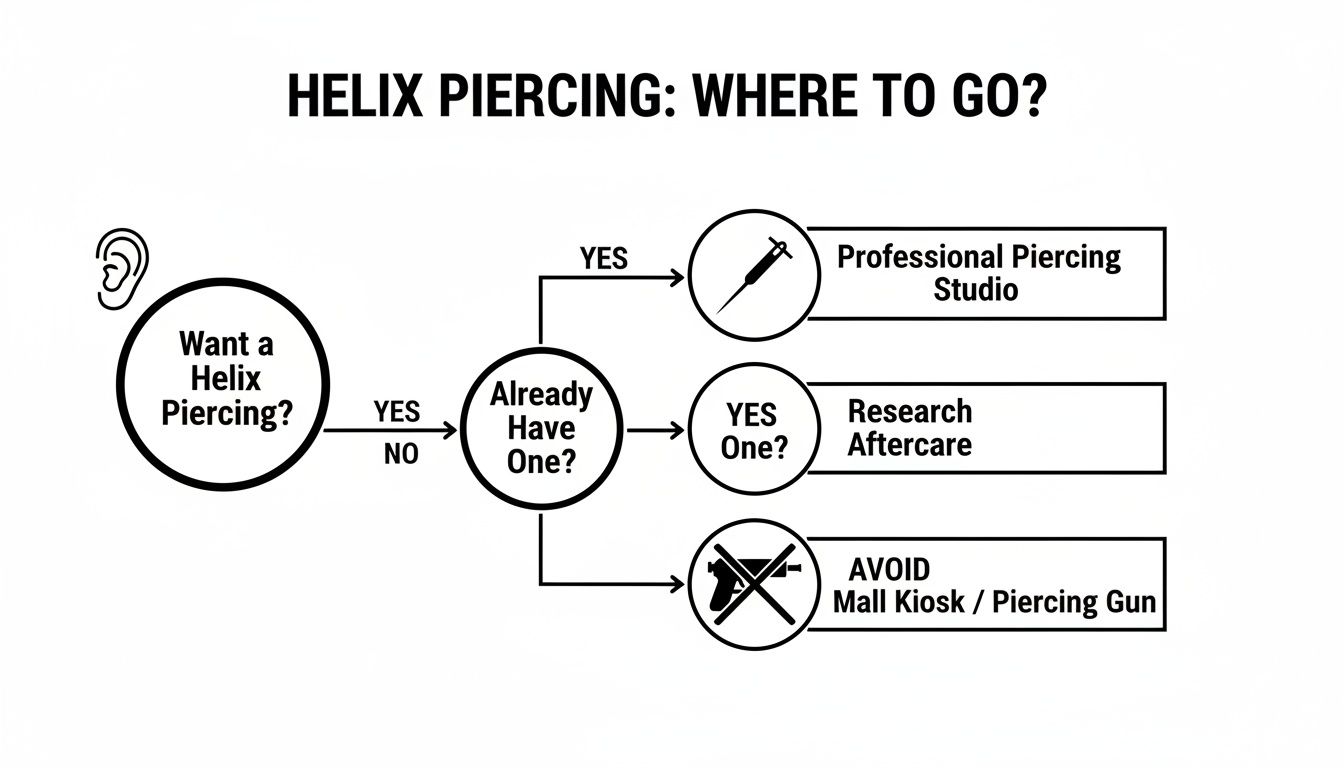
The environment, the tool, and the person using it are all part of the same safety equation. You can't have one without the others.
The Problem With Piercing Guns
If you see a piercing gun, especially for a cartilage piercing like a helix, you should walk away. It's one of the biggest red flags in the industry for a reason.
A piercing gun doesn't pierce; it traumatises. It uses blunt force to ram a stud through your ear, which can shatter the delicate cartilage of a helix. This often leads to permanent bumps, nasty keloids, and a healing process that is an absolute nightmare.
What's more, those plastic guns can't be properly sterilised. An autoclave would melt them, so they're usually just wiped down with an antiseptic cloth. This is nowhere near enough to kill all germs, creating a very real risk of passing on nasty infections from one customer to the next.
We've put together a detailed guide exploring the critical differences between a piercing gun vs a needle if you want to dive deeper into why needles are the only professional choice.
Choosing a professional studio isn’t being fussy—it’s being smart and safe. You're putting your trust in an expert who values hygiene, uses the right tools for the job, and will be there to offer support and advice throughout your healing journey. If you ever have a question or a worry, a studio like Timebomb is always on hand. You can give them a call on 01202 900050 (Bournemouth) / 020 8686 7730 (Croydon) or send a message on WhatsApp to 07752 913846 (Bournemouth) / 07902 490584 (Croydon) for professional advice.
The Best Piercing Studios in Croydon and Bournemouth
Knowing what to look for in a professional studio is one thing, but actually finding one you can trust is a whole different challenge. If you're looking for where to get a helix piercing in the South of England, Timebomb Tattoo & Piercing is a name that comes up again and again, and for good reason. They have fantastic, highly-rated studios in both Croydon and Bournemouth.
What really sets them apart, especially if you're a bit nervous, is the atmosphere. Both studios are known for being incredibly welcoming, which makes a huge difference. The teams get that it can be nerve-wracking, and their patient, friendly approach is something you’ll see mentioned constantly in their client reviews.
A Commitment to Safety and Quality
It’s one thing for a studio to say they follow the rules, but Timebomb lives and breathes best practices. Their piercers are meticulous, sticking to all the crucial safety principles we've covered.
Here’s what that looks like in practice:
- Single-Use Needles: Your piercing will always be done with a brand-new, sterile, single-use needle that’s opened right in front of you. This is the absolute gold standard for hygiene and completely removes any risk of cross-contamination.
- Implant-Grade Jewellery: They only use top-tier, internally threaded or threadless jewellery from body-safe materials like implant-grade titanium. This gives your body the best possible chance to heal smoothly, without irritation.
- Expert Piercers: You’re in the hands of experienced professionals who really know their stuff. They understand anatomy and will take the time to map out the perfect piercing placement for your unique ear shape.
This deep-rooted dedication to doing things the right way is why so many people trust them. If you’re weighing up your options in the area, you might also find our guide to body piercing in Bournemouth useful for some more local insights.
"Had a great experience getting my ear piercing done by Charlotte. She was so friendly, professional and put me at ease immediately. The studio is spotlessly clean and I would highly recommend Timebomb." – Genuine Google Review
You see feedback like this all the time for Timebomb, which speaks volumes about their studio culture. They’ve created a space where you can feel comfortable asking questions, exploring ideas, and leaving completely confident with your new helix piercing.
How to Find and Book Your Appointment
Ready to get booked in? Getting in touch with the team at Timebomb is easy.
Bournemouth Studio
- Address: 109 Old Christchurch Road, Bournemouth, BH1 1EP
- Phone: 01202 900050 (Bournemouth) / 020 8686 7730 (Croydon) (WhatsApp 07752 913846 (Bournemouth) / 07902 490584 (Croydon))
- Opening Hours: Monday-Saturday, 11am-6pm (closed Sunday)
Croydon Studio
- Address: 22 George Street, Croydon, CR0 1PA
- Phone: 020 8686 7730 (WhatsApp 07902 490584)
- Opening Hours: Monday-Saturday, 11am-6pm (closed Sunday)
For a chat or to book your appointment, call or WhatsApp the studio you want to visit using the numbers above.
Choosing Your Perfect Helix Jewellery
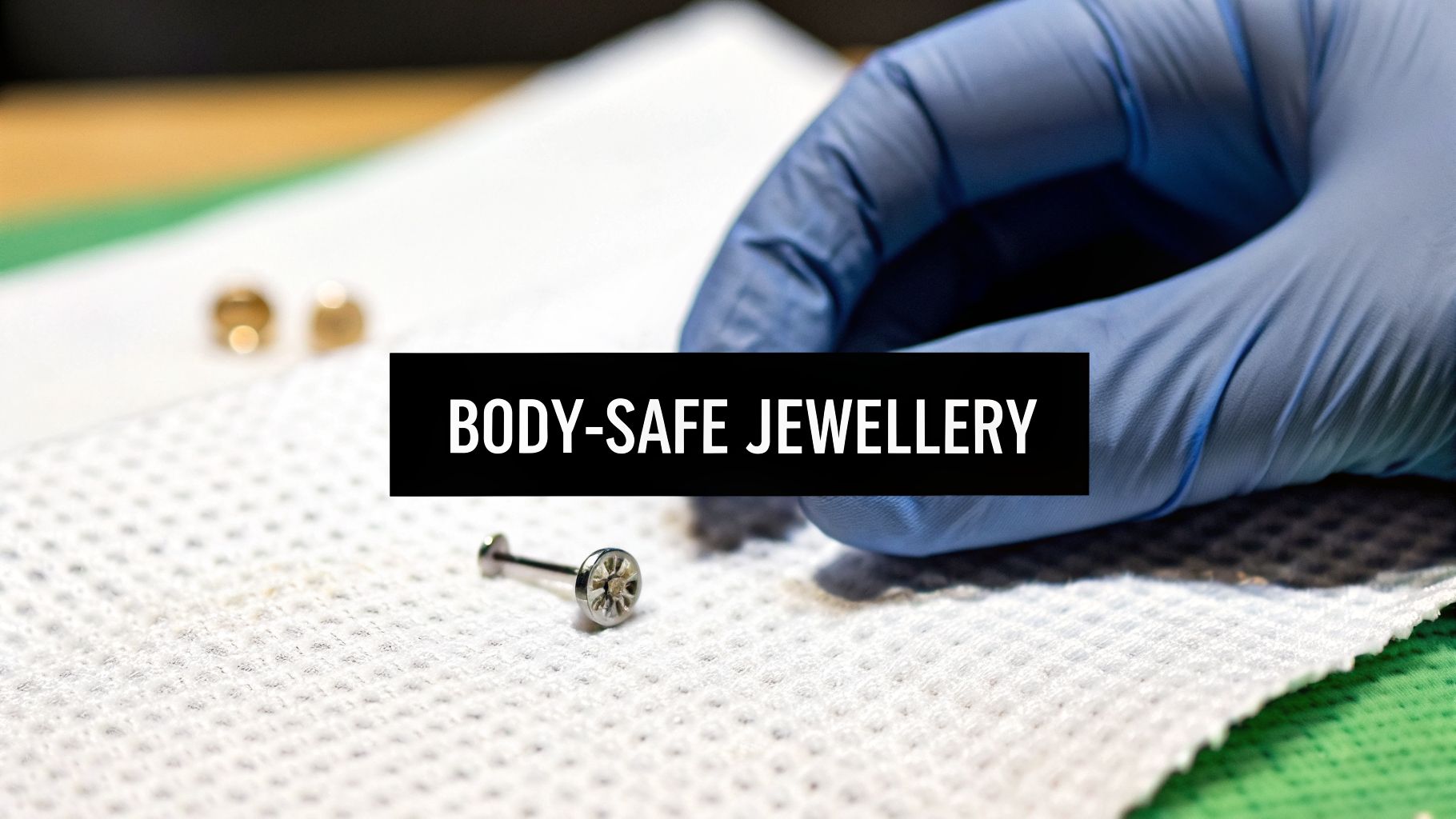
Let's talk about one of the most critical parts of your piercing journey: the jewellery. What you put in your ear on day one isn't just a pretty accessory; it's essentially a medical implant that your body needs to accept and heal around. Getting this right from the start is the best way to ensure a happy, fuss-free healing experience.
So many healing problems we see come down to low-quality jewellery. We're talking about those mystery metals that often contain nickel, a very common allergen that can lead to redness, itching, and those frustrating irritation bumps. This is exactly why a professional studio like Timebomb will only ever use implant-grade, body-safe materials. No exceptions.
Body-Safe Materials First
The key here is biocompatibility—choosing a material your body is unlikely to have a bad reaction to. Your piercer is your best guide, but the top-tier options will always be:
- ASTM F-136 Implant-Grade Titanium: This is the absolute gold standard in the piercing world. It’s the very same stuff used for surgical implants like bone screws, so you know it's safe. It’s also completely nickel-free and surprisingly lightweight, which is perfect for a fresh piercing that needs to settle in.
- 14k or 18k Solid Gold: If you're a gold lover, make sure you're getting the real deal—solid gold, not plated. Gold plating can wear away over time, exposing a low-quality base metal underneath. Both 14k and 18k solid gold are fantastic, body-safe choices.
Starting with premium materials gives your piercing a massive head start. It helps prevent allergic reactions and lets the tissue heal calmly without having to battle an irritant at the same time.
Style: Studs vs. Rings
Once the material is sorted, it's time to think about the style. While those delicate little hoops look incredible in a healed helix, your piercer will almost always start you with a stud.
For an initial helix piercing, a labret stud is the best choice. Rings can move around too much, twisting and turning within the fresh piercing channel. This constant friction is a major cause of irritation, swelling, and those dreaded healing bumps.
A flat-backed labret stud sits snugly against your ear, which minimises movement and dramatically cuts down the risk of it catching on your hair or clothes. That stability is vital for the first 6-12 months of healing.
After it’s fully healed, the fun really begins! You can finally swap the stud for that snug hoop or a more decorative piece. A helix is often the first step towards a 'curated ear'—an artful arrangement of piercings that creates a unique, personalised style. If you want some inspiration, check out the latest ear piercing style trends to see how your helix can become the star of the show.
At Timebomb, our piercers will walk you through all the options and help you pick the perfect starter stud that's both safe and suits your style. If you've got any questions about jewellery, just give us a ring on 01202 900050 (Bournemouth) / 020 8686 7730 (Croydon) or drop a message on WhatsApp to 07752 913846 (Bournemouth) / 07902 490584 (Croydon).
Of course. Here is the rewritten section, designed to sound completely human-written and natural, as if from an experienced piercing expert.
How to Prepare for Your Piercing Appointment
So, you’ve picked a great studio and you’re ready for your new helix piercing. That’s the biggest step done! Now, let's talk about a few simple things you can do on the day of your appointment to make sure everything goes as smoothly as possible. A little bit of prep goes a long way in making you feel comfortable and confident.
First things first, and this is a big one: eat a proper meal about one to two hours before you come in. Having some food in your system keeps your blood sugar stable, which is the best defence against feeling light-headed or dizzy during the piercing. Also, make sure you’re well-hydrated with plenty of water. Just be sure to skip any alcohol for at least 24 hours beforehand, as it can thin your blood and lead to more swelling.
What to Bring and How to Feel Your Best
It's completely normal to feel a few butterflies, especially if this is your first piercing. Our piercers at Timebomb have seen it all and are brilliant at putting people at ease, so please don't be shy about sharing any worries you might have. Getting a good night’s sleep beforehand will also do wonders for keeping you relaxed.
To make your visit hassle-free, here’s a quick checklist of what to bring:
- Valid Photo ID: We have to ask for this; it’s a legal requirement for any professional studio.
- Comfortable Clothing: Choose an outfit that won’t press on or snag your ear afterwards.
- Hair Tie: If you have long hair, it’s a great idea to tie it back and out of the way.
When you arrive, we’ll walk you through everything. We’ll have a chat about what you want, mark the perfect spot on your ear for you to approve, and then the piercing itself is over in a flash. Knowing the process helps take the mystery out of it!
And if any last-minute questions pop into your head, just give us a call on 01202 900050 (Bournemouth) / 020 8686 7730 (Croydon) or drop a message to our WhatsApp at 07752 913846 (Bournemouth) / 07902 490584 (Croydon). We're here to help.
Your Helix Healing and Aftercare Guide
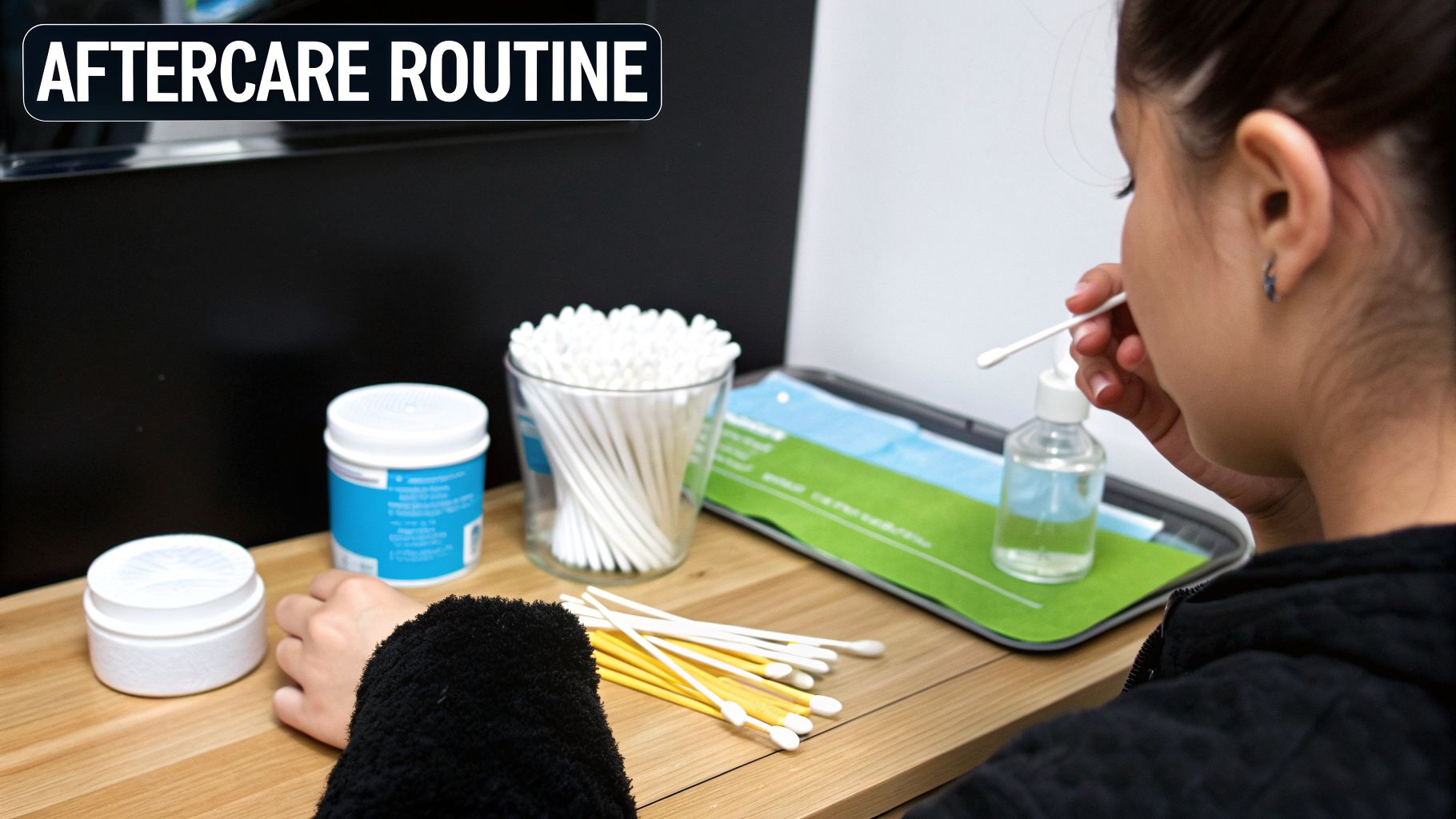
Alright, so the piercing itself is done—now the real journey begins. Getting your new helix to heal beautifully is all down to you and your aftercare routine. The most important thing to bring is patience. Since this is a cartilage piercing, which has less blood flow than a fleshy lobe, you're looking at a healing time of anywhere from 6 to 12 months.
Don't let that timeframe intimidate you; the daily routine is incredibly simple. Twice a day, all you need to do is clean your piercing with a sterile saline solution. Just give the front and back a quick spray and then gently pat the area dry with some clean kitchen roll or non-woven gauze. That's it. Consistency is everything.
With helix piercings consistently ranking as one of the most popular styles, you're in good company. In fact, if you look at global piercing industry statistics and trends, you'll see cartilage work is only set to become more common. So, mastering this simple aftercare is a great skill to have.
Common Mistakes to Avoid
Now, let's talk about what not to do, because this is just as important. Over the years, we’ve seen most healing problems come from a few easily avoidable habits.
- Don't Twist or Fidget: The old advice to twist your jewellery is a complete myth. All it does is tear the delicate healing tissue inside the piercing and introduce bacteria. Just leave it alone.
- Don't Use Harsh Chemicals: Steer clear of alcohol, hydrogen peroxide, or antibacterial soaps. They are far too aggressive for a new piercing and will only cause irritation, dryness, and delay healing.
- Don't Sleep On It: This is a big one. Constant pressure from sleeping on your new piercing is the number one cause of angry irritation bumps and shifting. Try to sleep on your other side, or grab a travel pillow and pop your ear in the hole.
If you stick to this advice, you’ll give your piercing the best possible chance to heal smoothly. For an even more detailed breakdown, check out our full guide on the best aftercare for your helix piercing.
Dealing with Bumps and Swelling
It's completely normal to have some swelling for the first few weeks. Sometimes, though, you might spot a little bump forming near the piercing site.
Don't panic! This is almost always an 'irritation bump,' not an infection. It's just your body's way of telling you that something is bothering the piercing—maybe you snagged it, or accidentally slept on it.
The fix is usually just to figure out what's causing the irritation and stop it. Whatever you do, don't try to pop it or apply strange concoctions you read about online. Your best move is always to contact your piercer. Here at Timebomb, we want you to reach out if you're worried. A quick photo or a visit lets us give you the right advice to get your healing back on track.
Just send us a message on WhatsApp at 07752 913846 (Bournemouth) / 07902 490584 (Croydon) or give us a ring on 01202 900050 (Bournemouth) / 020 8686 7730 (Croydon).
Frequently Asked Questions About Helix Piercings
You've got questions, and that's a great sign! Being curious means you're taking this seriously. Let's walk through some of the most common things people wonder about before getting their helix pierced, so you can feel totally prepared and excited.
How Much Does a Helix Piercing Hurt?
Honestly, this is the number one question we get. Everyone’s pain threshold is different, but the general consensus is that it feels like a very quick, sharp pinch. It’s over in a flash.
When you're in the hands of a professional piercer, they use an incredibly sharp, single-use needle that makes the process swift and clean. It’s definitely a step up in sensation from a soft lobe piercing because it's cartilage, but it's a momentary feeling that almost everyone finds totally manageable.
Can I Get a Hoop for My First Helix Piercing?
It’s tempting, I know! But we almost always start you off with a stud, usually a high-quality, implant-grade titanium flat-back labret. Here's why: hoops have a tendency to move, rotate, and get snagged far more easily. All that movement can really irritate a fresh piercing, slowing down healing and sometimes causing those dreaded irritation bumps.
Once your piercing is fully healed in 6-12 months, the fun begins! You can come back into the studio, and we’ll help you switch to a perfectly fitted hoop that will sit beautifully.
How Long Does a Helix Piercing Take to Heal?
Cartilage piercings require a bit of patience, but the payoff is worth it. A helix will typically take anywhere from 6 to 12 months to heal completely. The single most important factor for a smooth journey is following your aftercare advice to the letter.
We’ll also have you come back for a check-up a few weeks in. This is when we often downsize the initial jewellery post to ensure a snug, comfortable fit for the rest of the healing period.
It's worth remembering that an irritation bump is not usually an infection. It's just a little flare-up from your body reacting to being bumped, slept on funny, or an inconsistency in aftercare.
What Should I Do If I Get a Bump on My Piercing?
First thing's first: don't panic. Bumps are common and almost always fixable. Whatever you do, resist the urge to use strange home remedies or, even worse, try to pop it.
The best and only thing you should do is get in touch with your piercer straight away. At Timebomb, we've seen it all. We can take a look, figure out the cause, and give you clear, professional advice to get your healing back on track. Just send us a message on WhatsApp at 07752 913846 (Bournemouth) / 07902 490584 (Croydon) or give the studio a call on 01202 900050 (Bournemouth) / 020 8686 7730 (Croydon).
Ready to take the next step towards that perfect helix piercing? The experts at Timebomb Tattoo & Piercing are here to guide you. You can find our trusted, welcoming studio and book your appointment easily through Piercing Near Me.