
You're probably reading this with one tab open to jewellery inspiration and another tab full of pain questions. That's normal. Most first-time clients don't really want a dramatic answer. They want an honest one.
If you're wondering whether a nose piercing hurts, the short answer is yes, but usually for a very short moment. The part that catches people out isn't the puncture. It's the healing window afterwards, when small habits decide whether the piercing settles calmly or turns into a nuisance.
That's the bit worth understanding before you book.
What a Nose Piercing Actually Feels Like
You're in the chair. Your hands are colder than usual. The piercer checks the placement, marks the nostril, shows you the dot, and asks you to take a steady breath. In that moment, many expect something far worse than what happens.
The sensation usually comes in a quick sequence. First, there's pressure as the tissue is held steady. Then comes the puncture itself, which UK-facing guidance commonly describes as a short, sharp pain around 4 to 6 out of 10, with the intense part lasting only 1 to 3 seconds according to UK nose piercing pain guidance. After that, you may feel the jewellery slide in, then a warm pulse and watery eyes.
Why people often say “that was it?”
The shock of the moment is often bigger than the pain itself. Your body reacts fast. You tense, then it's over.
For many first-timers, the strangest part is how brief it is. The build-up feels longer than the piercing. If you want a more placement-specific breakdown, this nostril piercing pain guide gives a useful overview of what clients commonly report.
Most people don't leave saying it was painless. They leave saying it ended much faster than they expected.
What you'll notice right after
Straight after the jewellery is in, the area can feel hot, slightly full, or a bit stingy. That doesn't mean anything has gone wrong. It's the body reacting to a fresh wound.
A calm piercer will usually talk you through this while you're still in the chair. If you're nervous, ask them to explain each step before they start. Knowing the sequence often helps more than trying to act brave.
Why the Sting Is Short but the Soreness Lasts
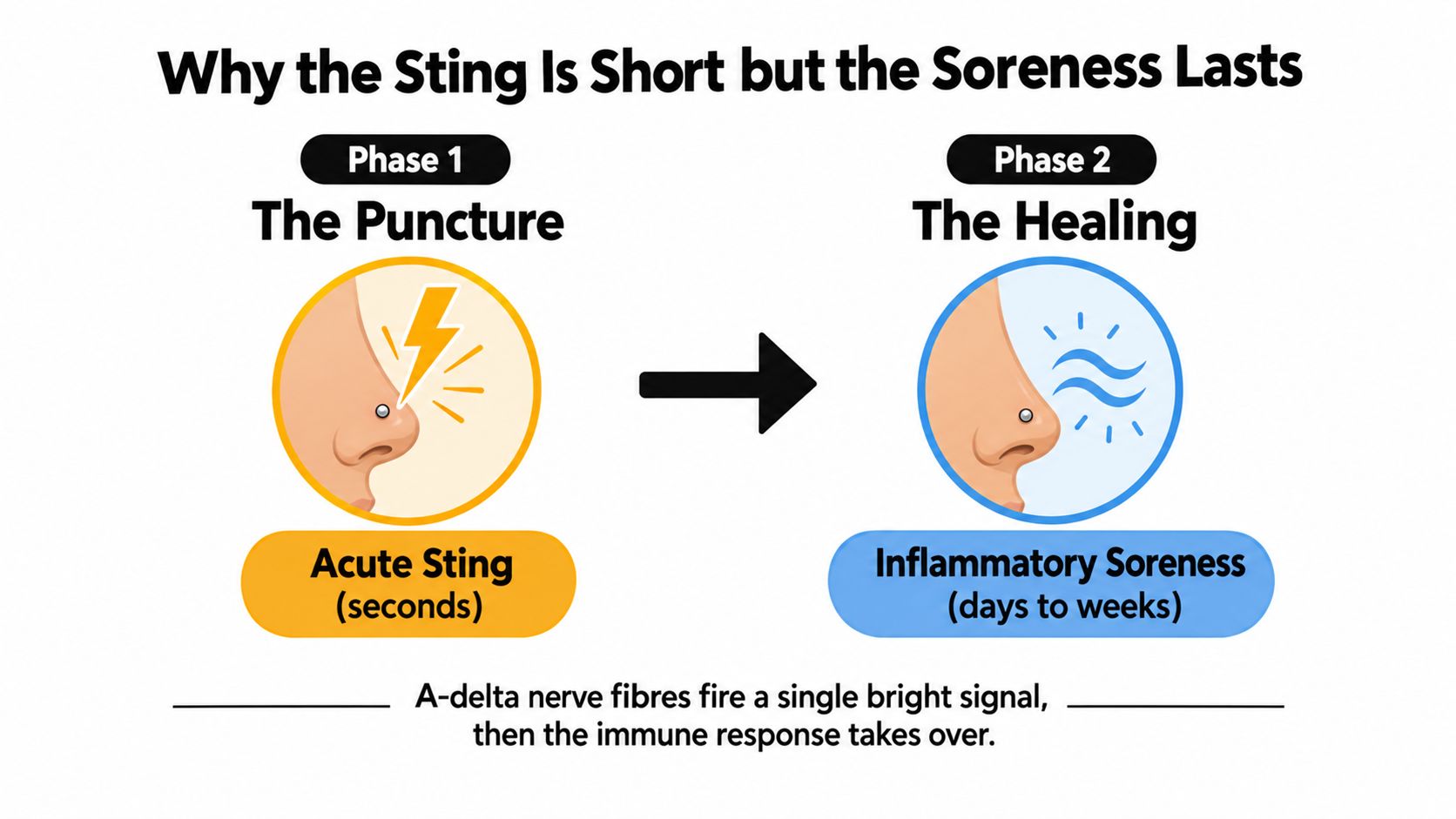
The easiest way to understand nose piercing discomfort is to split it into two phases. People often mix them together, then get confused when the actual piercing was fine but the next morning feels more noticeable.
Phase one is the puncture
The first phase is the needle passing through the tissue. UK-facing piercing guidance describes this as a sharp pinch lasting about 1 to 3 seconds, followed by milder soreness over the first few days in this explanation of nose piercing pain and healing discomfort.
That first sting is the body responding to the puncture itself. It's bright, sudden, and over quickly. You don't need much pain management for a sensation that brief. Breathing steadily matters more.
Phase two is healing soreness
What comes next is different. Over the next 1 to 3 days, soreness is often described as around 2 to 4 out of 10 in the same UK guidance linked earlier. This part isn't the needle any more. It's the body sending fluid, blood flow, and immune activity into the area.
That's why day two can sometimes feel more awkward than the piercing appointment. The site can be tender when you wash your face, pull a jumper over your head, or catch it with a towel.
Practical rule: Don't judge a nose piercing by the first sting. Judge it by how well you protect it in the first few days.
What soreness means and what it doesn't
Mild tenderness, slight swelling, and local warmth usually fit normal wound healing. They don't mean the piercing has “rejected” overnight, and they don't mean your body can't handle it.
What often prolongs soreness is friction. Twisting the jewellery, checking it constantly in the mirror, sleeping on it, or over-cleaning can all keep the area irritated. The needle creates the wound. Repeated movement keeps reminding the wound it's there.
Factors That Change How Much a Nose Piercing Hurts
Two people can get the same piercing on the same day and describe it very differently. That doesn't mean one of them is exaggerating. It means pain is shaped by placement, anatomy, stress, and technique.
Placement and procedure
A standard nostril piercing usually feels simpler than a higher or more awkward placement. Tissue thickness matters. Angle matters. So does whether the jewellery suits the anatomy properly.
A clean needle technique also matters. A well-trained piercer using a single-use hollow needle and correct jewellery will usually create less trauma than poor technique or unsuitable equipment.
Your body on the day
Pain isn't only about the nose. It's also about the state your body is in when you arrive.
If you've slept badly, had too much caffeine, skipped food, or turned up already panicking, the whole experience can feel sharper. If you're calm, hydrated, and fed, the same puncture often feels more manageable.
| Factor | Effect on Pain |
|---|---|
| Placement | Higher or trickier placements often feel sharper than a standard nostril |
| Jewellery fit | Poorly fitted jewellery can increase pressure and post-piercing soreness |
| Piercer technique | Smooth, confident technique usually reduces unnecessary tissue trauma |
| Anxiety level | High nerves can amplify how intense the moment feels |
| Sleep and food | Tiredness and low blood sugar can make you feel more sensitive |
| Touching afterwards | Constant movement often increases soreness more than the piercing itself |
A quick self-check before booking
Ask yourself:
- How anxious am I today? If you're already keyed up, tell the piercer so they can slow the pace.
- Have I slept and eaten properly? Turning up shaky doesn't help.
- Am I choosing placement for style alone? A more advanced spot can heal less easily than a classic nostril.
- Am I likely to fiddle with jewellery? Be honest. That habit affects soreness more than expected.
Pain isn't just something that happens to you. It's shaped by the conditions around the piercing.
The Realistic Healing Timeline Week by Week
Healing is where most confusion starts. People expect pain to be the main event, then get unsettled when the area feels fine one day and grumpy the next. A nose piercing rarely heals in a perfectly straight line.
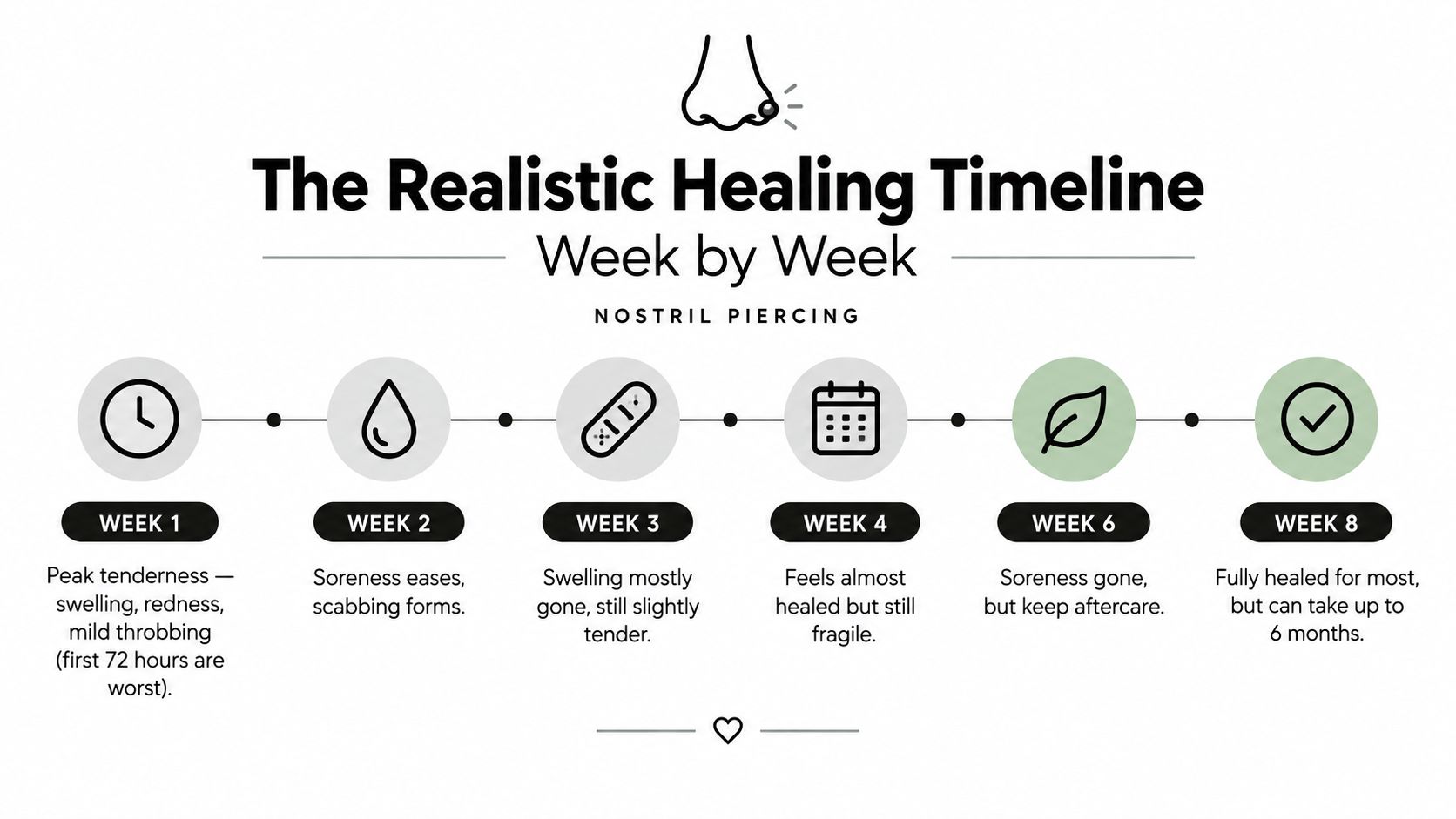
Patient Info states that nose piercings usually take 2 to 4 months to heal and also advises cleaning with a saltwater solution made from ½ teaspoon of salt in one cup of warm water while avoiding alcohol and hydrogen peroxide because they can irritate the skin and slow recovery, as explained in this Patient Info piercing care guide.
The first few days
The first 72 hours are often the most noticeable. The area may feel tender, slightly swollen, and reactive if bumped. A dull ache is common. So is the feeling that you're suddenly very aware of the side of your nose.
Weeks one to four
Swelling usually starts to settle, but the piercing can still feel delicate. You might see a little crusting. You may also get brief flare-ups after washing, sleeping awkwardly, or catching the jewellery on clothing.
Surface calm can be misleading. By week three or four, the outside may look much better while the inside still feels vulnerable.
Healing often looks ahead of how it feels. That's why people change jewellery too early and set themselves back.
Months two to four and beyond
The piercing starts to feel more like part of you and less like a fresh wound. According to the same UK guidance, 2 to 4 months is a common healing range, while some council guidance allows for up to 6 months, which is noted in the earlier UK pain and healing reference.
That longer window matters. Feeling “fine” is not the same as being fully settled. Progress is usually slow and quiet. Less soreness, less discharge, fewer flare-ups. That's the sign of healing.
Aftercare That Eases Soreness and Speeds Recovery
Good aftercare is boring in the best possible way. It doesn't involve miracle oils, aggressive cleaning, or constantly checking whether the stud moves. It's simple, clean, and repetitive.
The first rule
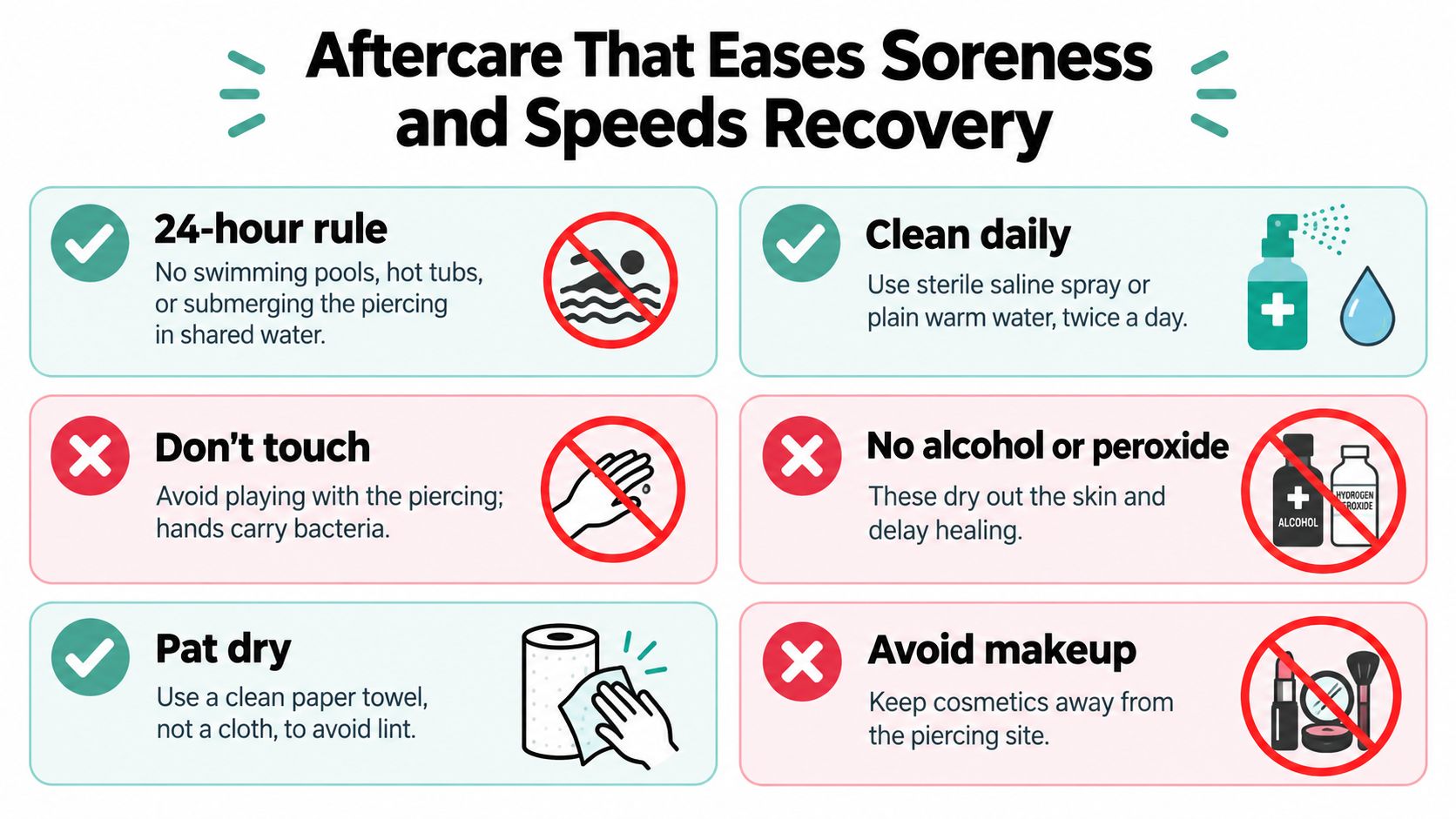
Keep shared water away from a fresh piercing at the start. Swimming pools, hot tubs, and similar environments add unnecessary exposure while the channel is open.
Hands matter too. Wash them before any contact. If there's no reason to touch the jewellery, leave it alone.
What to use and what to skip
A straightforward routine works best. Many clients use sterile saline spray. If you're comparing products and methods, this saline spray for piercing guide outlines the basics clearly.
Use a gentle routine:
- Clean carefully: Use sterile saline or a simple saltwater rinse as advised by a professional.
- Pat dry: Use clean, non-woven gauze or a disposable paper product rather than a towel that may snag.
- Protect the area: Keep makeup, retinoids, and strong skincare away from the piercing site.
- Leave the jewellery in place: Twisting it doesn't help healing. It usually just restarts irritation.
Avoid products that dry or aggravate the skin. Patient Info specifically says to avoid alcohol and hydrogen peroxide because they can irritate the area and slow recovery, as noted in the linked UK guidance above.
A simple routine you can actually follow
Morning:
- Rinse or spray: Clean the area gently.
- Dry without rubbing: Moisture left sitting around the jewellery can irritate skin.
- Check for snags: Make sure hair, clothing, and masks won't catch it.
Night:
- Clean again: Keep the routine consistent, not harsh.
- Sleep carefully: A travel pillow or a position that avoids pressure can help.
- Don't inspect endlessly: Looking is fine. Poking isn't.
Aftercare works because it reduces irritation. That's what shortens the sore phase.
What the Pain Question Is Really About
The question of whether a nose piercing hurts is only half the story. What they usually mean is, “Will this be manageable, and what could go wrong if I get it wrong?”
The puncture is brief. The risk sits in the healing period, especially when hygiene slips. A UK look-back exercise at a piercing premises with poor hygiene found that 36.3% of respondents reported a subsequent skin infection after piercing, including 28% of those under 16 and 38% of those aged 16 and over, and the same UK review also discusses an outbreak in England linked to contaminated aftercare solution in this public-health article on piercing-related infections.
Why aftercare deserves more attention than the needle
That data matters because it shifts the focus. The issue usually isn't that the nostril hurt for a second. The issue is whether the environment, jewellery, and aftercare support healing properly.
There's another useful UK signal here. A hospital-cost case involving nasal foreign bodies found that NHS hospitals in England spent almost £3 million a year removing nasal foreign bodies between 2010 and 2016, averaging 1,218 cases annually, according to this UK summary of nasal foreign body removals. That figure isn't about piercing pain itself, but it does show how often the nose can need medical attention when something goes wrong.
| Factor | Typical Pain Rating | Reported UK Complication Rate |
|---|---|---|
| Initial nostril puncture | Short, sharp pain commonly described around 4 to 6 out of 10 | Not the main long-term risk focus |
| Early healing soreness | Mild to moderate tenderness over the first few days | Problems rise when hygiene and aftercare slip |
| Poor hygiene or contaminated aftercare | Can become increasingly painful rather than settling | 36.3% in the Wales look-back exercise |
| Nose-related medical intervention | Varies by issue rather than by piercing pain | 1,218 nasal foreign body cases annually in the cited NHS hospital-cost case |
The better question to ask
Instead of asking only whether a nose piercing hurts, ask this: Can I look after it properly for months, not just cope with a few seconds?
That question gets you much closer to a good outcome.
Warning Signs That Soreness Has Become Infection
A healing piercing can look a bit dramatic at first. Slight redness close to the hole, mild crusting, and tenderness when knocked can still fit normal healing. What matters is the direction things are moving.
If pain is easing, that's reassuring. If pain is building, spreading, or getting hotter, that's different.
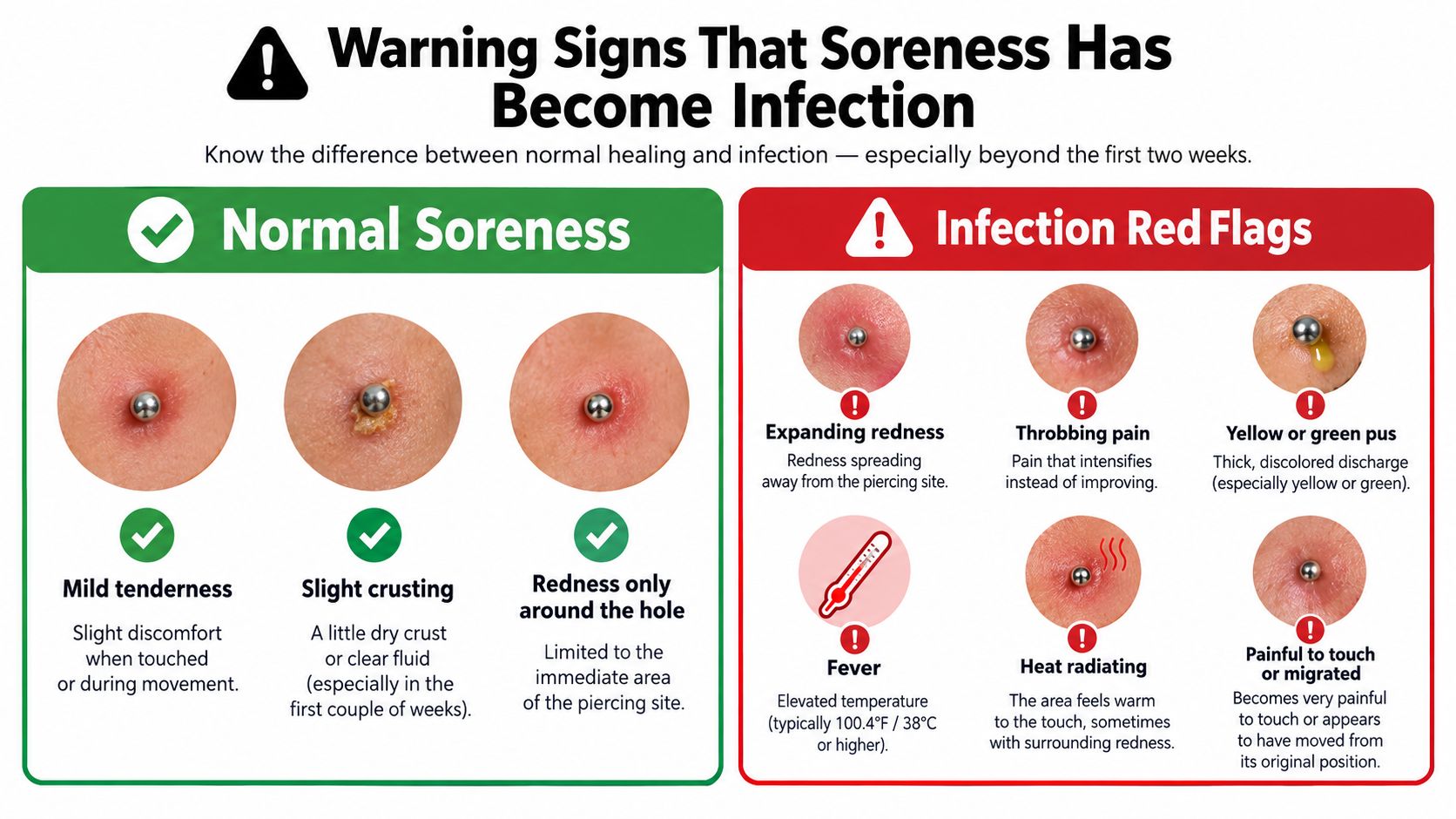
Red flags to take seriously
The NHS says infected piercings can be swollen, painful, hot, and very red or dark, and advises contacting a GP or NHS 111 if infection is suspected, as explained in NHS advice on infected piercings.
A practical UK benchmark also comes from Derby City Council, which recommends consulting a GP if redness, swelling, or pain does not improve within 24 hours in its cosmetic piercing guidance.
Watch for signs like these:
- Pain that worsens instead of settles
- Heat coming off the area
- Redness spreading away from the piercing
- Pus, ongoing bleeding, or a very angry bump
- Jewellery starting to feel embedded
If you're unsure what normal irritation looks like compared with infection, this guide on telling if a piercing is infected can help you compare symptoms more clearly.
Pain that rises rather than falls is the warning sign many people miss.
Who to contact and when
For jewellery fit, pressure, or snagging issues, contact your piercer first. For spreading redness, marked heat, or systemic symptoms, contact your GP. If it's out of hours or you're worried it's escalating quickly, contact NHS 111.
It also helps to take photos with timestamps. That gives the professional something concrete to assess instead of a vague memory from yesterday.
Walking Into the Studio Calm and Prepared
The best appointments usually start before you leave home. Preparation won't make the piercing vanish, but it can make the whole experience steadier and easier.
What to do before you arrive
A few basics make a difference:
- Sleep well the night before: Tired bodies tend to feel more reactive.
- Eat beforehand: A proper meal a couple of hours earlier helps prevent feeling light-headed.
- Skip alcohol: It's not a useful way to “relax” for a piercing.
- Arrive with clean skin: Leave makeup, nasal creams, and heavy skincare away from the nostril area.
- Wear practical clothing: A top that doesn't scrape over your face after the appointment is easier.
Bring photo ID if needed, and mention any medication or health issue the piercer should know about. If your skin is sensitive, ask about suitable starter jewellery such as implant-grade titanium.
Questions worth asking in the studio
Don't try to sound experienced if you're not. A good piercer expects questions.
Ask things like:
- Can you talk me through each step before you start?
- What jewellery shape are you using for initial healing?
- What aftercare do you want me to follow at home?
- When should I come back if it feels irritated?
One last thing nervous clients forget
Book your support, not just your piercing. Ask whether the studio offers a follow-up check. That matters because healing rarely raises all its questions on day one.
If you'd rather talk it through before booking, you can ring 01202 9000 50 or message 07752913846 on WhatsApp and ask the practical questions first. That sort of conversation often settles nerves better than reading ten conflicting forum posts.
If you want help finding a safe, professional studio and understanding what a nose piercing really feels like before you commit, Piercing Near Me offers UK-focused guidance on placement, pain, healing, and aftercare. It's a practical starting point if you want to book with clearer expectations, ask the right questions, and walk in feeling prepared rather than panicked.