
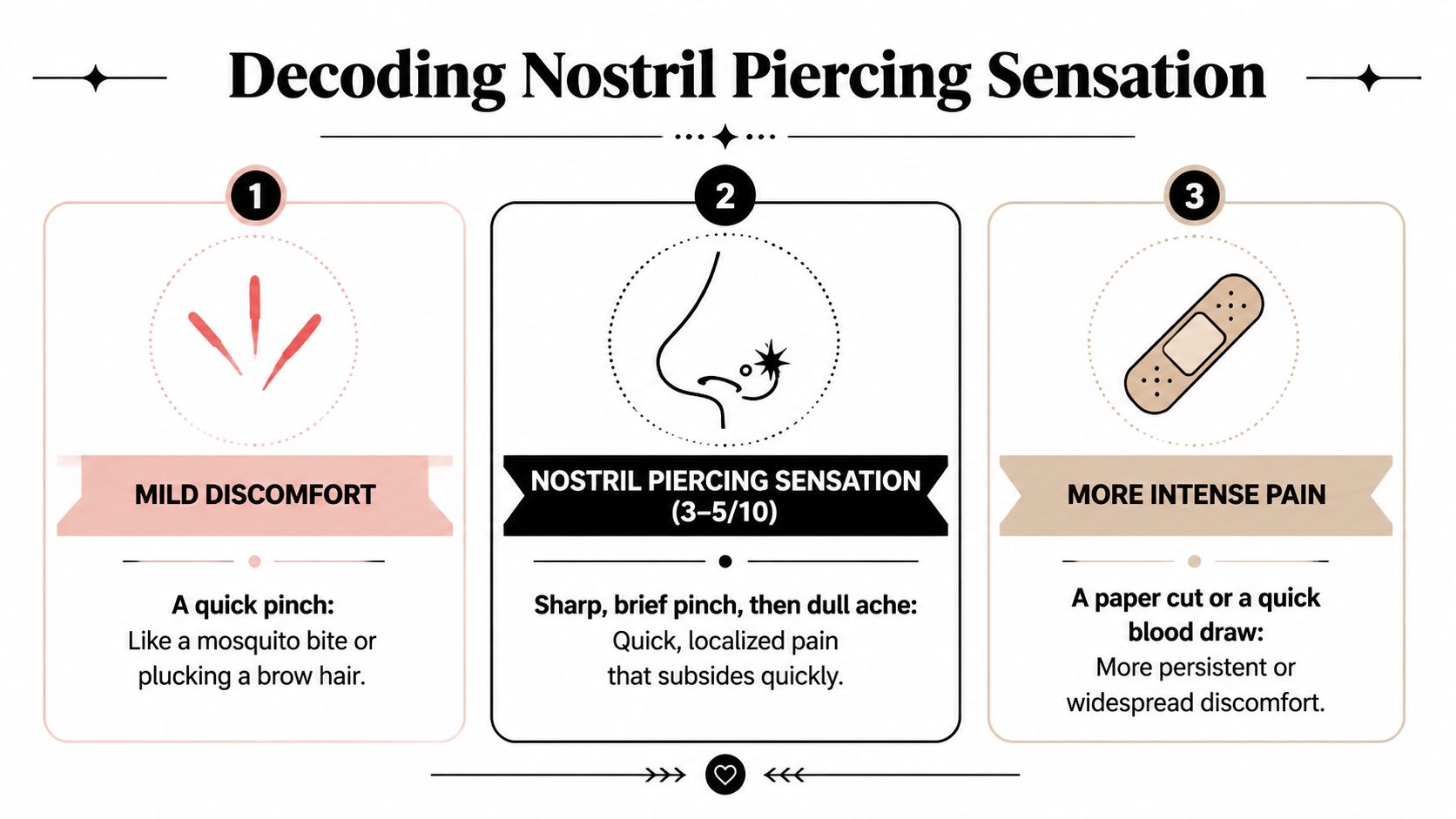
A nostril piercing is typically rated 3 to 5 out of 10 for pain. The sensation is often described as a quick, sharp pinch that's over in seconds, followed by a dull ache or tenderness rather than ongoing sharp pain.
If you're reading this with one browser tab open to jewellery options and another open to “does a nose piercing hurt?”, you're in the same place most first-time clients start. You want the look, you want it done properly, and you want an honest answer instead of vague reassurance.
The honest answer is that nostril piercing pain is generally manageable, but the part that shapes your experience most isn't bravery. It's who performs it, how they perform it, and whether the setup is professional from the first marker dot to the aftercare advice you take home.
Considering a Nostril Piercing
You've probably had this moment already. One tab open with jewellery styles, one hand touching the side of your nose, and one question running in the background: can I handle this?
That uncertainty usually settles during the consultation, not during the piercing. A professional piercer checks your anatomy, explains placement, answers the pain question plainly, and tells you whether your routine will support healing. That conversation is often the point where anxiety turns into confidence, because you stop guessing and start making an informed choice.
For clients weighing up nose options, a nostril piercing is usually the less intense choice than a septum. If you're comparing the two, this guide to septum piercing pain levels gives useful context. The bigger difference in real life, though, often comes from who does the piercing. Good technique makes the procedure quick, controlled, and easier to tolerate. Poor technique can make even a simple piercing feel more stressful than it needs to.
What nervous clients usually get wrong
First-time clients often put all their focus on the needle. I pay just as much attention to what happens before and after it.
A strong appointment starts with basics that directly affect comfort. Correct marking matters. Jewellery choice matters. Needle technique matters. Placement that suits your nose matters. If the angle is off or the jewellery is unsuitable, you can end up with extra swelling, pressure, snagging, or a piercing that never quite settles.
Healing is where that decision keeps paying off. A skilled piercer gives realistic aftercare, uses appropriate jewellery, and sets you up for a calmer recovery instead of a cycle of irritation. Daily mistakes still happen. Towels catch. Makeup gets too close. People sleep on the fresh side. But a well-placed piercing done under clean, professional conditions starts with a much better chance of healing smoothly.
Choose the piercer first. The rest gets easier.
Decoding the Sensation of a Nostril Piercing
You're in the chair, the mark is checked, and the nerves usually peak right before the needle does. What helps most at that moment is knowing the sensation is brief, predictable, and heavily shaped by the person performing the piercing.
During the needle pass
A nostril piercing usually feels like a quick, sharp pinch followed by a sting that fades fast. Clients often expect a drawn-out painful moment, but a well-executed nostril piercing tends to peak quickly and settle just as quickly. If you're comparing nose piercings, this guide to septum piercing pain levels gives helpful context on why the nostril often feels easier for first-time clients.
The biggest difference in the chair is technique. With calm marking, good support of the tissue, and one clean needle pass, the sensation stays brief and controlled. If the appointment feels rushed or the placement is awkward for your anatomy, discomfort often feels stronger than the piercing itself should.
A few reactions catch people off guard, even when everything is going normally:
- Eyes watering: a normal reflex linked to the area being pierced
- A short hot sting: common for a moment right after the needle pass
- Pressure during jewellery insertion: noticeable, sometimes odd, usually brief
After the piercing is in
Once the jewellery is fitted, the feeling changes from sharp to tender. Clients often describe it as sore, warm, or more noticeable when they smile, wipe their nose, or bump the area by accident.
That tenderness makes sense. Freshly pierced tissue reacts quickly, and the nose is an area you use and touch more than you realise. The piercing itself is over in seconds. The soreness afterward is what tends to linger through the rest of the day.
Your eyes may water, you may flinch, and a few seconds later you may still say, “That was quicker than I expected.”
What tends to feel worse than the piercing itself
Anticipation can amplify the whole experience. Clients who come in holding their breath, tensing their shoulders, or bracing for something dramatic usually feel more overwhelmed, even when the piercing goes smoothly.
A steady professional changes that. Clear instructions, accurate placement, suitable jewellery, and confident needle work reduce unnecessary stress before the needle ever touches your skin. That is one reason I tell nervous first-timers to put more effort into choosing the piercer than worrying about a pain score. Good technique does not just make the appointment easier to tolerate. It also sets up a calmer start to healing, which matters far more than the split second of the piercing.
Key Factors That Shape Your Pain Experience
A nervous client can walk into a studio expecting the worst and walk out saying, “That was much easier than I built it up to be.” The difference is often the piercer.
Nostril piercing pain is not a fixed score. Personal pain tolerance matters, but the quality of the appointment matters more than many first-timers realise. Good technique reduces drag through the tissue, keeps placement accurate, limits fumbling during jewellery insertion, and gives the piercing a calmer start.
The factor you can control most
You cannot change your nervous system on the day. You can choose who handles your nose.
An experienced piercer checks whether your anatomy suits the placement you want, marks carefully, selects jewellery with room for early swelling, and uses a sterile single-use needle with a steady hand. That usually means a quicker procedure, less tissue irritation, and fewer problems caused by poor placement or jewellery that does not fit well.
Cheap work often costs you later. A low price can mean rushed prep, weak angle control, awkward jewellery changes, or placement that catches every time you dry your face. Those mistakes do not just affect healing. They can make the piercing feel sharper, more stressful, and more sore in the hours that follow.
| Choice | What it tends to feel like | Why it matters |
|---|---|---|
| Professional needle piercing | Controlled, quick, easier to stay calm through | Precise placement, cleaner tissue handling, better start to healing |
| Rushed or poorly trained service | More tense, less predictable, often more irritating afterward | Extra trauma, poor fit, and uneven placement can increase discomfort |
Technique changes the experience
Clients often ask whether nostril piercings "just hurt a lot." My practical answer is that poor technique hurts more.
The nose gives very little room for sloppy work. If the angle is off, if the jewellery is forced through, or if the piercer hesitates mid-procedure, you feel it. By contrast, a skilled piercer keeps the process efficient and controlled from marking to insertion. That is why choosing the studio is the biggest pain-management decision you make before the appointment.
Small details that make a big difference
Several factors shape how the piercing feels after the initial pinch:
- Placement: Good placement sits naturally on your anatomy and is less likely to catch during daily life.
- Jewellery fit: Starter jewellery should allow for swelling without sticking out so far that it snags.
- Your stress level: Tension, shallow breathing, and bracing can make the whole process feel stronger than it is.
- Clear guidance: Clients who know how to clean it and what to avoid usually irritate the piercing less in the first weeks.
Healing comfort starts here too. If you want a realistic idea of what happens after the appointment, this guide to nostril piercing healing time and recovery stages explains what is normal and what tends to make a fresh piercing angrier than it needs to be.
A good piercer does more than create the opening. They lower avoidable pain before the needle pass, reduce stress during the procedure, and set you up for an easier healing period. That is what turns anxiety into confidence.
Navigating Your Healing Timeline and Aftercare
The piercing itself is quick. Healing asks for patience.
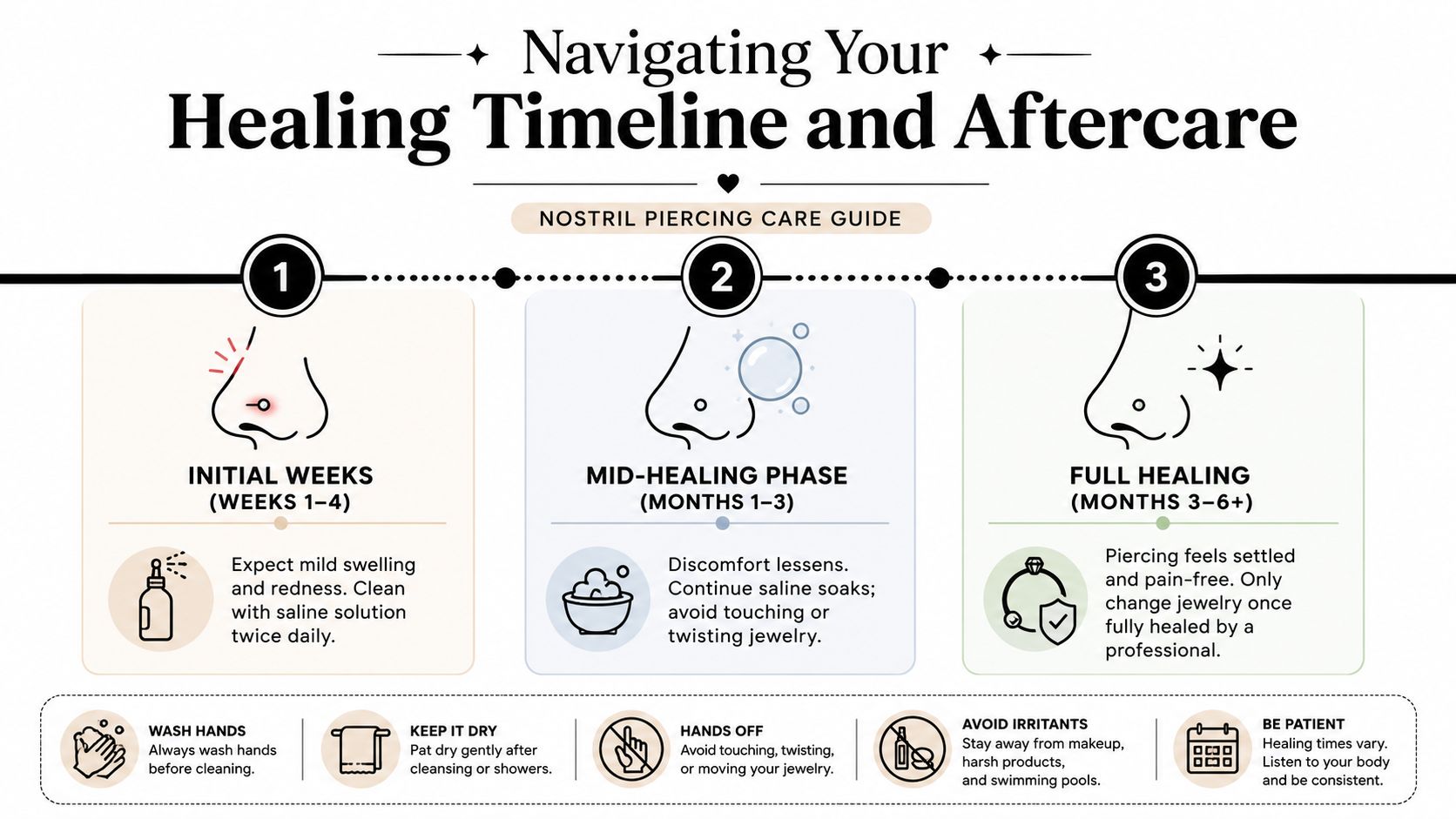
UK-specific aftercare guidance from professional studio and health-facing sources agrees on the key point: a nostril piercing is usually a very short nociceptive event, often described as a quick pinch or flick lasting only seconds, while the main symptom burden shifts to local soreness and swelling during healing. That same guidance stresses that managing discomfort is mostly about reducing mechanical irritation, using saline-based cleaning, and avoiding trauma from sleep, clothing, makeup, and touching, as outlined in this guide to nostril piercing pain, aftercare, and jewellery options.
The first part of healing
The early stage is when clients are most aware of the piercing. It may feel warm, slightly puffy, or tender when you wash your face, dry off, or pull clothing over your head.
That doesn't mean something is wrong. It means the area is fresh and reactive.
What helps most in this stage:
- Use saline gently: Clean the area with a saline-based product rather than scrubbing.
- Keep hands off: Touching, twisting, and checking it in the mirror tends to restart irritation.
- Watch how you sleep: Pressure on a fresh nostril piercing often causes next-day soreness.
- Be careful with face products: Makeup, cleansers, and creams can all annoy the site if they migrate onto it.
The middle phase
People tend to get overconfident. The piercing feels calmer, so they assume it's settled.
It often isn't. The outside can look fine while the inside is still delicate. This is when avoidable problems happen. People snag it with a towel, switch jewellery too soon, or over-clean because they see a little crust and panic.
A steadier approach works better than an aggressive one.
Aftercare reality: Most nostril piercing pain during healing comes from irritation, not from the original puncture.
If you want a more detailed breakdown of what settling-in can look like, this guide to nostril piercing healing time is useful.
What works and what doesn't
A lot of bad aftercare comes from trying to do too much. Fresh piercings don't usually need elaborate routines. They need consistency and restraint.
| Works well | Usually causes trouble |
|---|---|
| Gentle saline cleaning | Harsh scrubbing |
| Leaving jewellery alone | Twisting or rotating jewellery |
| Avoiding knocks and pressure | Sleeping directly on the site |
| Keeping products away from it | Letting makeup or skincare sit on the piercing |
The long view
Healing isn't linear. A nostril piercing can feel calm for a while, then get sore after one accidental bump. That's frustrating, but it's common.
The better mindset is to treat the area as healing until it's clearly settled, not just until it stops reminding you it exists. Clients who do well usually keep their routine simple, don't change jewellery on a whim, and ask their piercer before making changes.
Identifying Piercing Problems and When to Act
Most healing symptoms look more dramatic than they are. A little redness around the entry point, some tenderness, and dried discharge around the jewellery can all happen during normal healing.
The problem starts when people confuse normal irritation with a serious issue, or dismiss a clear red flag because they assume “all piercings do that”.
What's usually normal
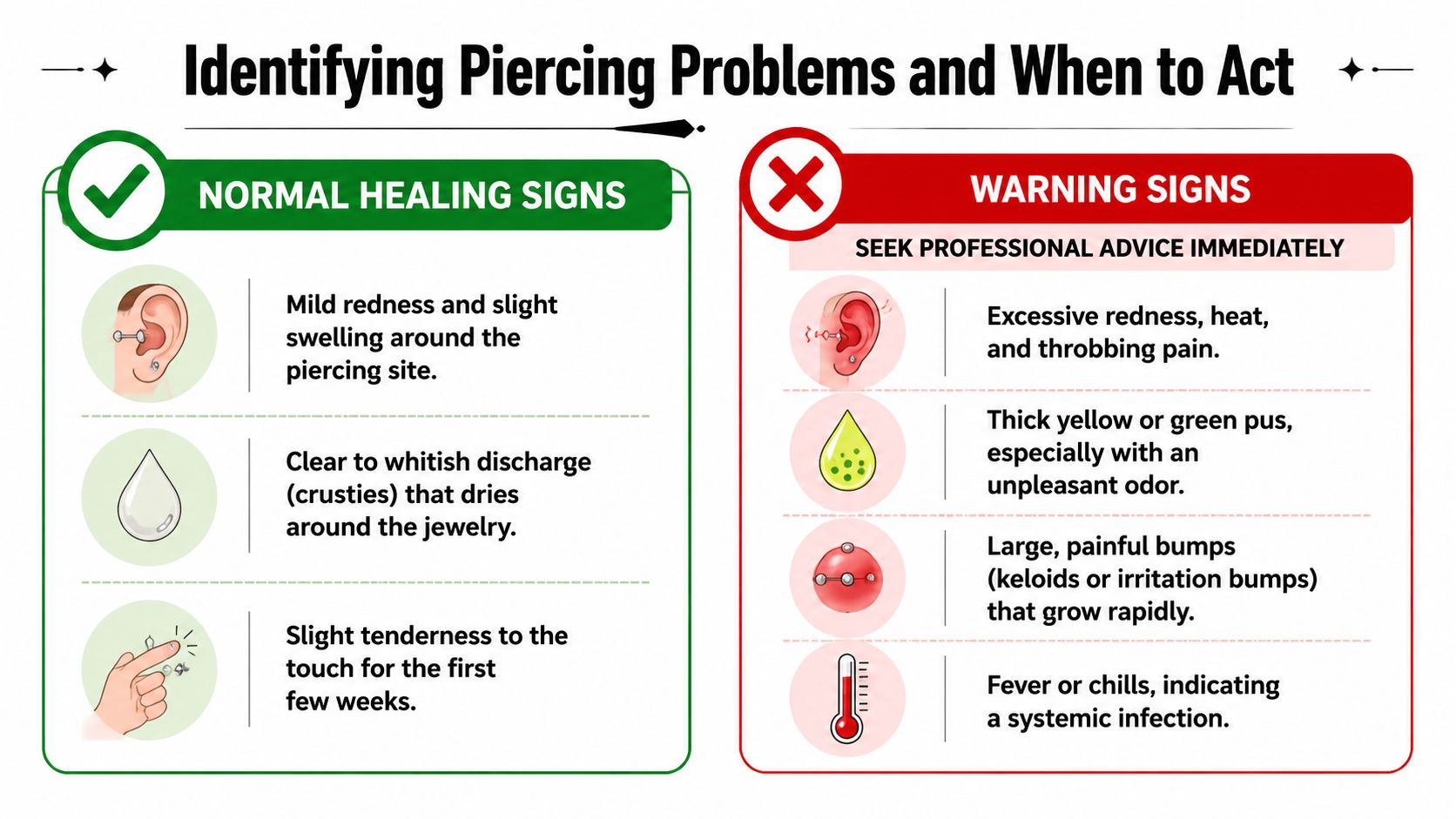
A fresh nostril piercing can show ordinary healing signs without being infected.
- Mild redness: A small halo of colour close to the site can happen early on.
- Slight swelling: The jewellery may feel a bit more noticeable while the tissue settles.
- Light tenderness: Being careful around the area is normal for a while.
- Clear or whitish crust: Dried discharge around the piercing often appears during healing.
What needs closer attention
Some changes deserve professional advice quickly.
| More likely to be normal | More concerning |
|---|---|
| Local tenderness | Increasing heat and throbbing pain |
| Small amount of crust | Thick yellow or green pus |
| Minor swelling near the site | Redness that spreads or looks aggressive |
| Occasional irritation after a bump | Fever, chills, or feeling unwell |
A rapidly growing painful bump, heavy swelling, or discharge that looks and smells unpleasant shouldn't be brushed off. Severe or escalating pain also matters. Fresh piercings can be sore, but they shouldn't keep worsening without a reason.
If the area looks angrier each day instead of calmer over time, contact your piercer and seek medical advice when symptoms are severe or systemic.
What to do first
Start with the simplest question. Has the piercing been knocked, slept on, over-cleaned, or exposed to makeup or face products? If yes, irritation may be the cause.
Even so, don't self-diagnose for too long. Contact your piercer for an assessment. If you have strong heat, obvious pus, or signs that go beyond the piercing site, speak to a medical professional promptly.
The right response is calm and practical. Don't remove jewellery on impulse, don't squeeze bumps, and don't throw random products at it.
The Professional Promise for a Safer Piercing
The simplest way to reduce nostril piercing pain and improve healing is to choose a professional studio from the start. That affects everything. The marking, the placement, the sterile setup, the jewellery choice, and the quality of the aftercare advice all come from that one decision.
Professional standards aren't decoration. They are the difference between a controlled procedure and a stressful one. You want single-use sterile needles, accurate placement, and implant-grade jewellery that gives your piercing the best chance to settle cleanly. You also want a piercer who explains what's happening and what to do if healing becomes uneven.
That's why cheap shortcuts rarely stay cheap. A poor piercing can cost you comfort, time, and confidence. A professional appointment usually feels calmer because it is calmer. The process is organised, hygienic, and built around reducing avoidable trauma.
If you're still deciding where to book, this guide on piercing gun versus needle is worth reading before you commit.
If you'd like advice before booking, call 01202 900050 (Bournemouth) / 020 8686 7730 (Croydon) or message 07752 913846 (Bournemouth) / 07902 490584 (Croydon) on WhatsApp. A good studio won't rush you. They'll answer the question you care about, which is whether your piercing will be done safely, placed properly, and supported during healing.
If you're ready to book with confidence, Piercing Near Me helps you find safe, professional piercing services with experienced piercers, sterile single-use needles, quality jewellery, and clear aftercare support. Whether you're in Bournemouth, Croydon, or nearby, you can explore trusted studios and take the next step without guesswork.
Trackbacks/Pingbacks