
You might be looking at your baby now, wondering whether ear piercing is a lovely family tradition, a style choice you've always planned, or something you're still unsure about. Most parents who ask about baby ear piercing aren't being casual about it. They're trying to balance culture, timing, comfort, safety, and the simple question of whether now is the right moment.
That's a good instinct.
Ear piercing for babies sits in that space where personal choice meets practical responsibility. In the UK, it has long been treated less as a strict legal-age issue and more as a decision parents make carefully, with attention to hygiene, risk, and proper aftercare. Ear piercing is common, and the earlobe is the most frequently pierced site, which helps explain why many families see it as normal and meaningful rather than unusual or extreme, as noted in this medical overview on when to pierce a child's ears.
What matters most is how the piercing is done, what jewellery is used, and whether the adults involved are equipped to care for it properly afterwards.
Considering a Piercing for Your Baby
A lot of parents arrive at this decision after weeks or months of thinking about it. One parent wants to honour a family tradition. Another likes the idea aesthetically but worries about pain. Someone else has read five different articles online and ended up more confused than when they started.
That confusion is understandable because baby ear piercing advice is often mixed. One studio says they'll pierce very young babies. Another says wait. A shopping centre kiosk makes it sound simple. A medical article focuses on infection. None of that helps much unless someone puts the trade-offs in plain English.
What parents are usually weighing up
For most families, the decision comes down to a few very practical questions:
- Safety first: Is my baby old enough to heal well, and what are the risks?
- Technique: Should this be done with a needle or a gun?
- Studio standards: Who is qualified to do this properly?
- Aftercare reality: Can I stay consistent with cleaning and monitoring every day?
Baby ear piercing should never be treated like a quick errand. It's a minor procedure, and it should be approached with the same care you'd expect from any service involving skin, blood, and a healing wound.
What works and what doesn't
What works is calm decision-making, a sterile environment, implant-grade jewellery, and a parent who's ready to supervise the healing process.
What doesn't work is choosing the closest place because it's convenient, accepting vague reassurance instead of clear safety standards, or assuming babies heal well no matter how the piercing is done.
Parents don't need pressure. They need straight answers. If you choose to pierce your baby's ears, the goal isn't just getting jewellery in place. The goal is a well-positioned lobe piercing that heals cleanly, with as little trauma and distress as possible.
Deciding the Right Time for Piercing
The “when” matters more than many people realise. This isn't only about whether a baby looks tiny in earrings. It's about whether their body is at a sensible stage to cope with healing and to handle infection risk better if something goes wrong.
Why many professionals advise waiting
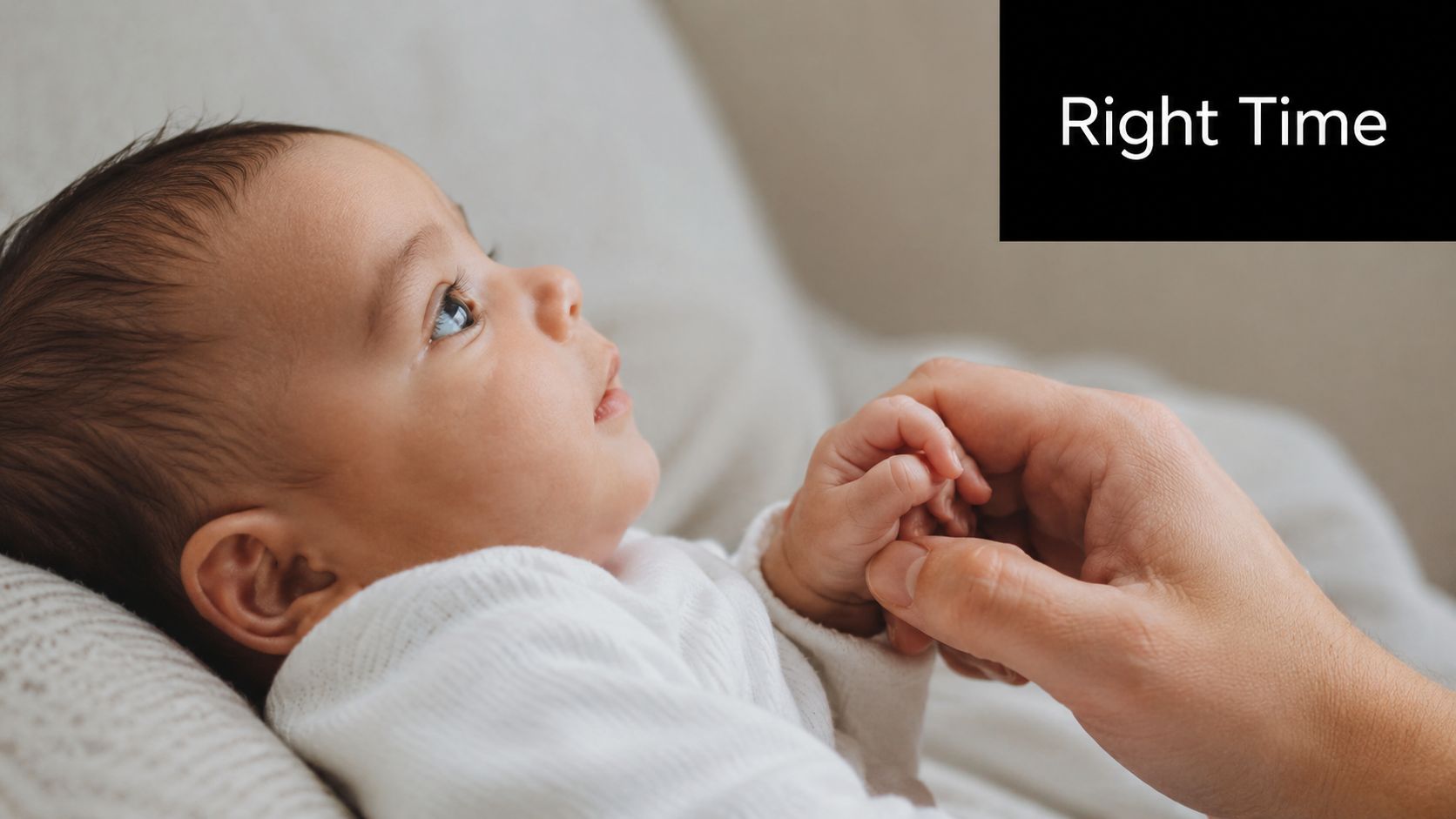
UK-relevant medical guidance points to a useful developmental milestone. Many clinicians recommend waiting until at least 3 months old, while some providers accept babies from 2 months if they've had their first DTaP vaccination, because infections in younger newborns can be more serious and by around 3 months a baby's immune system is stronger, according to this guidance on the best age for ear piercing and the underlying medical discussion published by The Bump.
That doesn't mean every baby should be pierced the moment they reach that point. It means there's a clearer health-based reason for waiting beyond “because someone said so”.
The practical way to think about timing
A good decision usually includes these checks:
General health
Your baby should be well on the day. If they're unwell, unsettled, fighting an infection, or dealing with skin irritation around the ears, reschedule.Vaccination milestone
Some parents choose to wait until after early vaccinations because that lines up with the medical reasoning above. It's a sensible benchmark.Ear development
Tiny lobes can be pierced safely by an experienced practitioner, but placement needs to account for growth, angle, and future symmetry. Poor placement on a very small lobe becomes more obvious as a child grows.Your readiness for aftercare
This is the part people underestimate. If you're exhausted, overwhelmed, or not confident you'll check the jewellery regularly, waiting may be the smarter choice.
Timing is not a race
There's no prize for doing it early.
Some parents prefer baby ear piercing before the child can tug at jewellery or object to the process. Others choose to wait until the child is older and can participate in aftercare. The evidence gap here matters. A lot of claims about babies healing better are anecdotal, and younger does not automatically mean safer if the setting is poor or aftercare slips.
Practical rule: choose the age that gives your baby the safest conditions, not the age that feels most convenient for the adults.
If you're undecided, speak to your GP or health visitor if your baby has any health issues, a history of skin sensitivity, or if you want reassurance before booking. A careful delay is always better than a rushed appointment.
How to Choose a Safe Piercing Studio
The safest studio for baby ear piercing is not the one with the brightest display, the cheapest offer, or the fastest walk-in queue. It's the one with standards you can see, explain, and verify.
Needle first, always
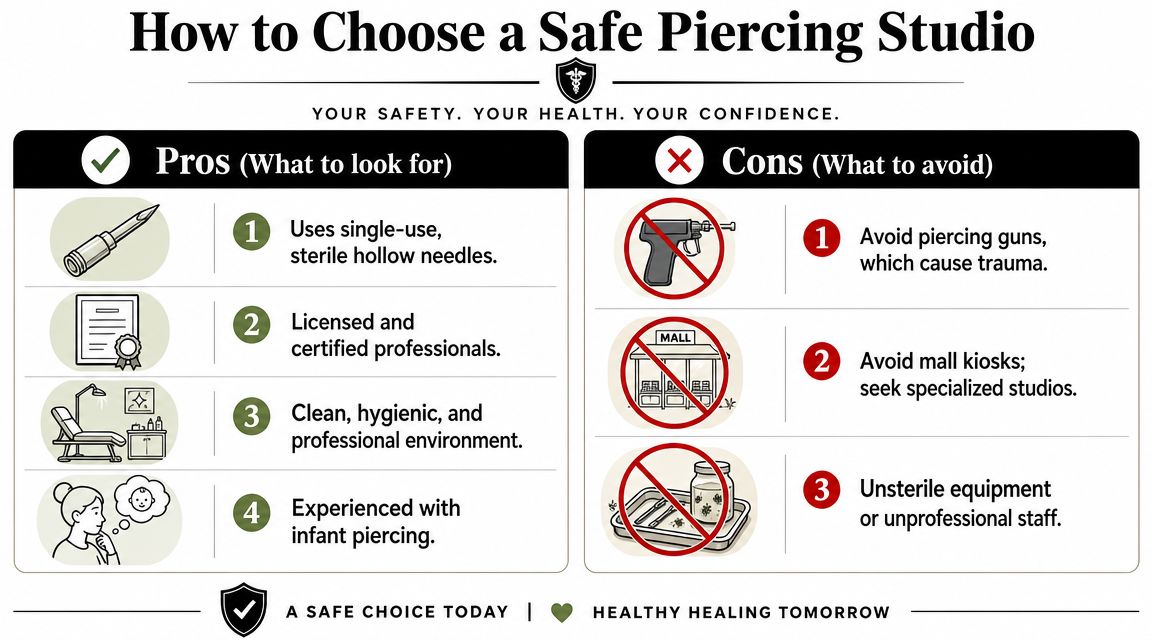
The best procedural standard for infant lobe piercing is a sterile, single-use, needle-based piercing. Professional providers describe a process that includes disinfecting the skin, using a new hollow needle for each ear, and inserting pre-packaged sterile hypoallergenic jewellery immediately after. This gives better precision and causes less tissue trauma than a piercing gun, as outlined by this professional guide to professional ear piercing near me and the procedural reference from Medical Piercing Canada.
No guns for baby ear piercing. They rely on force rather than a clean surgical cut, and they're the wrong tool for small, delicate lobes.
A hollow needle removes a tiny channel of tissue cleanly. A gun drives blunt jewellery through the ear. That difference matters.
What a good studio should be able to show you
Parents should expect clear answers, not vague reassurances. A reputable studio should be comfortable explaining its process in detail.
Look for these signs:
- Single-use sterile equipment: Needles should be opened in front of you and used once.
- Appropriate jewellery: Starter jewellery should be sterile, correctly sized, and made from a suitable hypoallergenic material such as implant-grade jewellery.
- A proper treatment area: Clean, organised, clinical in method, and clearly separated from casual retail clutter.
- Calm communication: The piercer should explain positioning, holding technique, expected crying, aftercare, and warning signs without rushing you.
- Experience with infant lobes: Piercing a baby's ears isn't the same as piercing an adult's second lobe. The anatomy is smaller, movement is less predictable, and jewellery choice matters more.
What to avoid without compromise
Some red flags are immediate reasons to leave:
| Warning sign | Why it matters |
|---|---|
| Piercing guns | More tissue trauma and poorer precision |
| Reassurance without process | If they can't explain sterility, they probably don't have a robust system |
| Poor jewellery choices | Bulky butterfly backs and unsuitable materials increase problems |
| Retail kiosk setting | Convenience rarely equals best practice for infants |
| Rushed marking | Placement errors are much harder to fix later |
Jewellery matters as much as the piercing
Parents often focus on the needle and forget the jewellery, but poor starter jewellery causes many avoidable issues. For babies, the goal is secure, smooth, appropriately fitted jewellery with enough room for normal swelling and no design features that catch on clothing.
A flat-back style is often easier to manage than jewellery with awkward sharp edges or decorative protrusions. What you want is stability, not sparkle at all costs.
If a studio talks more about how cute the earrings look than how the jewellery heals, that's a problem.
A professional studio should also be honest about what it won't do. Refusing poor placement, declining unsuitable jewellery requests, or asking you to wait if your baby is too young or unwell are all signs of good judgement, not poor service.
Your Baby's Piercing Appointment What to Expect
Most parents feel calmer once they know exactly how the appointment should run. A well-handled baby ear piercing appointment is orderly, quick, and focused.
Before the piercing starts
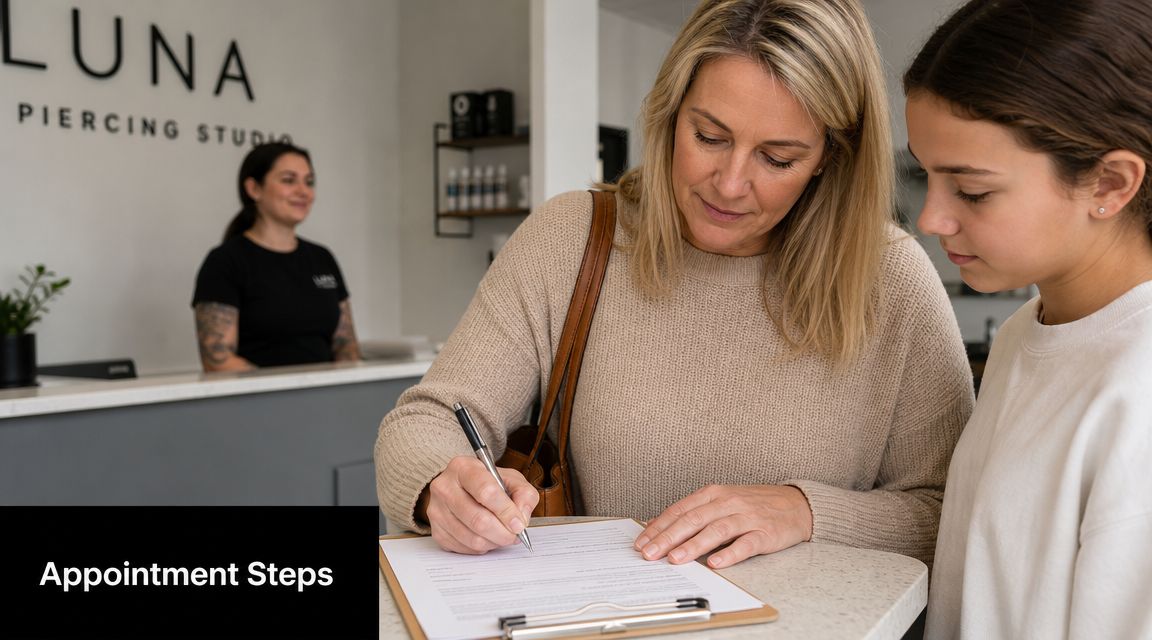
You'll normally begin with consent and identification checks. For infant piercings, the parent or legal guardian should be present, and the studio may ask for proof of identity and details for the child.
The piercer should then talk through jewellery choice, positioning, and aftercare. If that conversation feels rushed, that's useful information. Good practitioners don't skip the briefing because they know the healing starts with informed consent, not with the needle.
The marking stage is one of the most important parts
The lobes should be marked carefully before anything else happens. During this process, symmetry is assessed, taking into account the baby's natural anatomy, head position, and the fact that no pair of ears is perfectly identical.
A parent should be shown the marks and invited to approve them. This matters. Once the piercing is done, correcting poor placement means removing jewellery, allowing the ear to heal, and starting over later.
During the piercing itself
For babies, the appointment is often set up to make the process as fast and controlled as possible. In some professional settings, two piercers work together so both ears can be pierced at the same time. That can reduce movement and shorten the stressful part of the appointment.
A typical sequence looks like this:
- Positioning: Your baby is held securely and safely.
- Final skin prep: The lobes are cleaned again just before piercing.
- Needle piercing: Each ear is pierced with its own sterile single-use needle.
- Jewellery insertion: Sterile starter jewellery is fitted immediately.
- Visual check: The piercer checks alignment, backing security, and tissue response.
Most babies cry. That's normal. Usually the upset is brief and linked to restraint and surprise as much as the piercing itself.
A calm appointment doesn't mean no tears. It means the team works efficiently, handles your baby gently, and doesn't create extra trauma through poor technique or hesitation.
Before you leave
You should leave with clear aftercare instructions and a way to contact the studio if you're worried about swelling, jewellery position, or signs of irritation. If aftercare advice is vague, verbal only, or full of old myths, that's not a small issue. It usually reflects the overall standard of care.
Essential Aftercare and Healing Guide
Aftercare is where a tidy piercing stays tidy or starts to go wrong. Most complications in baby ear piercing don't come from the few seconds of the procedure itself. They show up later through touching, snagging, pressure, poor cleaning habits, or jewellery that isn't suitable.
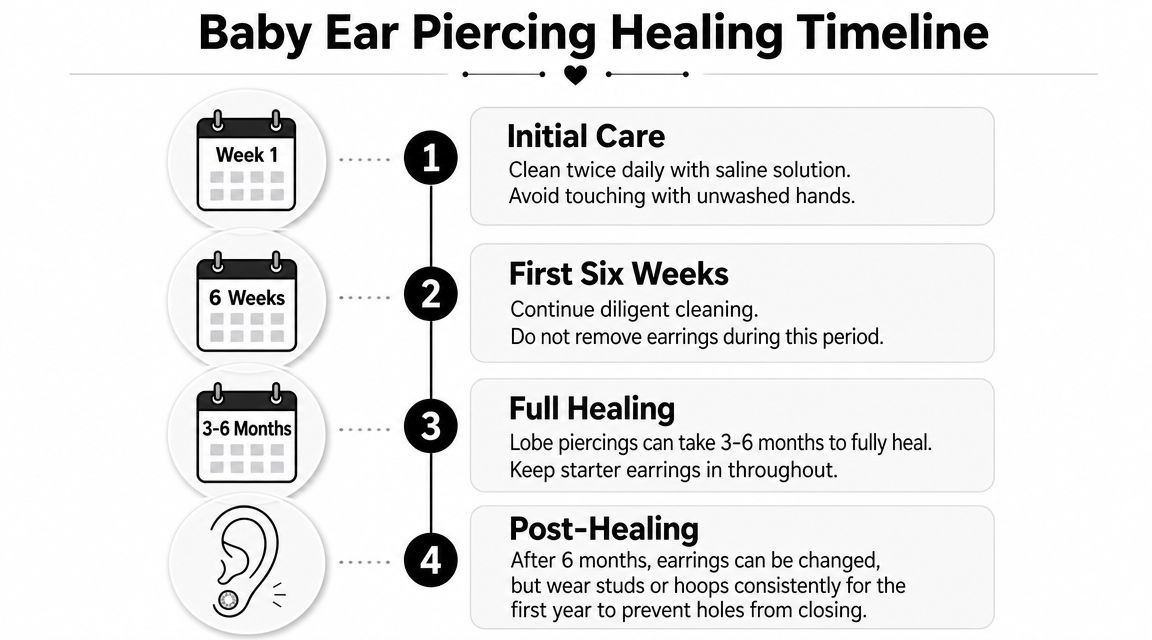
A clinical review of paediatric piercing complications noted that embedded earrings were a factor in 79% of complications in children, which is why regular checks, proper starter jewellery, and careful monitoring matter so much, as discussed in this review of after ear piercing care and the underlying clinical literature on paediatric ear-piercing complications.
The routine that usually works best
Keep it simple. Over-cleaning and home remedies create problems.
- Clean gently with sterile saline: Use a sterile saline solution to soften and remove any dried discharge around the piercing.
- Wash your hands first: If you need to touch the area, clean your hands before you do.
- Leave the jewellery alone: Don't twist, turn, or “work” the earring through the channel.
- Watch for pressure points: Check that the front and back of the jewellery aren't pressing into swollen tissue.
- Protect the area: Be careful with sleepsuits, towels, muslins, and clothing changes.
What's normal and what isn't
A fresh lobe piercing can show mild redness, slight tenderness, and small amounts of dried discharge. That alone doesn't mean infection.
Be more alert if you notice:
- Spreading redness
- Increasing swelling rather than gradual settling
- Heat at the site
- Thick yellow or green discharge
- Jewellery starting to sink into the lobe
- Your baby seeming unusually distressed when the area is touched
- Any fever or general unwellness
If jewellery looks embedded or the ear appears to be swallowing the backing, get professional advice promptly. Don't force jewellery in or out at home.
Healing advice: gentle cleaning and close observation beat aggressive cleaning every time.
Baby Piercing Aftercare Timeline
| Time Period | What to Expect | Aftercare Action |
|---|---|---|
| First days | Mild redness, tenderness, brief crying when touched | Clean with sterile saline, keep hands off unless necessary |
| First six weeks | Gradual settling, occasional crusting | Continue consistent cleaning, keep starter jewellery in place |
| Three to six months | Ongoing internal healing even if the outside looks settled | Keep monitoring fit, avoid changing jewellery early |
| After full healing | More stable piercing channel | Change jewellery only if healing is complete and the new jewellery is appropriate |
What causes preventable problems
The most common mistakes are familiar:
Changing jewellery too soon
The outside can look healed while the inside is still fragile.Using the wrong products
Alcohol, peroxide, tea tree oil, thick creams, and ointments often irritate healing tissue.Ignoring fit
A backing that's too tight can create pressure and increase the risk of embedding.Choosing style over function
Dangly earrings and decorative shapes are a poor choice for a fresh baby lobe piercing.
A realistic healing mindset
Healing isn't linear. One side may look calmer than the other. A good week can be followed by irritation after snagging on clothing or pressure during sleep.
What matters is trend, not perfection. You want the piercing to become less reactive over time, not more. If something seems off, get it checked early. Parents often wait too long because they don't want to overreact. With infant piercings, early review is usually the better call.
UK Consent Laws and Booking Your Appointment
In the UK, baby ear piercing is generally handled through parental choice and informed consent, not a single nationwide minimum age rule. In practice, reputable studios set their own policies, require the parent or legal guardian to attend, and ask for consent before the piercing goes ahead, as explained in this overview of children's earlobe piercing policies.
That means the question usually isn't just “is it legal?” It's “what is this studio's minimum age, what documents do they require, and are they equipped to do it safely?”
What to bring to the appointment
A well-run booking process usually includes:
- Parent or guardian attendance: The adult giving consent should be present for the full appointment.
- Identification: Bring photo ID for yourself, and any documents the studio requests for your child.
- Health information: Tell the studio about skin sensitivities, recent illness, or anything relevant before the day.
- Time and patience: Don't squeeze the appointment into a frantic afternoon. Baby piercings go better when everyone is calm.
Quick answers parents still ask
Will it hurt?
Yes, briefly. The piercing itself is quick, and most babies settle soon after with cuddling, feeding, or soothing.
When can I change the jewellery?
Not until the lobe is fully healed. Fresh piercings need time and stability, and changing too early is one of the easiest ways to trigger irritation.
Do babies heal better than older children?
Not automatically. Good outcomes depend far more on proper technique, suitable jewellery, and consistent aftercare than age alone.
Can I book just because a studio says yes?
Only if their standards are right. A willingness to pierce infants is not the same thing as doing it well.
For bookings and questions about baby ear piercing at Timebomb Tattoo & Piercing in Croydon and Bournemouth, call 01202 900050 (Bournemouth) / 020 8686 7730 (Croydon) or message 07752 913846 (Bournemouth) / 07902 490584 (Croydon) on WhatsApp.
If you're looking for a trusted place to start, Piercing Near Me helps parents find safe, professional piercing services with clear studio information, proper hygiene standards, and straightforward booking options for Croydon and Bournemouth. If you'd like advice before committing, it's a practical first step.