
A curated ear can look effortless, but the result depends on decisions made before the needle touches skin. Placement, spacing, jewellery scale and healing order determine whether several piercings read as balanced styling or a crowded collection. In England, a 2008 survey found that about one in 10 adults had a piercing somewhere other than the earlobe, confirming that cartilage placement was already established in the UK rather than being a passing fashion UK body-piercing survey.
The seven curated ear piercings looks below move from discreet lobe-and-helix styling to expressive multi-cartilage arrangements. Each one pairs a visual personality with jewellery guidance, anatomy considerations and a realistic approach to healing. Before choosing a stack, book an in-person assessment for your ear shape, existing piercings and lifestyle, then discuss implant-grade jewellery and personalised aftercare through Piercing Near Me, serving Timebomb Tattoo & Piercing in Croydon and Bournemouth.
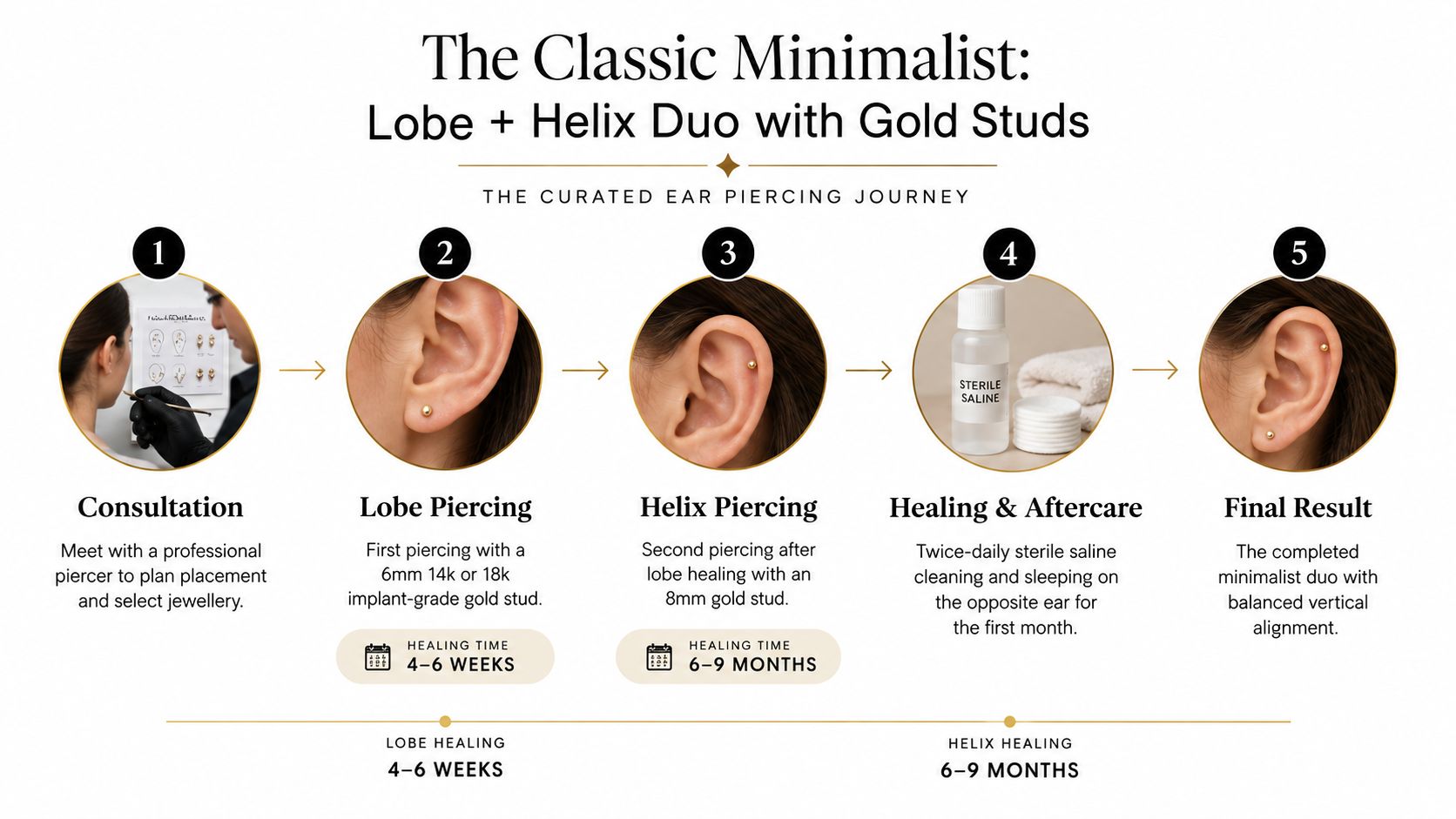
1. The Classic Minimalist With Gold Studs
A single lobe and one helix create one of the most adaptable curated ear piercings combinations. The lobe gives the ear a familiar anchor, while the upper-cartilage stud adds definition without making the look feel busy. Matching implant-grade gold studs keep the finish polished, making this pairing suitable for an office, formal event or anyone testing cartilage styling for the first time.
The visual trick is alignment. A piercer can assess whether the helix should sit vertically above the lobe or slightly towards the front, depending on the rim of your ear and the jewellery already in place. A small, smooth stud usually works better than a hoop during initial healing because it reduces movement and snagging.
Keep the finish quiet and intentional
Warm metals suit the classic version particularly well. 14k or 18k gold can provide a refined finish, with a smaller lobe piece and a slightly more visible helix top creating proportion without overwhelming the ear. Explore solid gold piercing jewellery with a professional, especially if you want to compare threadless tops, flat backs and stone settings.
Don't treat the two placements as identical wounds. The lobe generally settles more easily, while the helix can remain sensitive to hair, headphones and pressure. UK aftercare guidance commonly recommends sterile saline, clean hands and avoiding jewellery rotation, with pressure and swimming also best avoided during healing UK ear-piercing aftercare guidance.
A practical route is to establish the lobe first, then return for the helix once the piercer is satisfied that the ear is calm. Sleep on the opposite side after the cartilage piercing and keep hair, hats and over-ear headphones from catching the post.
2. The Statement Cartilage Stack With Mixed Metal Hoops
Three helix piercings turn the outer ear into a clear focal point. This is a stronger commitment than the minimalist duo, and the finished effect depends on air between the pieces, not adding three hoops in a row. Titanium and gold can work together when the sizes, profiles and positions feel deliberate.
A piercer should mark each proposed placement while you're sitting upright, then check the spacing from several angles. The uppermost point may need a smaller or lighter piece, while the middle and lower placements can carry slightly more visual weight. Your cartilage thickness and the curve of the rim determine whether three helixes are practical at all.
Build the stack in stages
Don't plan this as one rushed appointment. Multiple healing cartilage piercings can compete for space, create pressure and make it harder to identify which site is irritated. A staged plan gives each placement time to settle before the next piece changes the workload for your ear.
Practical rule: Choose the anatomy first, then choose the hoop. A beautiful ring cannot correct a placement that sits too close to the rim or another piercing.
Use implant-grade titanium or suitable solid gold for healing jewellery. Avoid treating plated or black-coated fashion hoops as equivalent to materials designed for fresh piercings. For a coordinated mixed-metal finish, review silver and gold mixed jewellery with the piercer rather than buying several pieces before the anatomy has been mapped.
Keep separate cleaning awareness for each site. A single crust or tender spot doesn't mean every piercing is failing, but rubbing all three with the same cotton bud can spread irritation. This journey suits clients who can protect the ear from sleeping pressure, helmets, hair and headphones over an extended healing period.
3. The Balanced Symmetry With Daith and Helix Details
A daith and helix pairing rewards people who like jewellery that reveals itself gradually. The helix is visible from the outside, while the daith sits within the inner fold, so the two placements create contrast without filling the entire ear. Small ornamental tops, subtle gemstones or a flower detail can make the arrangement feel luxurious rather than loud.
The daith is anatomy-dependent. The fold must be assessed in person, and the piercer needs to select jewellery that accommodates movement and sits securely without pressing into the surrounding tissue. A daith piercing can feel more intense than a helix because of its position and tissue, so this isn't the best choice for someone who wants the simplest possible first cartilage experience.
Let the inner ear heal undisturbed
Choose a compact implant-grade titanium top, perhaps with a decorative face that remains easy to clean. Oversized designs can trap residue and make access difficult, especially in the recessed area. Jewellery designed for the daith's shape and movement is more appropriate than adapting a random hoop.
Avoid sleeping on that side while the piercing is settling. Earbuds, in-ear headphones and frequent handling can also introduce pressure or contamination, so discuss your daily routine before booking. UK guidance identifies cartilage infections, including perichondritis associated with Pseudomonas aeruginosa, as a serious concern. A UK outbreak investigation connected 162 cases with ear piercings, and 93% involved cartilage UK perichondritis investigation.
Cartilage pain that is worsening, accompanied by marked swelling, heat, discharge or a change in the ear's shape needs medical attention. Don't rely on jewellery changes or home remedies to manage a suspected infection.
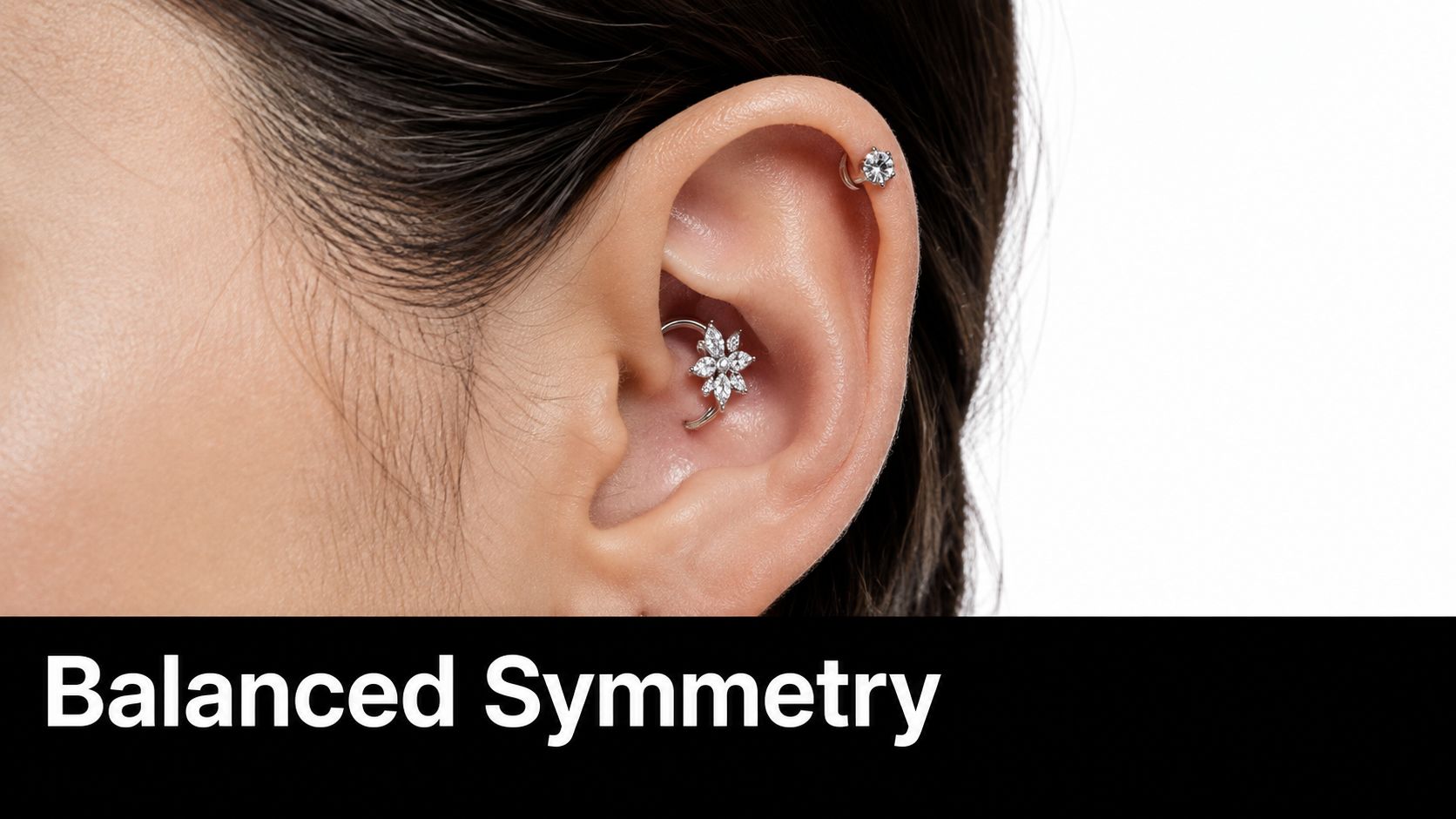
For a refined result, keep the helix top slightly simpler if the daith carries the ornament. Browse gold daith jewellery after your consultation, when the piercer can confirm the appropriate style and dimensions for your anatomy.
4. The Forward-Thinking Constellation
A forward helix changes the direction of the composition. Instead of following the outer rim, it places a small geometric detail near the front-facing upper ear, where it can complement a lobe stud without needing a large number of piercings. The result suits architectural, industrial and minimalist tastes, particularly when the jewellery has clean lines rather than ornate decoration.
This placement needs careful marking because the available tissue can be limited and the angle affects how the top sits. Ask to see the proposed position with your head upright and your hair moved away. Smooth-edged geometric studs and secure flat-back systems are preferable to shapes that catch on hair, glasses or face coverings.
Design around daily contact
A forward helix may be close to accessories you use every day. Hair can loop around the post, protective headwear can press on it and leaning against the pierced side can make the area tender. A piercer may angle the placement away from predictable contact, but the final decision must follow your anatomy.
- Choose low-profile jewellery: Flat, smooth tops reduce snagging during the early stage.
- Match the metal deliberately: Implant-grade titanium offers a practical neutral option, while white gold can create a brighter, polished effect when suitable for healing.
- Protect the front of the ear: Tie hair back carefully and keep hats or helmets from rubbing the site.
- Keep the constellation restrained: One lobe and one forward helix often look stronger than adding pieces that compete for the same visual space.
If you already have a fresh lobe piercing, allow it to settle before adding the forward helix. The two piercings may be close in appearance but they don't carry the same healing demands. A consultation in Croydon or Bournemouth can establish whether the forward fold offers enough room and whether the proposed angle will remain comfortable with your normal accessories.
5. The Romantic Trinity With Pearl Accents
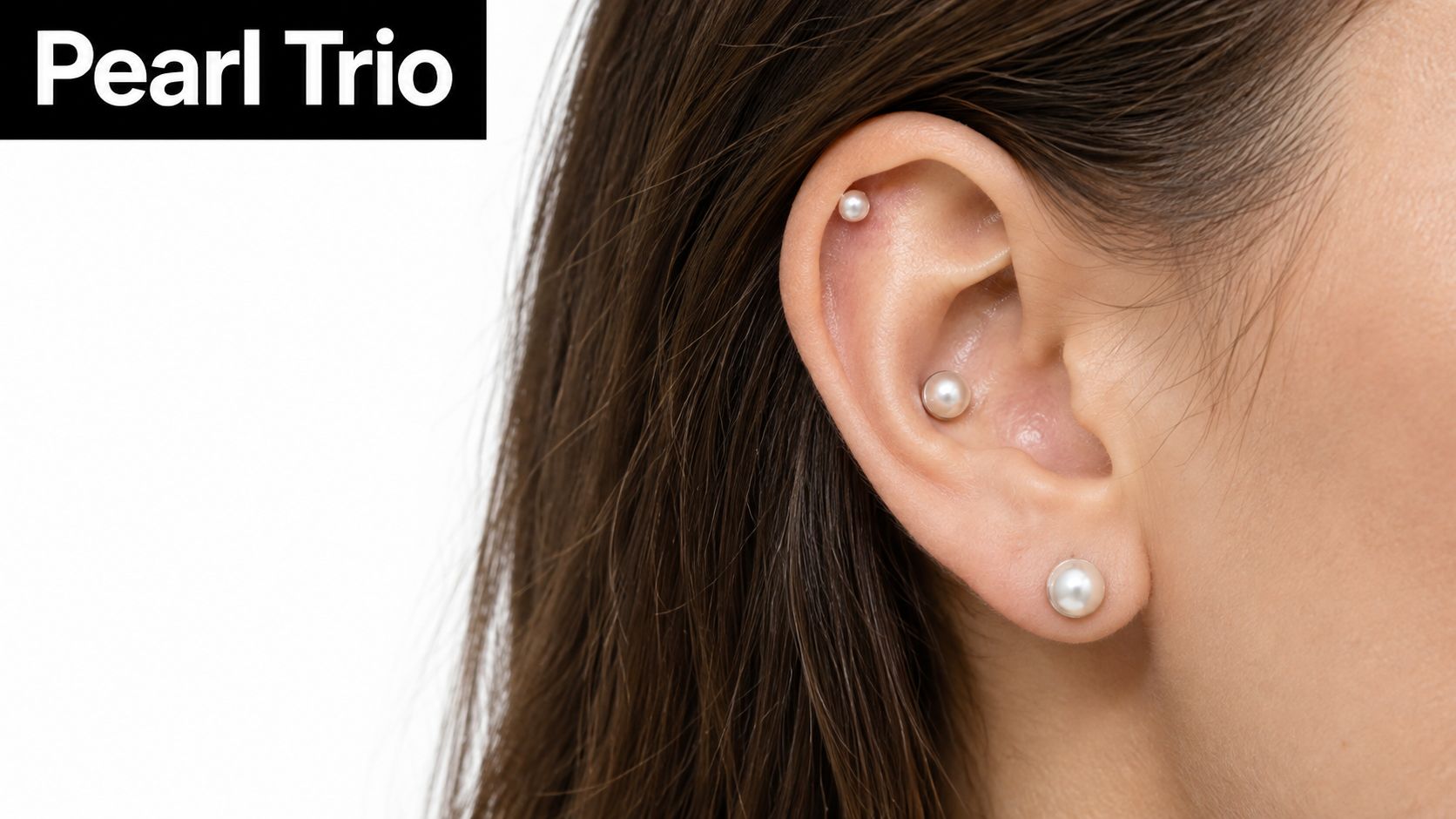
Pearl and opal details soften a three-point arrangement of lobe, helix and conch. The conch occupies the broad central bowl of the ear, so it gives the composition a luminous centre, while the lobe and helix create a path around it. White gold or silver-tone titanium keeps the palette bridal, elegant and easy to coordinate with formal clothing.
This look works best when the jewellery sizes graduate. A modest lobe stud can lead to a brighter conch piece, with the helix acting as a small point of light rather than a competing centrepiece. Secure settings matter for cartilage jewellery, especially if a pearl or opal top has a raised edge that could catch on hair or fabric.
Put the conch last
Start with the lobe if the ear is unpierced. Add the helix only when the first placement is calm, then plan the conch separately. The central bowl can experience pressure from sleeping, telephones and headphones, so clients who regularly use over-ear equipment should discuss alternatives before choosing this design.
The elegant result comes from restraint. Let the conch carry the glow, and keep the surrounding studs small enough to frame it.
Healing time varies by placement, jewellery, anatomy and irritation. UK aftercare advice ranges from shorter cartilage estimates to guidance extending cartilage healing across a much longer period, so don't promise yourself that a complete stack will be ready for a particular event UK cartilage-healing guidance. Plan the look in stages and keep the jewellery in place unless a qualified piercer advises a change.
Use sterile saline as directed, avoid sleeping on the ear and dry it gently with clean disposable paper rather than a shared towel. A soft travel pillow can remove pressure, but it shouldn't force the ear into an awkward angle.
6. The Edgy Modern Combination With Blackened Metals
A lobe, tragus and snug create a darker, more concentrated composition. The lobe provides an accessible starting point, the tragus brings the design towards the face and the snug adds a small inner-ridge detail for an alternative finish. Blackened implant-grade titanium can unify the three placements without relying on large jewellery.
The snug is particularly anatomy-dependent. The ridge may be too shallow, too curved or too close to neighbouring structures for the planned piece, and a responsible piercer should be willing to recommend another placement if the tissue doesn't support it. The tragus also requires practical planning because its position is close to the ear canal and can interact with earbuds and phones.
Make the dark finish durable
Ask how the black colour is produced and whether the jewellery is appropriate for a healing piercing. A surface coating that chips or degrades isn't the same as a purpose-made implant-grade option. Keep the top compact, with a backing that doesn't press into the surrounding ear.
A sensible sequence starts with the lobe, followed by the tragus and then the snug. Avoid holding a phone directly against the tragus during early healing, and clean carefully without pushing product into the canal. Don't twist the jewellery, pick at crusting or use alcohol and hydrogen peroxide, which UK aftercare guidance warns can irritate healing tissue UK piercing aftercare advice.
This look suits musicians, alternative-fashion clients and anyone comfortable with a more visible commitment. It doesn't suit a lifestyle built around sleeping on one side, frequent in-ear headphones or regular contact sports unless you can adjust those habits while the piercings heal.
7. The Delicate Abundance With Stacked Studs
Four lobe piercings and one helix offer the most jewellery flexibility of the seven looks. You can build a vertical lobe column on one ear, distribute the lobes across both ears or create an intentionally uneven arrangement with the helix acting as the upper punctuation mark. Different stud sizes, finishes and metals make the result feel collected rather than uniform.
Spacing is the foundation. The piercer must account for the lobe's shape, the thickness of each post and the backing space, not just the distance between visible tops. A row that looks airy on day one can feel cramped once swelling appears, so mark the positions while checking the ear from the front and side.
Keep abundance manageable
Don't plan all five placements around a single event unless you're prepared for an extended period of careful aftercare. Multiple fresh sites need consistent cleaning and protection, and a helix adds a different pressure risk from the lobes. Add the upper placement after the final lobe has settled enough for the piercer to assess the overall balance.
- Use implant-grade studs: Consistent quality across the collection reduces avoidable irritation.
- Label your jewellery storage: Small bags or a compartment box make it easier to identify posts, backs and healed-piece options.
- Keep healing jewellery in place: Changeovers should wait until the piercer confirms that the site is ready.
- Distribute visual weight: A stronger stud low on the ear can balance a tiny helix top above it.
Avoid rotating jewellery as a routine. Healing piercings don't benefit from being twisted, and handling introduces friction. Once each lobe is fully healed, a professional can help you select new pieces and check that the post length and backing remain appropriate. The result is playful, but it still needs a clear sequence and an anatomy-led plan.
Curated Ear Piercings: 7-Style Comparison
| Style | Complexity 🔄 | Resources ⚡ | Expected Outcomes 📊 | Ideal Use Cases 💡 | Key Advantages ⭐ |
|---|---|---|---|---|---|
| The Classic Minimalist: Lobe + Helix Duo with Gold Studs | Low, two piercings, simple vertical placement | Low, implant‑grade gold studs, few appointments | Sophisticated, understated balance; Lobe 4–6w, Helix 6–9m | First‑time cartilage clients; professional/formal settings | Hypoallergenic gold, cohesive look, quick styling |
| The Statement Cartilage Stack: Triple Helix with Mixed Metal Hoops | High, precise multi‑helix placement, sequential procedure | High, mixed implant‑grade metals, multiple fittings | Dramatic, dimensional statement; each 6–9m, total 14–18m (sequential) | Fashion‑forward clients, influencers, creative professionals | Highly customizable, strong visual impact, independent swaps |
| The Balanced Symmetry: Daith + Helix Pairing with Ornamental Studs | Moderately high, daith anatomy complex, requires experienced piercer | Moderate, ornamental studs (gems), implant‑grade titanium/steel | Layered, refined intrigue; Helix 6–9m, Daith 3–12m (variable) | Luxury/minimalist clients, wellness practitioners, unique looks | Hidden + visible interplay, elevated ornamental detail |
| The Forward‑Thinking: Forward Helix + Lobe Constellation with Geometric Jewellery | Moderate, forward helix needs precise angle and depth | Moderate, geometric titanium/white gold, careful backing selection | Modern, angular focal point; Lobe 4–6w, Forward helix 6–8m | Designers, architects, minimal‑industrial style seekers | Visible placement, contemporary edge, mix‑and‑match options |
| The Romantic Elegance: Conch + Lobe + Helix Trinity with Pearl Accents | High, conch depth and sequencing demand expertise | High, pearl/opal accents, white gold/silver‑tone titanium | Elegant, luminescent statement; Lobe 4–6w, Helix 6–9m, Conch 6–12m | Bridal/wedding clients, formal occasion enthusiasts | Timeless sophistication, striking conch focal point |
| The Edgy Modern: Snug + Tragus + Lobe Triple with Blackened Metals | High, snug/tragus variable anatomy, more painful placements | Moderate–High, blackened implant‑grade metals, careful aftercare | Bold, cohesive dark aesthetic; Lobe 4–6w, Tragus 6–8m, Snug 8–12m | Alternative musicians, punk/alternative communities | Unified edgy look, visible frame, strong alternative expression |
| The Delicate Abundance: Quad Lobe + Single Helix with Stacked Studs | Moderate, multiple lobe placements (can be simultaneous), curation required | Moderate, four studs + helix, incremental jewellery investment | Versatile layered aesthetic; Lobes 4–6w each, Helix 6–9m | Bohemian/collectors, festival‑goers, versatile stylists | Maximum styling flexibility, rapid lobe healing enables fast variation |
Turn Inspiration Into a Personalised Piercing Plan
The best curated ear piercings look isn't necessarily the one with the most placements. Choose the minimalist lobe and helix duo if you need discreet jewellery for work, want a straightforward introduction to cartilage or prefer a low-maintenance visual identity. The mixed-metal triple helix and the snug, tragus and lobe combination demand more patience, more protection from pressure and a greater willingness to stage appointments.
Your sleeping position matters. So do your headphones, helmet, glasses, hair routine and work uniform. A conch can be beautiful but awkward if your daily life involves constant ear pressure, while a forward helix may need extra planning around hats and hair. A consultation should also account for existing holes, scar tissue, asymmetry, lobe thickness, cartilage folds and the direction from which the jewellery will be seen.
UK rules make age and studio practice part of the conversation. Islington Council guidance defines ear piercing as including lower-lobe and upper-cartilage piercing and requires clients to be over 16 for ear or nose piercing with photographic ID available on request Islington piercing conditions. Local authority conditions can also require a parent or guardian to attend and sign consent for clients under 16, so check the studio's policy before booking Bromley piercing conditions.
Ask your piercer about:
- Placement order: Which piercing should come first, and which should wait?
- Jewellery suitability: Is the material implant-grade, and is the design appropriate for swelling?
- Pressure management: How will you sleep, work, exercise and use headphones without aggravating the ear?
- Aftercare: Which sterile saline product and cleaning routine suit your placements?
- Warning signs: When should irritation become a medical concern rather than a styling issue?
Timebomb Tattoo & Piercing offers consultations, walk-ins and appointments through Piercing Near Me at studios in Croydon and Bournemouth. Call 01202 900050 (Bournemouth) / 020 8686 7730 (Croydon) or message WhatsApp on 07752 913846 (Bournemouth) / 07902 490584 (Croydon) to discuss placement, jewellery and a realistic healing sequence before committing to your stack. Follow the aftercare supplied for your own ear, and arrange a professional check if the jewellery feels tight, the angle changes or symptoms worsen.
Timebomb Tattoo & Piercing provides placement-focused consultations, implant-grade jewellery options and personalised aftercare for curated ear piercings in Croydon and Bournemouth. Visit Piercing Near Me to explore your options, then call 01202 900050 (Bournemouth) / 020 8686 7730 (Croydon) or WhatsApp 07752 913846 (Bournemouth) / 07902 490584 (Croydon) to arrange your consultation.