
You're probably doing what most first-time daith clients do. You've zoomed in on ear photos, saved a few inspiration shots, maybe even checked whether a hoop or heart-shaped ring would suit your anatomy. Then the practical question cuts through the excitement. How much is this going to hurt?
That question is sensible. A daith isn't a soft lobe piercing. It sits in a tucked-away fold of cartilage, and because the placement is unusual, people often struggle to tell the difference between normal discomfort, bad aftercare advice, and internet myth. Let's clear that up properly.
An Honest Introduction to Daith Piercing Pain
A nervous first-time client usually says one of two things in the studio chair. Either, “Be honest, is this one awful?” or, “I've heard it helps migraines, so maybe the pain is worth it.” Both questions deserve a straight answer.
Daith piercing pain is real, but it's manageable. It isn't commonly described as unbearable. Instead, it's characterized as a strange, intense cartilage sensation that feels very different from a lobe piercing. It's more technical, more pressurised, and more memorable, mostly because of where it sits in the ear.
What trips people up is that “pain” in a daith piercing isn't just the puncture. There's the short procedural moment, then there's the ache, tenderness, and sensitivity that follow while the area settles. That second part is where first-time clients often feel surprised.
A daith can be absolutely worth getting. It just helps to expect a cartilage piercing experience, not a quick lobe-style sting and done.
There's also a lot of confusion around migraine relief. The claim gets repeated constantly online, but the responsible answer is simple. The widely cited migraine relief claim for daith piercings lacks strong UK-specific clinical evidence, and major medical bodies like the American Migraine Foundation recommend against it because of the lack of evidence and placebo risk, as noted in this UK feature on daith piercing claims and evidence.
So if you want a daith because you love the look, that's fair. If you want one as a guaranteed migraine solution, that's not something a good piercer should promise.
What the Pain Actually Feels Like
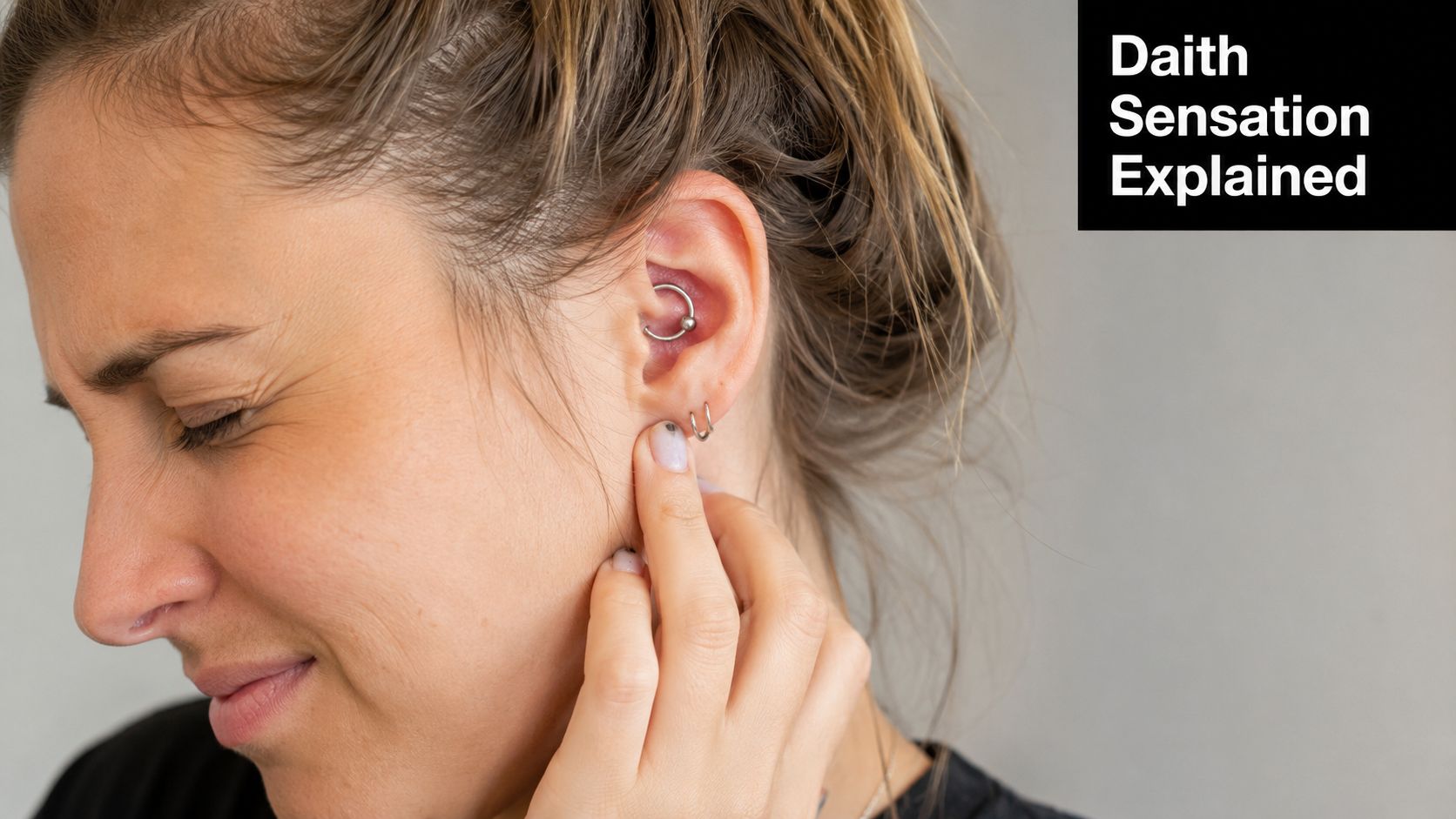
You are in the chair, your ear is marked, and the clamp or receiving tube is in place. This is the point where many first-time clients in Croydon and Bournemouth ask the same question. “Is it a sharp pain, or more of a pressure pain?” That is the right question, because a daith has a very specific feel.
Experienced UK piercers often describe it in two stages. First comes a concentrated pinch with strong pressure. Then comes the dense cartilage sensation, followed by a warm, dull ache once the jewellery is seated.
The first few seconds
The daith sits in the crus of the helix, a tight fold of cartilage above the ear canal. Because that tissue is firmer than the lobe, the sensation usually feels less like a quick needle prick and more like pushing through a stiff rubbery ridge. Clients often expect one clean sharp sting. What surprises them is how much of the feeling is pressure.
In plain language, it often goes like this:
- At the start: a fast pinch and a firm squeeze
- As the needle passes: a heavy, crunchy cartilage feeling that can feel strange more than dramatic
- Once the jewellery is in: heat, throbbing, and a sudden awareness of the whole inner ear
That “crunchy” description can sound alarming, so it helps to put it in context. You are not hearing your ear break. You are noticing resistance as the needle passes through dense cartilage in a small space.
Why the sensation feels so different
A daith piercing works through tougher tissue and a tighter angle than a lobe piercing. That changes the sensory profile. Instead of a quick sting that fades fast, many clients feel a short burst of compression, then a deeper ache that lingers in the background.
Piercers in Croydon often mention how anatomy shapes the experience. A more tucked-in daith can feel more pressurised because access is tighter. Bournemouth piercers make a similar point, especially with clients who arrive expecting a “sharp pain” and leave saying it felt more like their ear was being pressed through from the inside.
A good comparison is soreness after knocking your ear against a door frame. The piercing itself is quicker and cleaner than that, but the after-feel can be similar. Bruised, hot, and very aware.
If you want a broader comparison with rook, helix, and other ear placements, this guide to cartilage piercing pain gives useful context.
The feeling later the same day
For many clients, the puncture is the easy part. The more noticeable part is what arrives after the adrenaline settles.
Later that day, you may notice:
- A warm throb: especially when your body relaxes after the appointment
- A bruised inner-ear feeling: as if the fold has been knocked
- Tenderness with movement: even brushing hair back or pulling on a jumper can set it off
This is normal for a fresh cartilage piercing. The key difference is that sharp pain is usually brief. The ache that follows is duller, heavier, and easier to manage, even if it lasts longer. That is why so many nervous first-time clients say the daith was intense for a moment, then mostly sore and fussy rather than unbearable.
Your Complete Pain and Healing Timeline
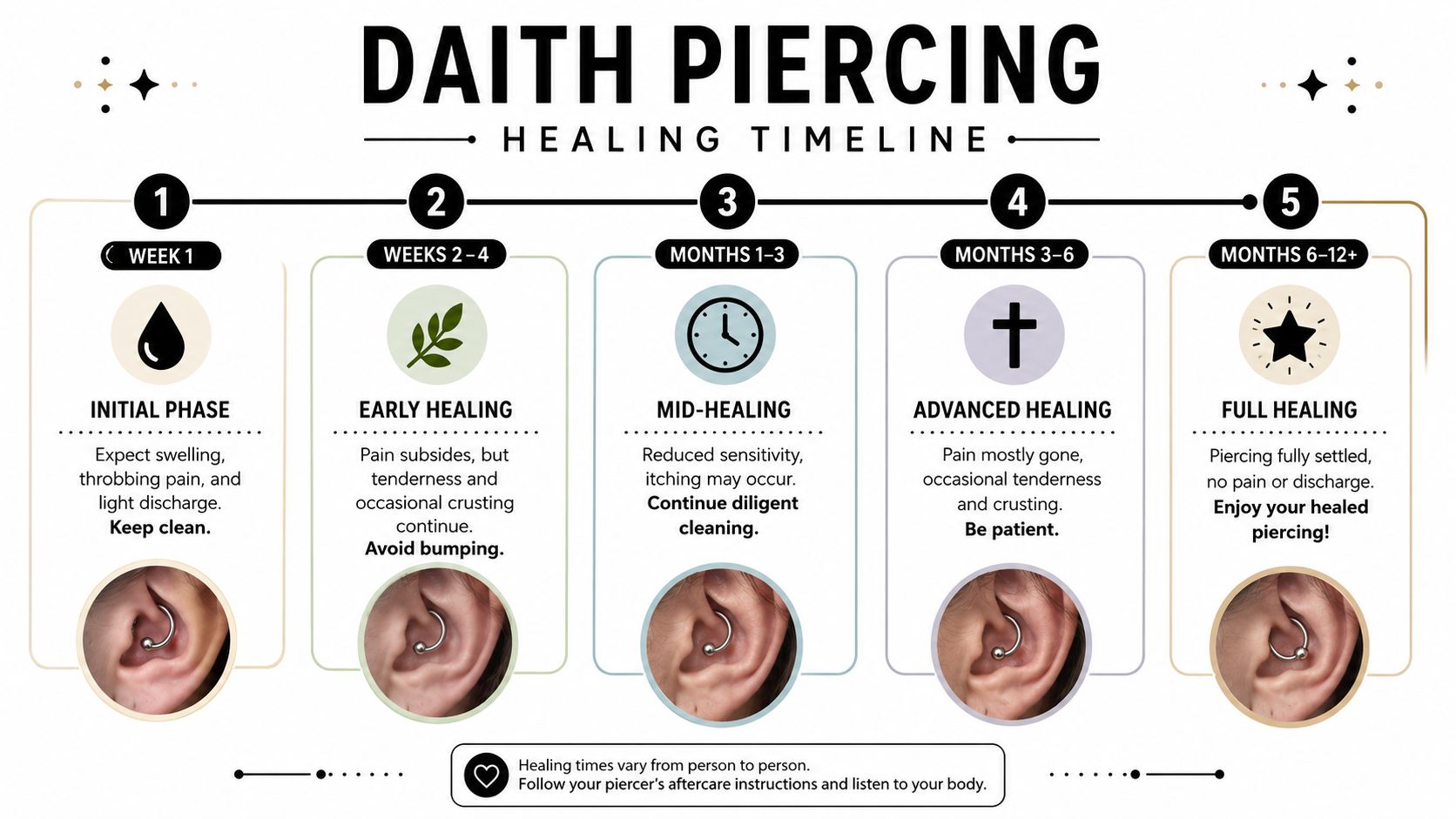
A daith can fool people because it often starts feeling better before it's fully healed. That's one of the biggest reasons clients accidentally irritate it. The outside calms down, so they assume the inside has done the same. It usually hasn't.
The first day to the first week
This is the “my ear is very aware of itself” phase. Swelling, heat, a pulsing sensation, and general tenderness are all common. Some people feel fine unless the jewellery moves. Others notice a constant dull awareness.
During this stage, keep expectations simple:
- Expect sensitivity: touching the ear, brushing hair back, or catching it while changing clothes can sting
- Expect some swelling: cartilage often holds onto irritation longer than softer tissue
- Expect crusting: dried lymph can appear and doesn't automatically mean infection
A daith is tucked inward, so clients sometimes forget it's there until they put in earbuds, answer the phone awkwardly, or roll onto that side in bed.
Weeks two to four
At this stage, many people think they're “basically healed”. They aren't. The pain usually drops, but the piercing can still flare up quickly if you bump it, sleep on it, or fiddle with the ring.
A useful way to think about this stage is “less dramatic, still delicate”.
| Stage | What it often feels like | What to do |
|---|---|---|
| Early settling | Tender but calmer | Clean gently and leave it alone |
| Small flare-ups | Sore after pressure or accidental knocks | Remove the cause, then let it settle |
| Dry crusting | Mild itching or dryness | Clean only as advised, don't pick |
Months one to six and beyond
This is the long game. The daith is widely regarded as a tricky piercing to heal, and because of its location, clients often need to avoid sleeping on that ear for a year or more to reduce irritation bumps and migration, as noted in this discussion referencing the reality of daith healing difficulty.
That last point matters more than people expect. In both Croydon and Bournemouth, one of the most common reasons a daith stays angry is simple mechanical pressure from sleep.
If you sleep on a healing daith, the piercing often doesn't get a proper chance to calm down. It gets compressed over and over again.
A realistic healing rhythm
Most clients move through a pattern rather than a straight line:
- Fresh and throbbing
- Calmer but still tender
- Mostly fine until knocked
- Random flare-up that feels unfair
- Gradual settling over months
That's why consistency beats intensity. You don't need dramatic aftercare. You need patient aftercare.
Practical Pain Management and Aftercare Advice
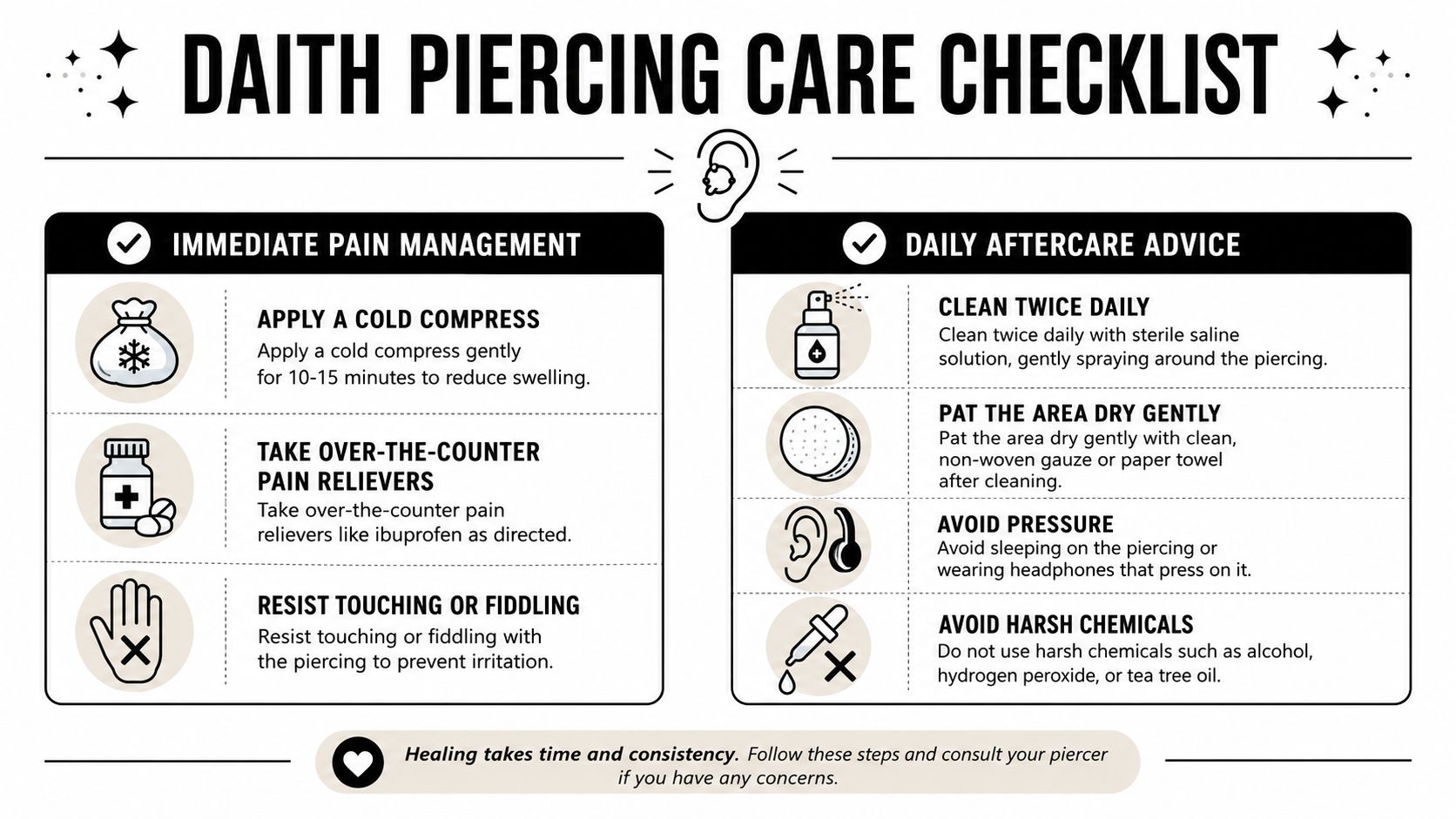
You get home, the piercing is done, and the sharp part is over. Then comes the question nearly every first-time client asks. “How do I stop this from turning into a sore, grumpy ear?”
The short answer is simple. Protect it from pressure, keep it clean, and resist the urge to fuss with it.
That matters with a daith more than with many lobe piercings because the jewellery sits in a tucked-away fold of cartilage. It is a bit like caring for a bruise in a cramped corner. Too much poking, rubbing, or pressure can turn a mild dull ache into a stronger throb by the end of the day.
What helps in the first few days
The first few days are about keeping the area quiet.
A few sensible habits make a real difference:
- Use a cold compress carefully: hold it near the area without pressing on the jewellery
- Take over-the-counter pain relief if appropriate for you: follow the packet instructions or ask a pharmacist
- Keep hands off: a lot of surprise soreness starts with touching, checking, or moving the ring
- Watch headphones, hats, and helmet straps: pressure inside the ear can make a settled piercing feel sharp again
If your starter jewellery was fitted properly, leave it alone. Twisting it does not help skin “breathe” or stop sticking. It usually just scrapes a healing channel that was beginning to calm down.
Daily care that works
Good aftercare is usually boring. That is a good sign.
Piercers in Croydon and Bournemouth often give similar advice here because the goal is the same. Keep the piercing clean without soaking it, rubbing it, or drying it out. Your own studio's instructions come first, especially if your anatomy, jewellery size, or placement needs a more customized routine.
A simple routine usually includes:
- Sterile saline: spray or rinse around the piercing gently
- A clean dry finish: pat dry with non-woven gauze or a clean paper towel
- No harsh products: avoid alcohol, hydrogen peroxide, and tea tree oil
- No early jewellery swaps: changing jewellery too soon often brings back swelling and tenderness
If you are already thinking about how it will look once fully healed, save that planning for later and browse gold daith jewellery styles for healed piercings rather than changing anything early.
Aftercare truth: a daith usually settles better with steady, low-drama care than with constant checking and “fixing.”
Everyday habits that reduce pain
Experienced UK piercers often save clients a lot of trouble. The small daily habits matter because daith pain is often triggered by pressure, not by the piercing “going wrong.”
In Croydon studios, clients are often warned about commuting, collars, scarves, and over-ear headphones rubbing the ear on busy days. In Bournemouth, piercers often end up talking about beach wind, wet hair, and the temptation to tuck damp hair behind the ear. Different places, same principle. Friction keeps cartilage irritated.
Try these:
- Use a travel pillow or donut pillow: it helps keep weight off the ear during sleep
- Be careful with hair and towels: brushes, combs, and rough drying catch daith jewellery easily
- Swap phone ears: avoid pressing your mobile into the piercing
- Be cautious with earbuds: many healing daiths do not tolerate in-ear headphones well
- Dry the area after showers: trapped moisture can leave the skin sore and fussy
If the pain changes from a brief sharp sting after a knock to a heavier, lingering ache, ask yourself what has been pressing on it. In many cases, the cause is mechanical and easy to correct once you spot it.
If you have any aftercare concerns, our team is here to help. Call us on 01202 900050 (Bournemouth) / 020 8686 7730 (Croydon) or message us on WhatsApp at 07752 913846 (Bournemouth) / 07902 490584 (Croydon).
Recognising Complications vs Normal Healing
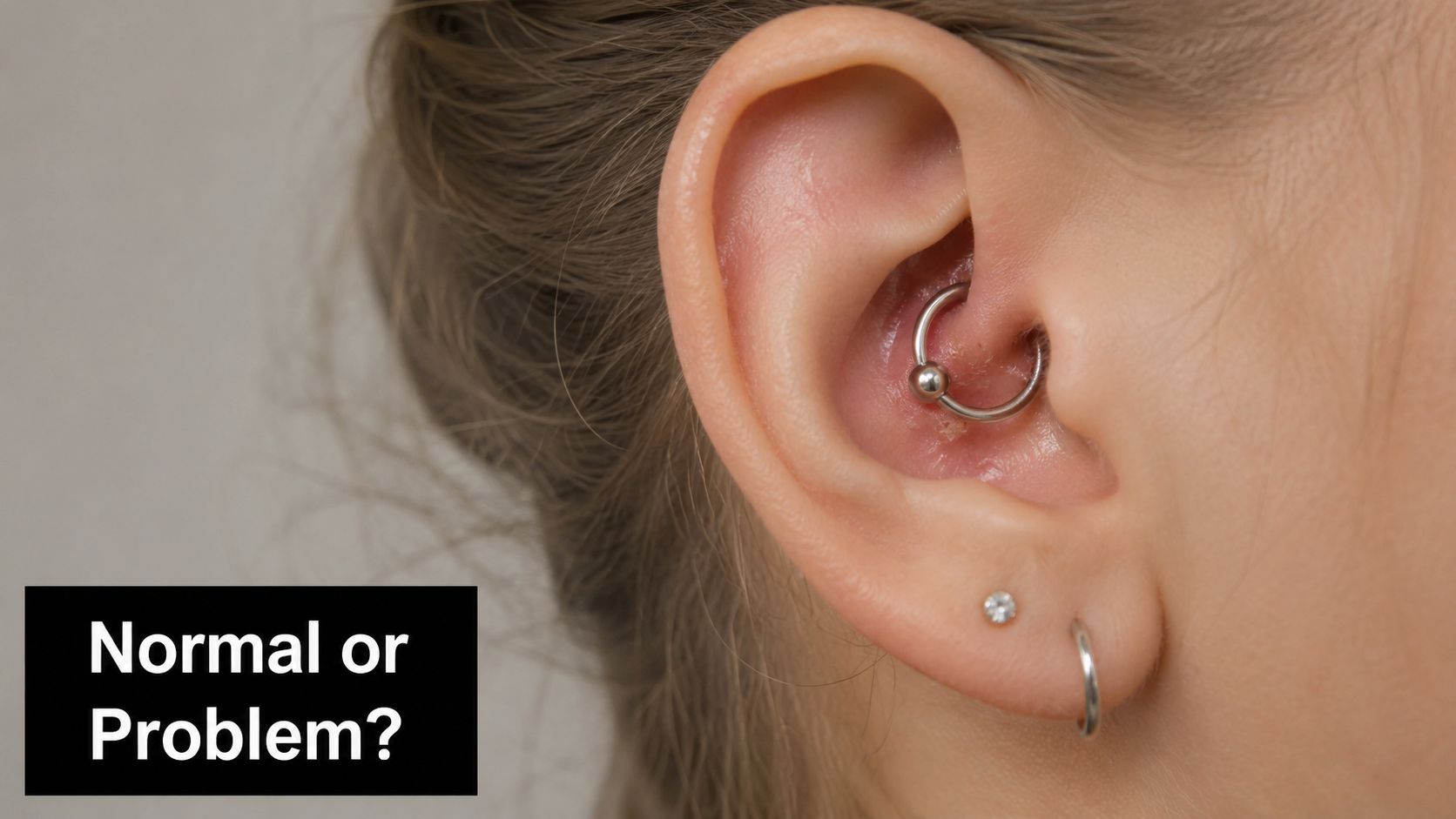
This is the point where anxious clients usually send a photo and ask, “Is this normal?” Fair question. Healing cartilage can look untidy without being dangerous.
What's usually normal
A healing daith often has small ups and downs.
- Mild swelling
- Light redness
- Clear or whitish fluid that dries into crust
- Tenderness after being knocked or slept on
- An irritation bump caused by pressure or movement
An irritation bump is usually a response to friction, sleeping on the piercing, moisture, jewellery movement, or poor angle for your anatomy. It isn't automatically an infection, and it isn't the same thing as a keloid.
What's more concerning
A professional piercer wants you to speak up if symptoms are worsening rather than gradually settling.
| More likely normal | Needs closer attention |
|---|---|
| Mild soreness that improves | Pain that persists or gets worse |
| Clear or pale crusting | Thick yellow or green discharge |
| Local tenderness | Strong heat, spreading redness, or bad smell |
| Small irritation bump | Feeling unwell or fever |
Clinical reports on daith piercings note persisting pain, worsening of attacks, slow healing over months, and a considerable risk for infection at this anatomical site, which is why expert placement and sterile technique matter so much, as discussed in the clinical review on daith piercing and migraine claims.
If the piercing looks slightly crusty but otherwise settles, that's often a healing problem. If it becomes more painful, hotter, and more swollen over time, get it checked.
When to contact someone
Contact your piercer if the area suddenly changes, develops a bump that keeps growing, or stays sore despite careful aftercare. Contact a medical professional if you suspect infection or feel unwell.
The best studios minimise risk from the start with clean technique, appropriate jewellery, and accurate placement. That doesn't make complications impossible, but it lowers the odds of avoidable problems.
Book Your Daith Piercing with Confidence
Daith piercing pain is short-lived during the procedure, but healing asks for patience. That's why the person doing it matters as much as the jewellery you choose. A skilled piercer checks your anatomy, uses single-use sterile needles, fits high-quality jewellery, and gives aftercare that fits your ear rather than handing you generic advice.
For a placement this specific, expertise isn't optional. It affects comfort, healing, and whether the piercing sits cleanly in the first place. If you're looking for experienced studios in London or on the South Coast, you can explore daith piercing options near you before booking.
Ready to talk it through with a professional team? Contact us for a consultation. Call 01202 900050 (Bournemouth) / 020 8686 7730 (Croydon) or send a message to our WhatsApp on 07752 913846 (Bournemouth) / 07902 490584 (Croydon) to book your appointment in Bournemouth or Croydon today.
If you're ready to find a safe, professional studio for your next piercing, Piercing Near Me makes it easy to explore trusted options, compare locations, and book with confidence.