
Your Ultimate Guide to Facial Piercings
Thinking about adding some new metal to your look? Facial piercings are a powerful way to express your personal style, but choosing the right one can feel overwhelming. A common starting point involves asking which piercing looks best or hurts least. The better question is whether your anatomy, routine, work life, and patience for healing suit the piercing you want.
That gap in thinking is where a lot of trouble starts. A piercing can look amazing on someone else and still be the wrong first choice for you. Jewellery style, swelling, snag risk, sleeping habits, glasses, makeup, sport, and oral care all matter more than most quick social posts make out.
In the UK, body piercings beyond standard earlobes are far from unusual, with an overall prevalence of 10% in a survey of 10,503 adults, and nose piercings accounting for 19% of those body piercings according to the British Orthodontic Society summary. So if you're weighing up different types of face piercings, you're not choosing from a niche menu. You're choosing from a set of very established placements that each come with their own real trade-offs.
This guide breaks down 10 of the most popular different types of face piercings to help you make an informed and confident decision. We'll cover everything you need to know, from pain levels and aftercare to finding the perfect jewellery for your new addition.
1. Septum Piercing
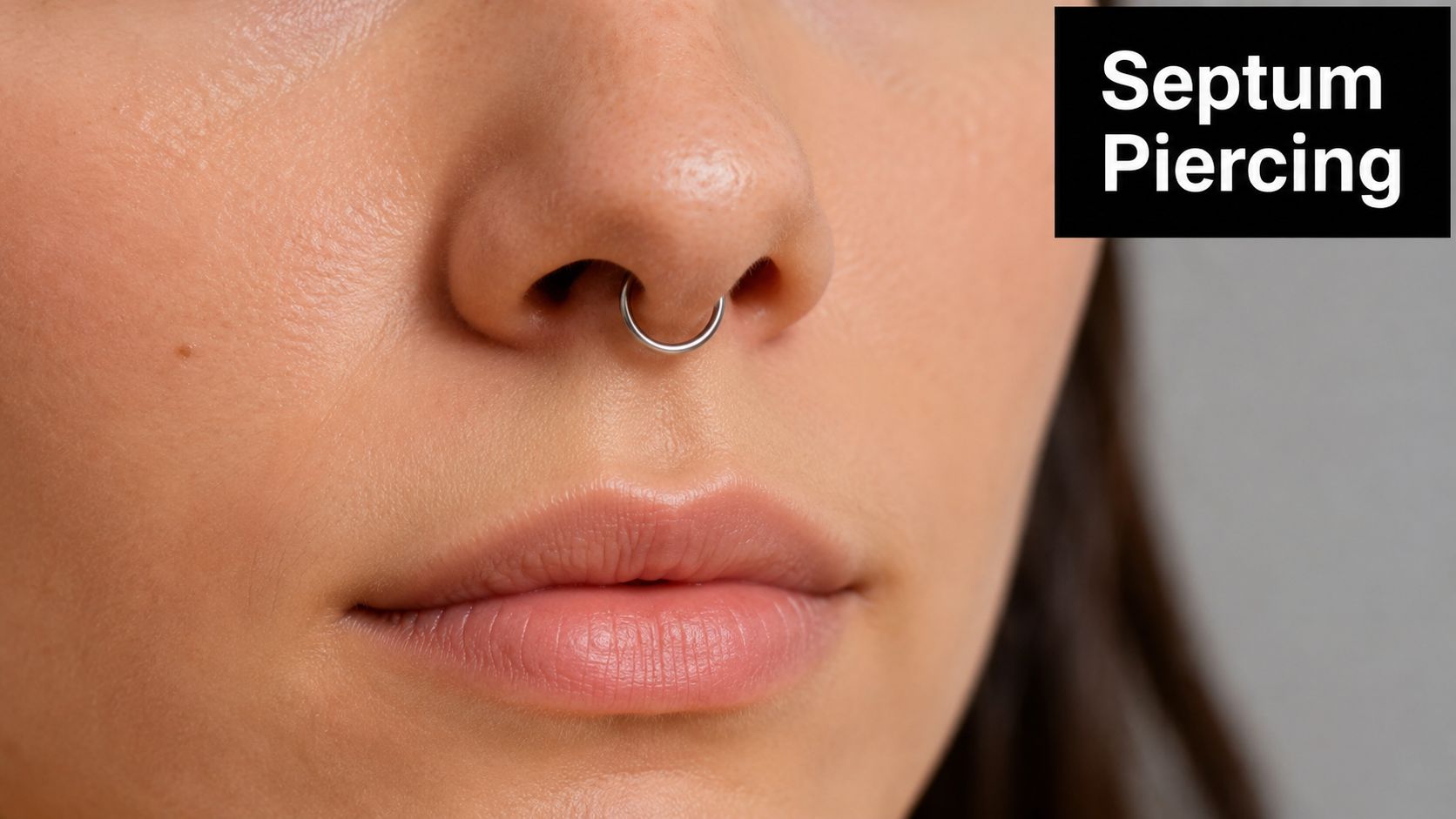
A good septum piercing sits through the soft tissue under the cartilage, not through the hard cartilage itself. That difference matters. When it's placed in the correct sweet spot, it tends to be much easier to live with than people expect, and it's one of the few facial piercings you can often hide by flipping suitable jewellery upward.
That versatility is why septum remains such a favourite. If you want something visible at weekends and discreet at work, it's one of the smartest options.
What works well
Most clients do best starting with a simple circular barbell or a neat horseshoe in implant-grade titanium. Smooth, lightweight jewellery gives the channel a calm start and doesn't fight your anatomy. If the ring is too heavy, too decorative, or badly sized, healing usually becomes fussier.
A septum also suits people who don't want side-specific placement decisions. Unlike a nostril or lip piercing, the visual balance is built in.
Practical rule: Ask whether your piercer regularly does septums, not whether they "can do" septums. Placement is everything with this one.
Real trade-offs
The biggest issue I see isn't pain. It's people twisting, flipping, or cleaning too aggressively because they think movement prevents crusting. It doesn't. Movement usually causes more irritation.
Keep it simple during healing:
- Choose experience: Pick a piercer who has a strong portfolio of healed septum work.
- Leave it alone: Don't rotate or flip the jewellery repeatedly during the healing period.
- Clean properly: Use sterile saline and keep hands off unless you're cleaning.
- Watch sleeping habits: If you bury your face into pillows, expect tenderness.
If you're comparing placements and want a clearer idea of comfort, swelling, and what healing normally feels like day by day, this guide to septum piercing pain level is worth reading before you book.
A classic example is the client who wants one visible facial piercing without committing to a permanent always-on look. Septum usually does that job better than bridge, cheek, or lip placements.
2. Nostril Piercing
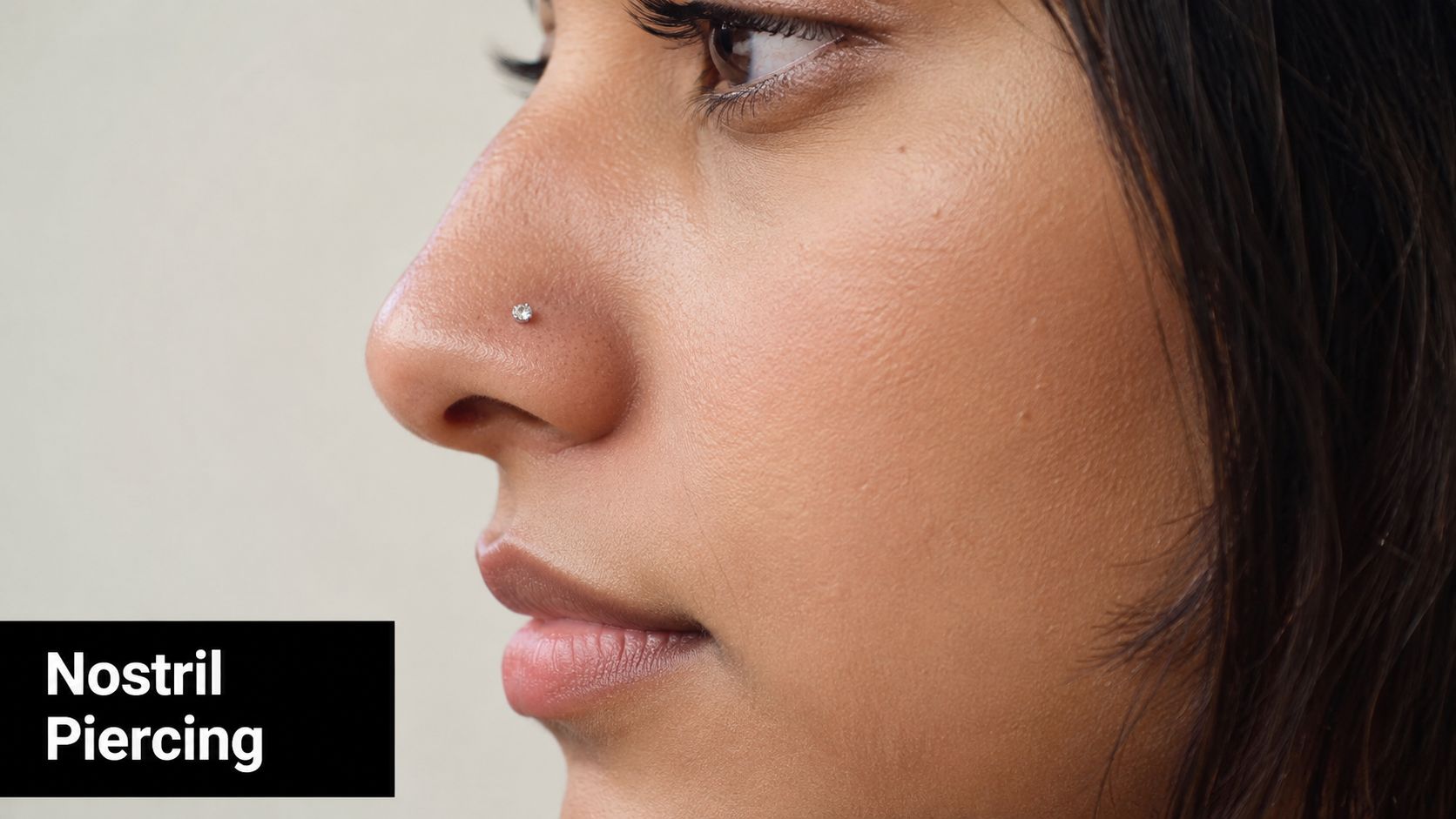
Want a facial piercing that reads polished at work, still suits a night out, and does not take over your whole face? Nostril piercing is usually the easiest place to start. It can stay understated with a tiny stud, or become more noticeable later with a well-fitted hoop once the channel is fully settled.
It also needs better placement planning than clients expect. I look at nostril shape, cartilage thickness, glasses, skincare habits, and which side gets pressed by a pillow or phone. That matters in practice. The side you prefer in photos is not always the side that will heal with the least irritation.
Best first jewellery choice
For a fresh nostril, a stud is usually the safer call. Hoops rotate through the channel, catch on towels and jumpers, and put pressure on the entry and exit points. That extra movement is one of the biggest reasons a nostril stays tender or develops an irritation bump.
A secure, well-sized stud gives the tissue a quieter start. Once healing is established, jewellery options open up.
If you like the look of facial jewellery beyond the nose, our guide to lip piercings and labret styles helps compare how different placements sit, heal, and suit daily wear.
What to avoid early on
Nostril piercings often look simple from the outside, but they can be fussy if the area gets knocked or over-cleaned. Makeup around the site, heavy skincare, steam rooms, swimming, and constant touching all make healing harder.
A few habits make a real difference:
- Choose a stud first: It usually stays calmer than a ring during early healing.
- Protect it while sleeping: Pressure from your usual sleep side can keep the area sore.
- Keep products off it: Foundation, cleanser, and thick moisturisers around the site often cause trouble.
- Leave jewellery changes to your piercer: The outside can look settled before the inside is ready.
A well-healing nostril is usually quiet, a little boring, and low drama.
For a fuller breakdown of timelines, downsizing, and common irritation issues, see this guide to nostril piercing healing time.
For clients in Croydon and Bournemouth, nostril piercing is one of the easiest facial piercings to personalise well if you book with someone who pays attention to anatomy instead of rushing through a standard placement. A small gold stud is still the classic choice because it works with office wear, weddings, and everyday looks. The common mistake is changing to a hoop before the tissue is ready for that extra movement.
3. Lip Piercing (Upper and Lower Lip)
Want a facial piercing that stays visible in every conversation, photo, and mirror check? Lip piercing does that fast, whether you choose a lower lip stud for a cleaner look or an upper lip placement such as a Monroe for something sharper and more styled.
I always treat lip work as a placement decision first and a style decision second. The jewellery sits near soft tissue, teeth, and gums, so the angle has to suit your anatomy and the disc on the inside needs to rest cleanly without digging in. A piercing that looks good on day one can become annoying very quickly if that part is rushed.
Lower lip piercings are often the easier starting point. They tend to give a strong look with fewer fitting problems, and a central labret usually heals more predictably than more complex combinations. Upper lip placements can look excellent too, but they need careful marking to match your lip line, smile, and natural asymmetry.
Healing is manageable, but the mouth is a busy area. Swelling, talking, eating, and accidental biting all affect comfort in the first stage. That is why initial jewellery choice matters so much.
- Start with a flat-back labret: It usually sits more cleanly against the inside of the lip and reduces rubbing.
- Rinse after food and drinks: An alcohol-free mouthwash helps keep the area cleaner without adding irritation.
- Keep food choices sensible early on: Spicy, very hot, and acidic foods can make a fresh piercing far more uncomfortable than it needs to be.
- Do not click the jewellery against your teeth: That habit can irritate the channel and cause avoidable dental wear over time.
Swelling can make people think the bar is too long. Early on, that extra length is often there for a reason. Once the swelling settles, a good piercer should check the fit and downsize if needed. That follow-up matters in practice, especially with oral piercings.
If you want to compare placements before booking, this guide to lip piercings and labret styles gives a useful breakdown of how different options sit and heal.
For clients in Croydon and Bournemouth, lip piercing is one of the clearest examples of why studio choice matters. A strong result depends on anatomy checks, good jewellery sizing, and honest advice about your teeth, gums, work routine, and tolerance for oral aftercare. If you are new to mouth-area piercings, a single lower lip stud is often the most sensible place to start.
4. Eyebrow Piercing
Eyebrow piercing has been around long enough to feel classic, but it still reads bold. It frames the eye, changes facial balance fast, and works especially well if you like asymmetry. A single vertical eyebrow piercing can sharpen one side of the face without taking over your whole look.
It also has limits. This isn't a "set it and forget it" piercing for everyone. Eyebrow tissue is mobile, exposed, and easy to snag with towels, fringe, hats, and hands.
Who it suits best
If you want a visible facial piercing without entering the nose or mouth area, eyebrow is often a strong choice. It's popular with clients who don't want oral aftercare and don't love the idea of intranasal cleaning.
The placement itself has to respect your brow shape, skin thickness, and how much tension the area carries when you smile or squint. A curved barbell usually sits more naturally here than a straight bar.
Common mistakes
Most trouble comes from pressure and cosmetic products. Brow pencils, pomades, skin tint, and heavy cleansing around the area can all interfere with healing if you aren't careful.
- Choose anatomy-first placement: A piercer should mark for your brow shape, not copy a photo exactly.
- Wear the right jewellery: A curved barbell tends to sit more comfortably.
- Keep products away: Makeup and brow products shouldn't touch a fresh channel.
- Expect some fragility: Catching it on clothing or bedding can set healing back quickly.
Eyebrow piercing looks effortless only after you've treated it carefully for a while.
A good real-world example is the client who wants one statement feature but still wants to wear a mask, glasses, and lipstick without the piercing interfering. Eyebrow can be easier to manage than bridge or lip for that person, provided they don't constantly touch their face.
5. Cheek Piercing (Dimple Piercing)
Cheek piercings are one of the most striking options on this list. They can create a dimple effect, add symmetry, and completely change a smile. They're also one of the least beginner-friendly choices in facial piercing.
I don't talk about cheek piercings as casual add-ons. They involve deeper tissue, more swelling, more aftercare, and more patience. You need to want the result enough to handle the process.
Why they're advanced
Cheek tissue moves every time you eat, speak, laugh, or sleep on your side. That makes healing more involved than clients often expect. Inside the mouth, oral hygiene matters. Outside the face, pressure and snagging matter. Both sides need to behave at once if you're doing a pair.
Initial swelling can be substantial, and longer jewellery is often necessary at first. Downsizing later isn't optional. It's part of making the piercing workable and reducing irritation.
Best mindset before booking
These suit clients who already understand that healing isn't linear. Some days look great. Some days don't. That's not the same as failure.
- Work with a specialist: Not every piercer offers cheek work, and that's a good thing.
- Plan your food: Softer meals are easier while the area is swollen and tender.
- Stay on top of oral care: Alcohol-free mouthwash after eating helps keep the inside cleaner.
- Accept the risk: Migration, scarring, and rejection are real possibilities.
A common scenario is someone loving the look of dimple piercings in photos but hating even mild swelling in daily life. If that sounds like you, a cheek piercing probably isn't your best first facial piercing.
6. Bridge Piercing
Bridge piercing is one of the most recognisable statement placements. It sits horizontally across the bridge of the nose between the eyes and gives a sharp, modern look that works especially well with other nose piercings. If you like symmetry, minimal jewellery, and a face-framing effect, bridge can look brilliant.
It also asks for honesty. Bridge is a surface-style placement on a very visible part of the face. Not everyone has the anatomy for it, and not every bridge piercing is built to last long term.
Anatomy and daily life
The bridge area needs enough tissue to support the jewellery comfortably. If the tissue is too tight or too shallow, the piercing is more likely to sit poorly, become irritated, or migrate.
Glasses wearers need an especially careful consultation. Frames that hit the jewellery every day are a problem. Even sunglasses can turn a good piercing into a frustrated one if they press the area.
Practical advice that matters
A bridge should sit cleanly and comfortably. If the jewellery looks like it's fighting the skin from the start, that's a warning sign.
- Pick low-irritation jewellery: Internally threaded or threadless pieces are usually the best start.
- Keep hands off: Rotating jewellery doesn't help bridge healing.
- Think about eyewear: Bring your usual glasses to the consultation.
- Have a backup mindset: This is one of the different types of face piercings that can look amazing and still not be ideal for your anatomy long term.
If your lifestyle depends on tight glasses, helmets, or constant face contact, bridge may be the wrong kind of beautiful for you.
A bridge often works best for clients who want a strong visual centre line and already know they can protect the area from repeated pressure.
7. Snakebites Piercing
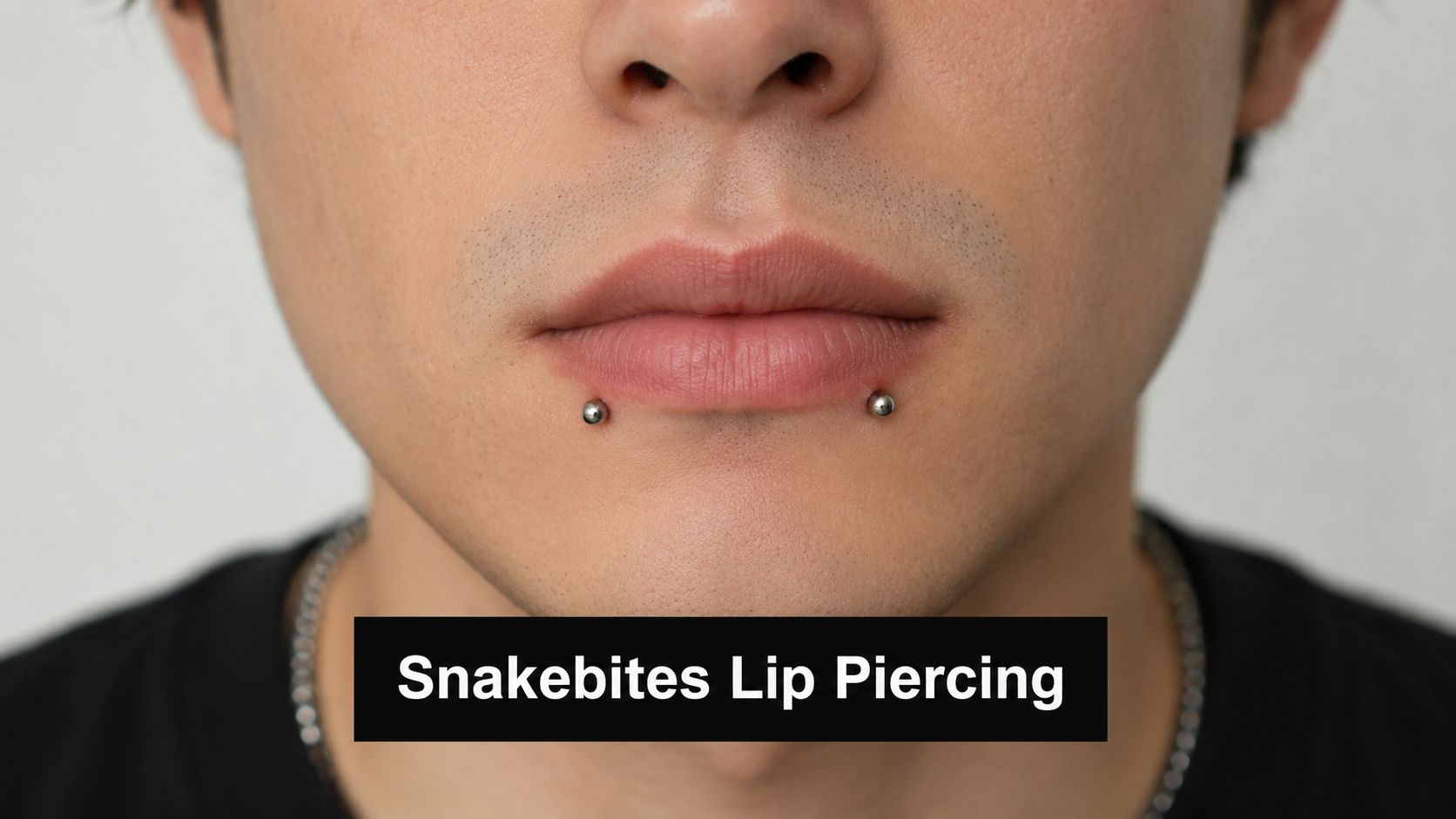
Want a paired lip piercing that reads bold without looking messy? Snakebites sit on either side of the lower lip and can look sharp, polished, or dramatic depending on the jewellery you choose. Small tops keep the look neat. Rings give more attitude, but they are a better option after healing.
Good snakebites depend on symmetry, but symmetry is not just about matching dots on the skin. A piercer has to check your natural lip line, how your mouth rests, how much your lower lip rolls inward, and whether jewellery is likely to rub your teeth or gums. I always tell clients that paired piercings leave less room for guesswork. A tiny difference in angle can stand out every time you look in the mirror.
Healing takes more effort because you are managing two fresh piercings in an area that moves all day. Talking, eating, smiling, and sleeping can all irritate them if the jewellery is poorly fitted or you keep catching the posts.
A sensible starting setup usually includes:
- Flat-backed labrets: Better for fresh snakebites than hoops, which tend to move more and cause extra irritation
- Implant-grade jewellery: A strong choice for fresh facial work, especially if your skin reacts easily
- Careful paired marking: Both sides should be checked from multiple angles, not just straight on
- Consistent oral aftercare: Alcohol-free mouthwash after meals and gentle brushing help keep the area cleaner
Snakebites are rarely the best first pick for someone who wants an easy heal. They suit clients who like the balanced look of paired jewellery and are prepared for a week or two of swelling, slower meals, and a mouth that feels a bit awkward at first.
If you are booking in Croydon or Bournemouth, ask for a consultation before committing to the final placement. That gives your piercer time to assess your anatomy, talk through stud size, and explain whether your lifestyle suits this setup. For the right client, snakebites look brilliant. For the wrong one, they become a constant source of irritation.
8. Medusa Piercing
Medusa, or philtrum piercing, sits in the groove above the upper lip and below the nose. It creates a strong centre point on the face and pairs well with septum, nostril, or lower lip jewellery. If you like symmetry, Medusa often gives one of the cleanest looks of any facial piercing.
It isn't a casual placement, though. The centre of the upper lip can swell noticeably, and jewellery angle matters for both appearance and oral comfort.
Why people love it
Medusa catches light nicely even with a small top. A plain polished disc can look minimal. A gem can make it read dressy without becoming fussy. It works on a lot of face shapes because the philtrum already acts as a visual focal point.
The best Medusa piercings sit neatly in that groove and don't look forced too high or too low. Precise marking is everything.
What to be careful about
This piercing spends healing time near the gums and teeth, so jewellery backing choice matters from day one. Flat-backed labret jewellery is usually the sensible start.
- Expect swelling: Especially in the first couple of days.
- Keep meals simple: Hot and acidic foods can sting more than people expect.
- Stay strict with oral care: Rinse after meals and keep the mouth clean.
- Avoid constant checking: Lip movement and mirror fiddling can irritate the channel.
A Medusa often suits someone who wants one focal piercing rather than a scattered setup. It can hold the centre of the face on its own, which is why so many clients stop there and don't feel the need to add more.
9. Vertical Labret Piercing
Vertical labret gives you a lip-focused look without the jewellery resting inside the mouth in the same way a standard labret does. It passes vertically through the lower lip, with visible ends above and below. For clients worried about internal contact against teeth and gums, that's often the main attraction.
Visually, it's softer than snakebites and more unusual than a standard lower lip stud. It also puts the jewellery right where lip movement and dryness can affect healing.
What makes it different
This piercing depends on lip shape more than many people realise. Fullness, resting posture, and the natural curve of the lower lip all influence whether it sits attractively. If the angle is slightly off, the piercing can look unbalanced from the front.
A curved barbell is the usual choice because it follows the lip's contour better. Straight jewellery tends to fight the anatomy.
Day-to-day healing reality
People often find drinking, eating, and applying lip balm need a little relearning for a while. Dry lips can become a bigger issue because chapped skin around the piercing is uncomfortable and harder to manage.
- Get the angle right: Vertical alignment matters more than fancy jewellery.
- Choose lip-friendly habits: Be careful with cups, bottles, and foods that snag.
- Leave it alone: Twisting jewellery with your teeth or lips causes irritation fast.
- Monitor comfort: If anything feels like it's putting pressure where it shouldn't, go back to your piercer.
This is a good example of a piercing that looks simple in photos but depends heavily on experienced placement. Done well, it can be one of the most flattering different types of face piercings for the lower lip.
10. Surface Piercing (General Facial)
Want a facial piercing that looks less expected than a nostril or eyebrow? Surface work can do that, but it asks more from both the piercer and the client.
Facial surface piercings sit in flatter areas such as the temple, upper cheek, forehead, or jawline, using jewellery designed to rest close to the skin. They can look striking, especially if you want something more editorial or experimental. They are also less predictable over time than standard piercings that pass through a clear ridge of tissue.
That trade-off matters. With facial surface work, I always discuss longevity before jewellery style, because rejection and migration are part of the risk even with good technique, suitable anatomy, and careful aftercare. Some placements settle well. Others slowly shift or become irritated enough that removal is the better call.
What makes surface piercings harder to keep
These piercings rely heavily on anatomy, placement depth, and jewellery shape. A surface bar in the wrong area, or at the wrong angle, often creates pressure on the skin and encourages the body to push it out. Implant-grade materials help reduce irritation, but they do not fix poor placement or an area of the face that moves too much.
This is why surface piercings are not my first recommendation for a first-time client who wants an easy heal.
Safety and studio standards
If you are booking in Croydon or Bournemouth, check the studio as carefully as you check the portfolio. For skin piercing in England and Wales, local authority registration can apply under the Local Government (Miscellaneous Provisions) Act 1982. That matters more with advanced placements like facial surface work, where experience, sterile setup, and correct jewellery choice make a visible difference.
A good consultation should cover more than whether the piercing looks nice in a photo.
- Ask whether your anatomy suits the placement: Flat-looking areas are not always stable enough for surface jewellery.
- Choose implant-grade jewellery: This reduces avoidable irritation during a piercing that already has a higher rejection risk.
- Expect regular check-ins: Surface piercings often need closer monitoring than a nostril, septum, or standard lip piercing.
- Watch for early movement: Thinning skin, increased visibility of the bar, or a piercing that looks shallower than before should be reviewed quickly.
For the right client, a facial surface piercing can look brilliant. For the wrong anatomy, or for anyone wanting a low-maintenance option, it can be frustrating. If you are unsure, book a proper assessment with an experienced piercer in Croydon or Bournemouth and let placement decisions follow your anatomy, not just the reference photo.
Comparison of 10 Facial Piercing Types
| Piercing | Implementation Complexity 🔄 | Resource Requirements & Healing ⚡ | Expected Outcomes 📊 | Ideal Use Cases 💡 | Key Advantages ⭐ |
|---|---|---|---|---|---|
| Septum Piercing | Moderate, quick when done by an experienced piercer; precise "sweet spot" placement required. | Low equipment; heals ~6–8 weeks; implant-grade jewellery recommended. | Versatile visible/hidden look; reliable healing when well placed. | First-time facial piercing; flexible professional or casual styling. | ⭐⭐⭐⭐, Quick healing, low pain, highly versatile. |
| Nostril Piercing | Low, straightforward placement on soft nostril tissue. | Low equipment; heals ~4–6 months; studs/hoops options. | Subtle to bold nose accent; long-term stable result. | Starter facial piercing; cultural/traditional or everyday wear. | ⭐⭐⭐⭐, Widely accepted, highly customisable. |
| Lip Piercing (Upper & Lower) | Moderate, careful placement to avoid dental/gum damage. | Moderate resources; heals ~8–12 weeks; oral aftercare essential. | Bold mouth-framing statement; high visibility. | Statement aesthetics; combinations with other lip/face piercings. | ⭐⭐⭐, Highly customisable but requires dental precautions. |
| Eyebrow Piercing | Moderate, requires anatomical knowledge and precise placement. | Low–moderate equipment; heals ~6–8 weeks; curved barbells recommended. | Strong eye-framing effect; very visible. | Alternative fashion or accentuating the brow area. | ⭐⭐⭐, Great framing effect; customizable jewelry. |
| Cheek Piercing (Dimple) | High, advanced technique; higher migration/rejection risk. | Higher resources and expertise; heals 8–12+ weeks; significant swelling possible. | Striking, symmetrical dimple-like effect; higher long-term failure risk. | Experienced piercing enthusiasts; avant‑garde facial modifications. | ⭐⭐, Unique aesthetic but high rejection/scarring risk. |
| Bridge Piercing | Moderate–High, surface piercing precision required; careful angle/placement. | Moderate resources; heals 8–12 weeks (6+ months to stabilise); surface bars advised. | Distinct central line across the nose bridge; noticeable but risk of migration. | Avant‑garde centre-face styling; paired nose setups. | ⭐⭐⭐, Very distinctive; moderate rejection risk. |
| Snakebites Piercing | Moderate, two symmetric lower‑lip piercings; requires simultaneous precision. | Moderate resources; each heals ~8–12 weeks; strict oral hygiene needed. | Symmetrical, bold lower‑lip look; strong visual impact. | Alternative/rock aesthetics; balanced paired styling. | ⭐⭐⭐, Recognisable, balanced statement when healed well. |
| Medusa Piercing | Moderate, central upper‑lip placement; dental/gum precautions necessary. | Moderate resources; heals ~8–12 weeks; flat‑back labret recommended. | Central focal point above the lip; symmetrical enhancement. | Central facial balance or paired with other lip/nose piercings. | ⭐⭐⭐, Striking central accent with moderate healing. |
| Vertical Labret Piercing | Moderate, vertical alignment through lower lip requires precision. | Moderate resources; heals ~8–12 weeks; curved barbells and oral care required. | Half-visible, half-hidden effect; distinctive front view. | Unique lip aesthetic for partial discretion or pairing. | ⭐⭐⭐, Distinctive look with lower gum risk than some lip styles. |
| Surface Piercing (Facial) | High, complex surface technique with highest rejection potential. | High expertise and specialised jewellery; healing varies (weeks to months); intensive aftercare. | Artistic, flush appearance; strong risk of migration or scarring. | Experimental, artistic or couture facial designs (with caution). | ⭐⭐, Highly customizable and eye‑catching but high failure risk. |
Ready to Book Your New Piercing?
Which facial piercing suits your face, your routine, and the way you heal?
That is the question to bring into a consultation. Photos help, but they do not show whether a bridge will sit comfortably with your glasses, whether a nostril piercing will catch on your towel every morning, or whether your teeth and gums can tolerate certain lip placements over time. Good decisions come from anatomy, lifestyle, and honest discussion.
Facial piercings tend to fail in ordinary, predictable ways. People sleep on one side. They wear helmets. They cleanse with active skincare. They play contact sport. They fiddle with jewellery absent-mindedly. None of that rules a piercing out, but it does change what I would recommend and how I would plan the placement.
At a good studio, the conversation should feel specific. A proper consultation covers work, sport, makeup, shaving, skincare, oral hygiene, previous healing problems, and whether you are choosing a straightforward first facial piercing or something with a higher rejection risk, such as a surface placement. You should also hear a clear "not yet" if your first choice is likely to give you trouble. That is good practice.
Safety and jewellery choice matter just as much as style. As noted earlier, complications are not rare when people go to poor-quality studios, wear unsuitable jewellery, or ignore aftercare. The facial styles clients ask for most often are still nose, lip, and eyebrow piercings, which makes sense in day-to-day studio work because they offer a wide range of looks with very different healing demands and visibility.
For clients in Croydon and Bournemouth, local access makes the process much easier. You can be assessed in person, check whether the placement works with your anatomy, choose jewellery that is suitable for healing, and leave with aftercare that matches the piercing you had done, not a generic sheet that treats every facial piercing the same.
At Timebomb Tattoo & Piercing in Croydon and Bournemouth, the focus stays on the basics that protect your result. Clean studios. Single-use sterile needles. Implant-grade jewellery. Precise placement. Clear aftercare. Honest advice if a piercing is likely to clash with your job, your habits, or your anatomy.
If you are still deciding between two or three options, keep it simple. Bring reference photos. Be open to small placement changes. Start with jewellery chosen for healing, not for maximum impact on day one. The clients who get the best long-term results are usually the ones who stay flexible and let the consultation do its job.
Ready to book? Call us on 01202 900050 (Bournemouth) / 020 8686 7730 (Croydon) or message us on WhatsApp at 07752 913846 (Bournemouth) / 07902 490584 (Croydon) to arrange your consultation or appointment today.
If you're still comparing studios or want to explore more guidance before you commit, Piercing Near Me is a useful place to start. It helps clients in Croydon, Bournemouth, and nearby areas find safe, professional piercing services, learn what to expect from healing, and book with trusted piercers who use single-use sterile needles and implant-grade jewellery.