
You've just walked out of the studio, checked your reflection three times, and now the excitement is mixing with a very normal thought. How do you look after this properly without messing it up?
That part is simpler than the internet makes it sound. Good aftercare isn't about trying ten products, twisting the jewellery, or following old home remedies from a comment thread. It's about keeping things clean, keeping irritation low, and being patient while your body does the healing.
If you're looking up how to care for nose piercings, the safest advice is still the most boring advice. Wash your hands before touching it. Clean it properly. Don't sleep on it. Don't fiddle with it. Don't swap jewellery too soon. Most healing problems start when people do too much, not too little.
At our Croydon and Bournemouth studios, we spend a lot of time helping first-time clients avoid the same predictable issues. The people who heal well usually aren't doing anything fancy. They're just consistent.
Your New Piercing Journey Begins Now
You get home, wash your hands, and catch yourself reaching up to check the new jewellery again. That urge is normal. A fresh nose piercing may look small in the mirror, but your body still treats it as a healing wound, and calm handling makes a real difference in how it settles.
A lot of early problems start with old internet advice. Outdated forum tips still tell people to rotate the jewellery, use strong antiseptics, or dry the area on an everyday bathroom towel. In practice, those habits add friction, introduce bacteria, and slow the healing process.
What good aftercare looks like
Professional aftercare is simple on purpose. Reputable UK piercers usually keep to the same core approach. Wash your hands before touching the area, clean it with a sterile saline solution or a gentle wash routine your piercer has approved, and keep unnecessary contact to a minimum.
At our Croydon and Bournemouth studios, we give clients the same message because it works under normal, real-life conditions. You do not need a shelf full of products. You need a routine you will consistently follow twice a day without overdoing it.
Practical rule: A healing piercing does better with clean, low-contact care than constant checking, picking, or experimenting.
What usually causes trouble
The main issues I see are usually mechanical irritation rather than anything dramatic. Jewellery gets snagged on a towel, pressed during sleep, knocked while washing your face, or handled with fingers that seemed clean but were not freshly washed. One knock rarely causes a disaster. Repeated irritation often creates the swelling, tenderness, and bumps people blame on the piercing itself.
A better approach is to protect the area from everyday friction and keep your routine boring.
- Touch it only when there is a clear reason: less handling means less irritation.
- Keep the jewellery in place: changing or removing it too early can disrupt the channel.
- Use clean fabrics: pillowcases, face cloths, and towels sit close to the piercing and can either help or hinder healing.
- Be wary of home remedies: if advice sounds harsh, fast, or clever, it usually falls outside current professional standards.
If anything feels off, getting a piercer to assess it early is safer than guessing. That is part of proper aftercare too, and it is why clients in Croydon and Bournemouth can come back to us for a practical check instead of relying on myths.
The First Two Weeks Your Immediate Aftercare Plan
The first stretch is where people either help the piercing settle or annoy it into becoming dramatic. In plain language, this is the stage for leave it alone.
The rule that matters most
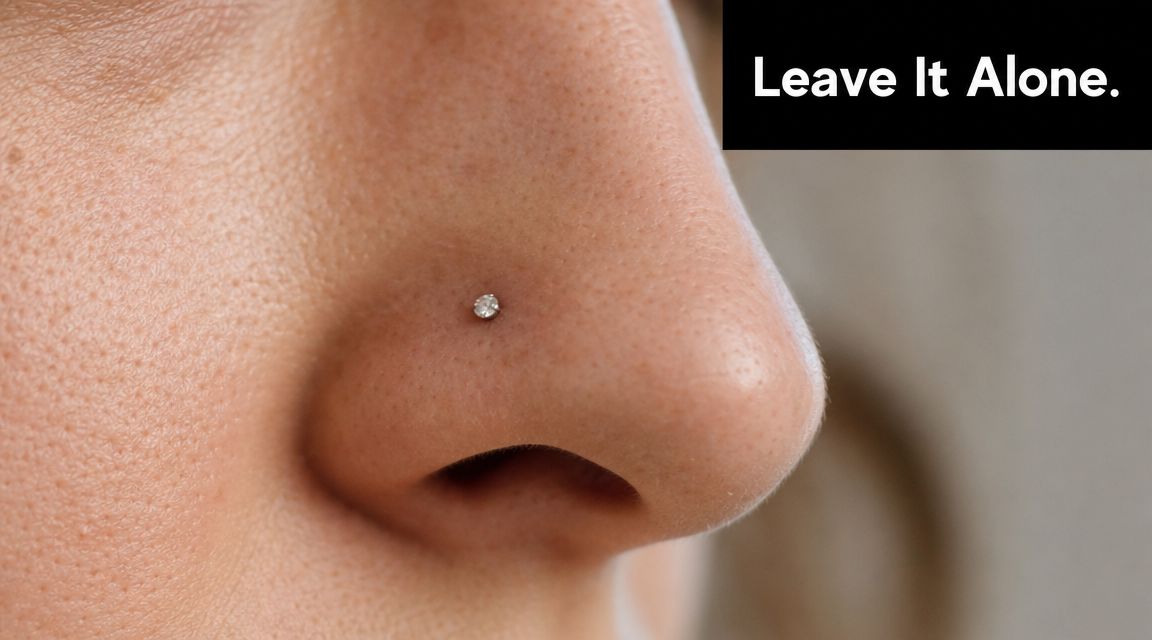
A fresh nose piercing should not be twisted, turned, or pushed back and forth during healing. That old advice needs to disappear. Movement tears at delicate tissue inside the channel and can drag dried discharge back into the piercing.
You also shouldn't remove the jewellery. Even if it looks fine on the outside, the inside is still vulnerable.
What to expect early on
A new piercing can be tender, slightly swollen, and a bit red at first. That doesn't automatically mean anything is wrong. The area has just been pierced, so some sensitivity is expected.
The more useful question is whether things are gradually settling or getting angrier.
Look for patterns:
- Normal early healing: mild tenderness, slight swelling, a little crusting, localised redness
- Usually irritation: increased soreness after snagging it, sleeping on it, or over-cleaning
- Needs attention: worsening pain, spreading redness, or anything that clearly feels like it's escalating rather than calming
Most fresh nose piercings do better when you stop checking them every hour.
Your day-to-day plan
For the first couple of weeks, keep life around the piercing as low-friction as possible.
- Wash your hands first if you need to touch the area at all.
- Clean only as advised, rather than every time you notice a bit of crust.
- Be careful with clothing when changing tops or jumpers.
- Watch your towels and pillowcases because they touch the piercing more than you think.
- Keep makeup and skincare off the piercing itself where possible.
Small habits that prevent bigger problems
This stage is often where a piercing gets knocked by normal routines. Face washing, drying your nose, hugging people, pulling clothes over your head, and sleeping face-down are all common culprits.
If you make one decision that helps most, make it this one. Stop treating the piercing like something that needs handling. Treat it like something that needs protecting.
Mastering the Cleaning Routine
You clean your piercing at the bathroom sink, catch yourself about to twist the stud, then stop because you are not sure whether that helps or makes things worse. That pause is useful. Good aftercare is simple, repeatable, and gentle enough that the tissue can settle instead of being disturbed all day.
At our Croydon and Bournemouth studios, we keep the routine straightforward because complicated routines lead to mistakes. UK professional aftercare standards point in the same direction. Clean with sterile saline, keep hands clean, avoid unnecessary handling, and leave the jewellery in place while the piercing heals.
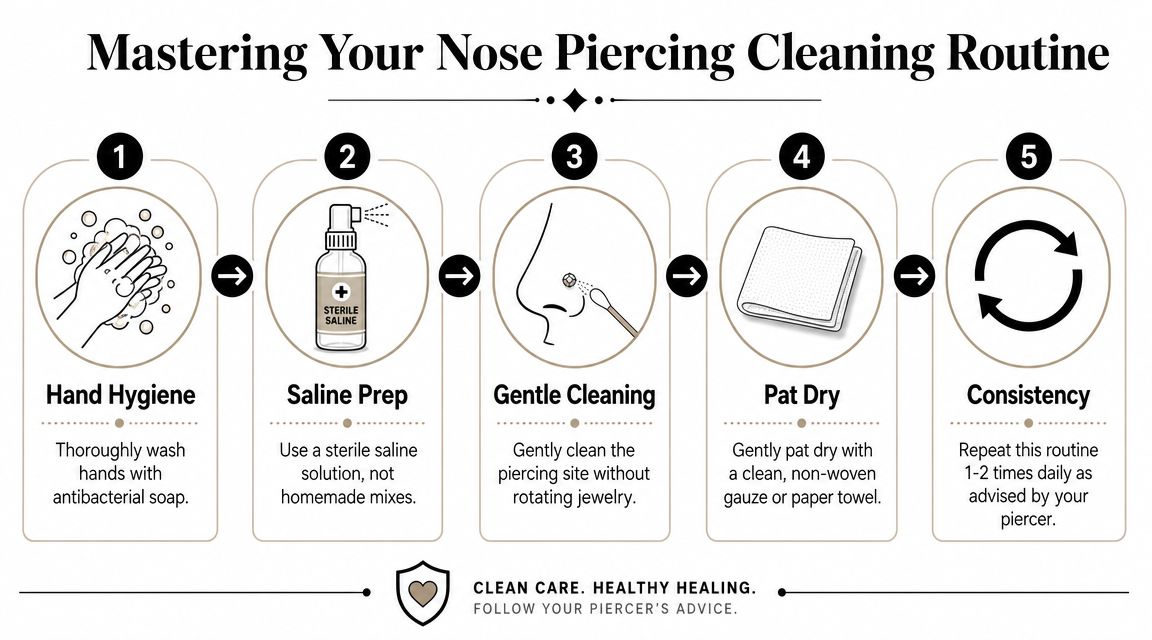
The step-by-step routine
This is the routine I recommend because clients can stick to it.
Wash your hands thoroughly.
If your hands are not clean, leave the piercing alone until they are.Use sterile saline.
Buy a ready-made sterile product rather than mixing your own. If you are unsure what to choose, this guide to saline spray for piercing aftercare explains what to look for.Clean the area gently.
Spray or soak the piercing area without forcing the jewellery to move. The goal is to rinse the area and soften any dried discharge.Remove loosened crust only if it lifts away easily.
If anything is still stuck, leave it for the next clean. Picking at it usually creates more irritation than the crust itself.Pat dry with something clean and disposable.
Non-woven gauze or clean paper towel works well. Fluffy towels shed fibres and can catch on jewellery.
What not to use
Healing tissue does not benefit from harsh products. It benefits from calm, consistent care.
Skip these:
- Hydrogen peroxide: too harsh for routine piercing aftercare
- Iodine: also too strong for a healing piercing
- Homemade salt mixes: often too weak, too strong, or reused for too long
- Random ointments: they can trap moisture and leave the area sticky
- Fluffy cotton wool: fibres cling to the jewellery and the piercing channel
A lot of myths come from the idea that stronger products clean better. In practice, they often dry the skin, delay settling, and make it harder to tell whether the piercing is healing well or reacting to what you put on it.
The over-cleaning trap
Over-cleaning is one of the most common problems I see in studio. Clients get worried by a bit of crusting or mild pinkness, then start cleaning several times a day. The tissue dries out, becomes reactive, and stays sore for longer.
Twice daily is enough for most fresh nose piercings unless your piercer has given you a specific reason to do something different. Leave the jewellery still during cleaning. Twisting it to "help" the saline get inside only reopens irritation.
If you are unsure whether what you are seeing is normal healing or the start of a problem, get a piercer to assess it early. That is far more useful than changing products three times in a week.
Navigating the Full Healing Timeline
You wake up one morning, the redness has eased, it no longer feels especially sore, and the jewellery seems to be sitting nicely. That is often the point where healing setbacks start. The outside can look settled while the piercing channel is still fragile enough to react to a jewellery change, a snagged towel, or a night of pressure on the area.
For a nostril piercing, healing usually takes months rather than weeks. The exact pace depends on jewellery fit, placement, your general health, and how much day-to-day irritation the area deals with. In studio, I tell clients to judge progress by stability, not by appearance alone.
What fully healed really means
A fully healed piercing is not one that looks less pink. It should feel settled through normal daily life, with no recurring tenderness, swelling, or flare-ups after routine face washing, sleeping, or careful cleaning.
Healing is rarely a straight line. A nose piercing can have a calm week, then become mildly irritated again after being bumped or pressed. That pattern does not always mean something is wrong. It means the tissue is still maturing.
Daily life while it heals
Small habits make a bigger difference than clients expect.
| Do | Don't |
|---|---|
| Sleep in a way that keeps pressure off the piercing | Sleep with your face pressed into the pillow |
| Keep pillowcases and towels clean | Reuse damp or grubby fabrics around your face |
| Be careful when washing your face or changing clothes | Rush and snag the jewellery on tops or towels |
| Leave jewellery in place during healing | Change it early because the outside “looks fine” |
| Keep swimming off the plan while it heals | Go into pools, hot tubs, rivers, or lakes before it's stable |
The trade-off is simple. The more normal life rubs, knocks, soaks, or compresses the piercing, the longer it tends to stay unpredictable.
Makeup and skincare can usually be managed, but keep them off the actual entry point. Side sleeping is another common problem. Clients are often careful during the day, then undo that work with several hours of pressure at night.
A piercing can look ready before the tissue is ready.
When to change jewellery
Jewellery changes should follow healing, not impatience. Swapping too early is one of the fastest ways to trigger swelling in a piercing that seemed to be doing well the day before.
If you are unsure whether your piercing has settled, get it checked before changing anything. Our team can assess healing in person at our Croydon and Bournemouth studios, and this guide on signs your nose piercing is not healing properly helps you spot the difference between normal delays and a problem that needs attention.
For people booking support and follow-up, Piercing Near Me lists studio information and booking options connected with Timebomb Tattoo & Piercing in Croydon and Bournemouth.
A calm-looking piercing is not always a stable one. Knowing that saves a lot of avoidable irritation.
Troubleshooting Irritation Bumps and Complications
You clean your nose piercing, leave it alone, then spot a small bump beside the jewellery and assume something has gone badly wrong. That reaction is common. In practice, the cause is often simple irritation from pressure, movement, moisture, or repeated contact.
Why nose piercings need extra respect
Nose tissue can be temperamental. It reacts quickly to friction, poor jewellery fit, heavy-handed cleaning, and everyday knocks that clients barely notice at the time.
I see the same pattern often in studio follow-ups. The piercing itself may have been done well and the jewellery may be suitable, but the area gets caught on a towel, pressed by glasses, rubbed during face washing, or bumped in sleep. A nostril piercing sits in one of the busiest parts of the face, so small problems can stay active longer if the trigger is still there.
Irritation versus infection
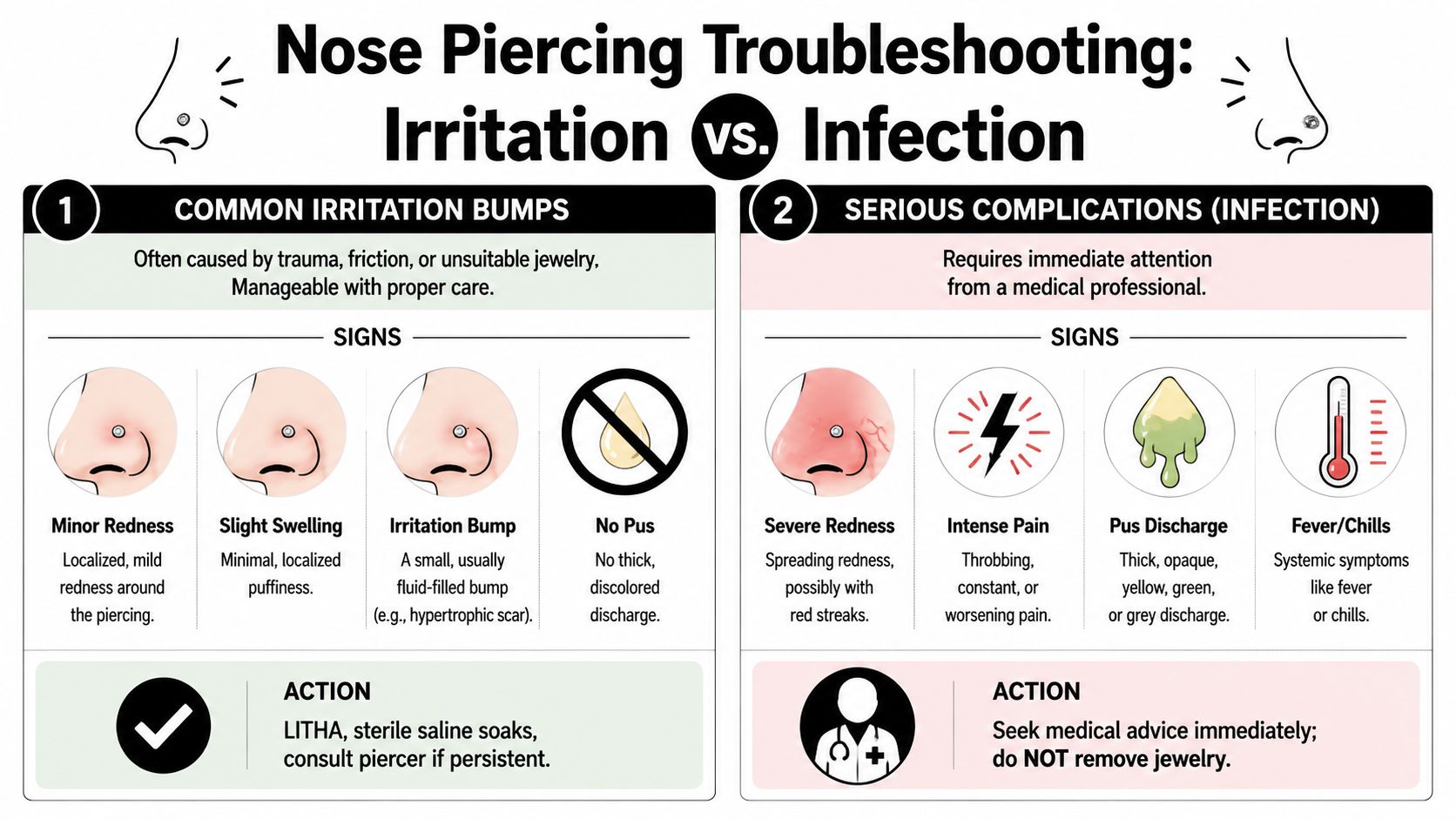
A typical irritation bump stays close to the piercing channel. It is usually small, raised, and pink or red. It may feel tender, especially after a snag or a day of extra movement.
Infection tends to look and feel more progressive. The area may become hotter, more swollen, more painful, and more red over time rather than gradually settling. Discharge can become thick and discoloured. Feeling unwell matters too.
Use this as a practical guide:
- More likely irritation: a localised bump, mild redness, slight swelling, sensitivity after trauma, symptoms that flare after knocking or sleeping on it
- More concerning signs: increasing heat, redness spreading beyond the piercing, stronger throbbing pain, thick yellow, green, or grey discharge, fever or feeling generally unwell
What usually helps an irritation bump
The best response is usually boring, and that is a good thing. Go back to the basics and remove the source of aggravation.
- Keep aftercare simple: sterile saline, clean hands, no picking
- Cut out home remedies: tea tree oil, alcohol, peroxide, strong antiseptics, and random creams often make the tissue angrier
- Check the mechanical causes: glasses, masks, makeup application, towels, phone contact, and sleeping position
- Leave the jewellery in place: twisting, turning, or flipping it creates fresh trauma
If the bump keeps returning, or the piercing seems stuck in a cycle of settling and flaring, this guide on signs a nose piercing is not healing properly can help you narrow down the likely cause before you book a check.
A persistent bump does not always mean something serious. It often means something is still irritating the site.
When to get help quickly
Get medical advice if symptoms are escalating, the redness is spreading, the area feels hot, or you feel unwell. Do the same if discharge becomes thick and strongly discoloured.
Get a piercer to assess jewellery fit, placement, and angle if the piercing keeps catching, sitting at pressure, or looking uneven after swelling has gone down. Under UK professional standards, aftercare is not just about what you do at home. It also includes sensible review when healing stops looking straightforward. Clients in Croydon and Bournemouth often do best with a quick in-person check before they try to solve the problem themselves.
One last safety point. If infection is a possibility, do not remove the jewellery on your own unless a medical professional tells you to. That decision needs proper assessment.
Your Professional Piercing Partner in the UK
Good aftercare at home matters. So does having an experienced piercer you can contact when something feels off.
That support is especially useful with nose piercings because many problems are practical, not dramatic. Jewellery might need checking. Swelling may have changed how it sits. You may need reassurance that what you're seeing is normal, or you may need a proper in-person look before a small issue becomes a bigger one.
Why follow-up matters
Reputable studios don't just perform the piercing and send you off with vague advice. They should be available for healing questions, jewellery checks, and sensible troubleshooting. That's a big part of safer outcomes, especially for first-time clients in Croydon or Bournemouth.
If you want to speak with a studio team, arrange a check-up, or find experienced support, you can contact the team through professional piercers near you.
Contact Our Studios
| Method | Contact Detail |
|---|---|
| Phone | 01202 900050 (Bournemouth) / 020 8686 7730 (Croydon) |
| 07752 913846 (Bournemouth) / 07902 490584 (Croydon) |
A good studio relationship saves guesswork. If you're unsure whether the piercing is healing normally, whether jewellery is ready to change, or whether that bump is simple irritation, ask. Getting clear advice early is much easier than undoing weeks of avoidable irritation.
If you're ready to book, need aftercare help, or want a professional opinion on a healing nose piercing, contact Piercing Near Me. They connect clients with safe, professional support for Croydon and Bournemouth, including guidance before, during, and after your appointment.