
You've probably done the same thing most first-time clients do. You've saved a few ear curation photos, decided you want something subtle, then stalled at the final step because the same question keeps coming back: how much is this going to hurt?
That hesitation is normal. People rarely worry about the jewellery first. They worry about the moment the needle goes through, whether they'll tense up, and whether they're accidentally choosing a piercing that's far more intense than it looks online.
Pain matters, but so does context. The least painful ear piercings usually feel manageable because the placement suits your anatomy, the technique is clean, and the piercer prepares you properly before the needle ever touches the skin. In practice, the experience is often shorter and calmer than anxious clients expect.
Starting Your Piercing Journey Without the Worry
A lot of clients walk in already half-committed. They've chosen the ear, picked the side, and maybe even know whether they want a tiny titanium stud or a neat hoop later on. What stops them is the build-up. They expect pain to be dramatic, drawn out, or harder to handle than it really is.
That's especially common with first lobes, second lobes, or a first cartilage placement. Someone will sit down and say they've wanted it for months, but every pain chart online has made them more nervous, not less. That's usually because those charts flatten everything into one simple ranking and miss the detail that matters. Where the piercing sits, how the tissue feels, and how well that placement suits your ear all affect the experience.
Most ear piercings aren't difficult because of the few seconds of sensation. They become difficult when someone chooses the wrong placement for their anatomy or goes to the wrong studio.
It helps to stop thinking in terms of fear and start thinking in terms of sensation, pressure, and recovery. A good piercing appointment is organised, quick, and clear. You'll know where the mark is going, what jewellery is being fitted, how to breathe through the needle, and what the aftercare looks like before you leave.
For anxious first-timers, that shift makes a difference. You're no longer guessing. You're choosing from the least painful ear piercings with real information behind the decision, not social media comments and random rankings.
The Piercing Pain Scale Explained From Lobe to Cartilage
Pain charts only become useful when you understand what they're measuring. The biggest divide in ear piercing isn't trendy versus classic. It's soft tissue versus cartilage.
The lobe is soft, fleshy tissue. Cartilage is firmer and offers more resistance. That's why a standard lobe almost always feels easier than a helix, conch, or industrial.
Why the lobe feels different
The clearest baseline is the standard lobe piercing. It's consistently ranked as the least painful ear piercing, with professional consensus and pain scale data placing it at approximately 3/10, or even 1 to 2/10, because there's no cartilage in the area. The sensation is typically described as a “quick pinch” lasting only seconds in this ear piercing pain ranking from Statement Collective.
That's why lobe placements are the usual starting point for nervous clients. They don't just hurt less. They also tend to feel more predictable during the procedure.
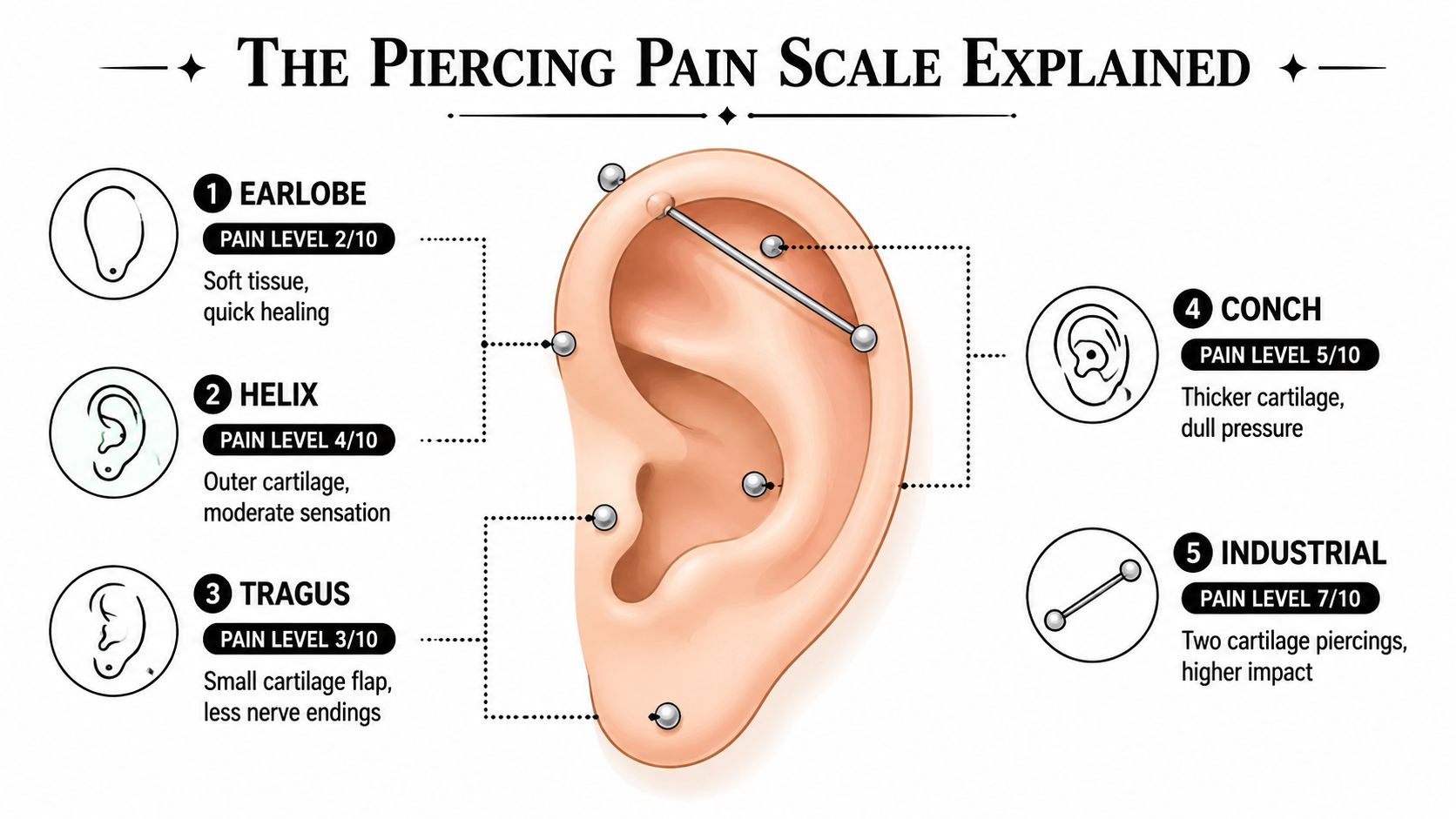
Ear Piercing Pain Scale at a Glance
| Piercing Placement | Pain Level (1-10) | What to Expect |
|---|---|---|
| Standard lobe | 1-3 | Soft tissue, brief pinch, beginner-friendly |
| Upper lobe | Low | Slightly firmer than the main lobe, still very manageable |
| Transverse lobe | 4 | More pressure than a standard lobe because of the angle |
| Helix | 4 | Outer cartilage, sharper sensation, easier to bump while healing |
| Tragus | 3 | Small cartilage flap, often more manageable than clients expect |
| Conch | 5 | Stronger pressure through thicker cartilage |
| Industrial | 7 | Two cartilage punctures, more swelling potential |
What a pain score actually means
A number isn't the full story. Two piercings can share a similar pain score and still feel very different.
- Initial sensation: Some placements feel like a quick sharp pinch.
- Pressure during jewellery insertion: Thicker tissue can feel more pressurised than painful.
- Recovery in the first days: A piercing that was easy to receive can still be awkward if it catches on hair, headphones, or pillows.
- Healing comfort: Here, many clients underestimate cartilage.
That last point matters. A helix may sound simple on paper, but if you sleep on it or catch it with a hairbrush, it can become more irritating than a placement tucked more neatly into the ear. If you want more context on how cartilage placements compare, this guide to cartilage piercing pain expectations is a useful companion.
Practical rule: Don't choose a piercing based only on the momentary sting. Choose it based on the full healing experience.
A Detailed Guide to Low-Pain Piercing Placements
If your goal is comfort first, start with lobe placements. They're the easiest way to build confidence, see how your body heals, and get used to cleaning a fresh piercing without the extra variables that come with cartilage.
Standard lobe
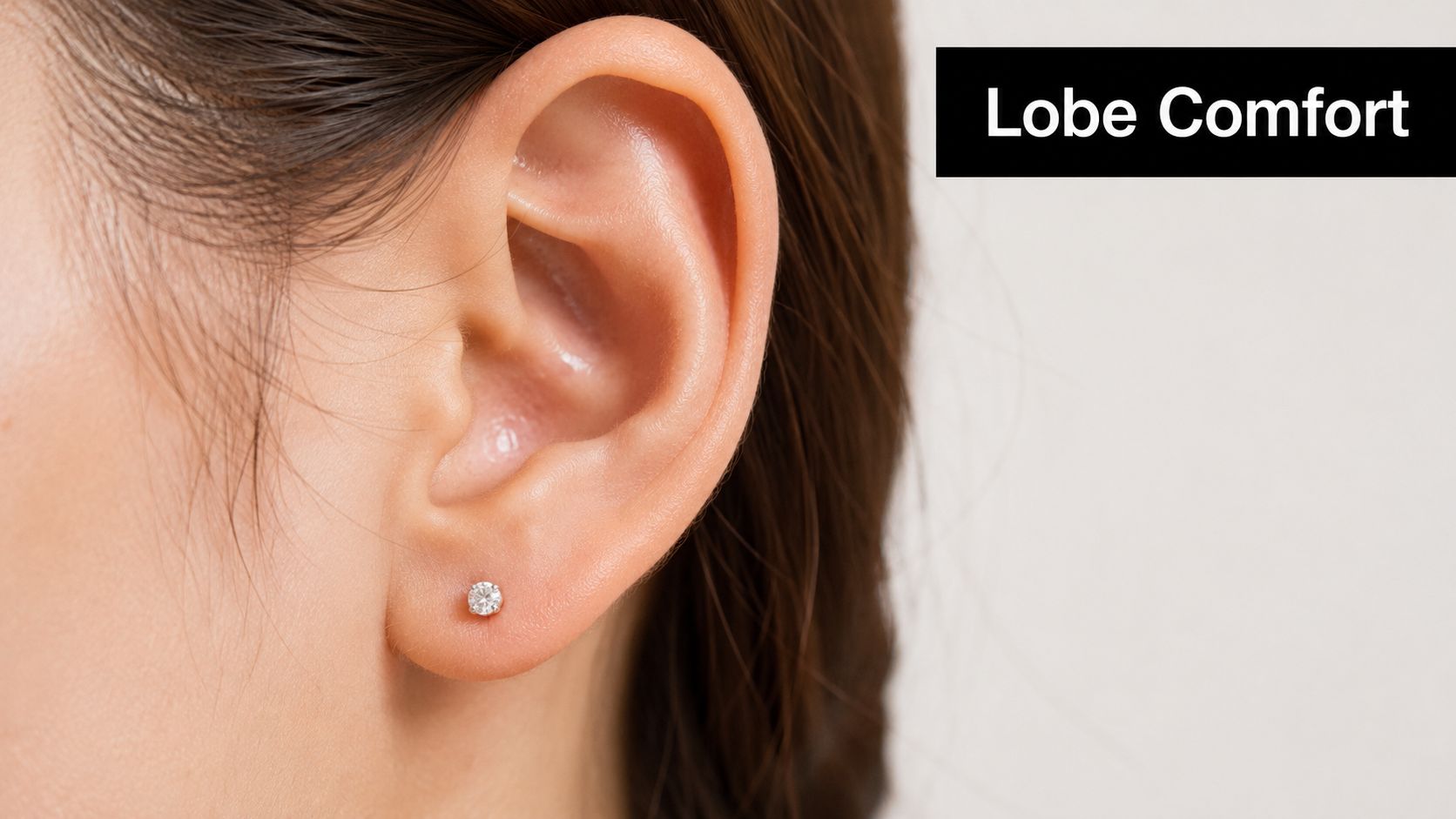
This is the classic first choice for a reason. It sits in the softest part of the ear and tends to feel straightforward from start to finish. For someone who's nervous, that matters more than style trends.
A standard lobe also gives you flexibility. You can begin with a simple implant-grade titanium stud, let it settle, and later build a stack around it once you know how your ear responds.
Upper lobe
An upper lobe sits above the traditional lobe line but still avoids true cartilage. That makes it a strong option for anyone who wants a more styled look without stepping into helix territory straight away.
It can feel slightly firmer than the main lobe depending on your ear shape, but it's still one of the least painful ear piercings in practical terms. It also works well in pairs, especially for clients who want a neat, balanced look rather than a single focal point.
Transverse lobe
This one deserves more attention than it gets. A transverse lobe passes horizontally through the lobe and usually uses a barbell, so the angle changes the sensation. It often feels more pressurised than a standard lobe, but it still avoids cartilage.
Because the jewellery path is different, this placement needs careful marking and strong anatomy for it. When it suits the ear, it offers a more distinctive look without jumping to a harsher cartilage experience.
A low-pain piercing doesn't have to be basic. Good placement can make a lobe piercing look far more intentional than people expect.
Choosing between them
If you're deciding among these placements, the choice usually comes down to what matters most:
- Lowest stress option: Standard lobe
- Simple but more styled: Upper lobe
- More unusual without cartilage: Transverse lobe
Jewellery also changes how comfortable the appointment and healing feel. For fresh lobe piercings, flat-back studs in implant-grade titanium are usually the easiest to live with. They reduce unnecessary movement and keep the area calmer than heavier or more decorative pieces.
If you're unsure what works best at the start, this guide to the best earrings for newly pierced ears explains why material, fit, and backing style matter so much.
Navigating Cartilage Piercings with Minimal Discomfort
Once clients move past lobes, the helix is usually treated as the obvious next step. It's common, visible, and widely described as the easiest cartilage option. That advice isn't always wrong, but it is often incomplete.
The main issue is that many pain guides focus only on the piercing moment and ignore what the piercing is like to live with afterwards. That's where a lot of people realise the helix wasn't automatically the gentlest choice for them.
Why helix isn't always the easiest
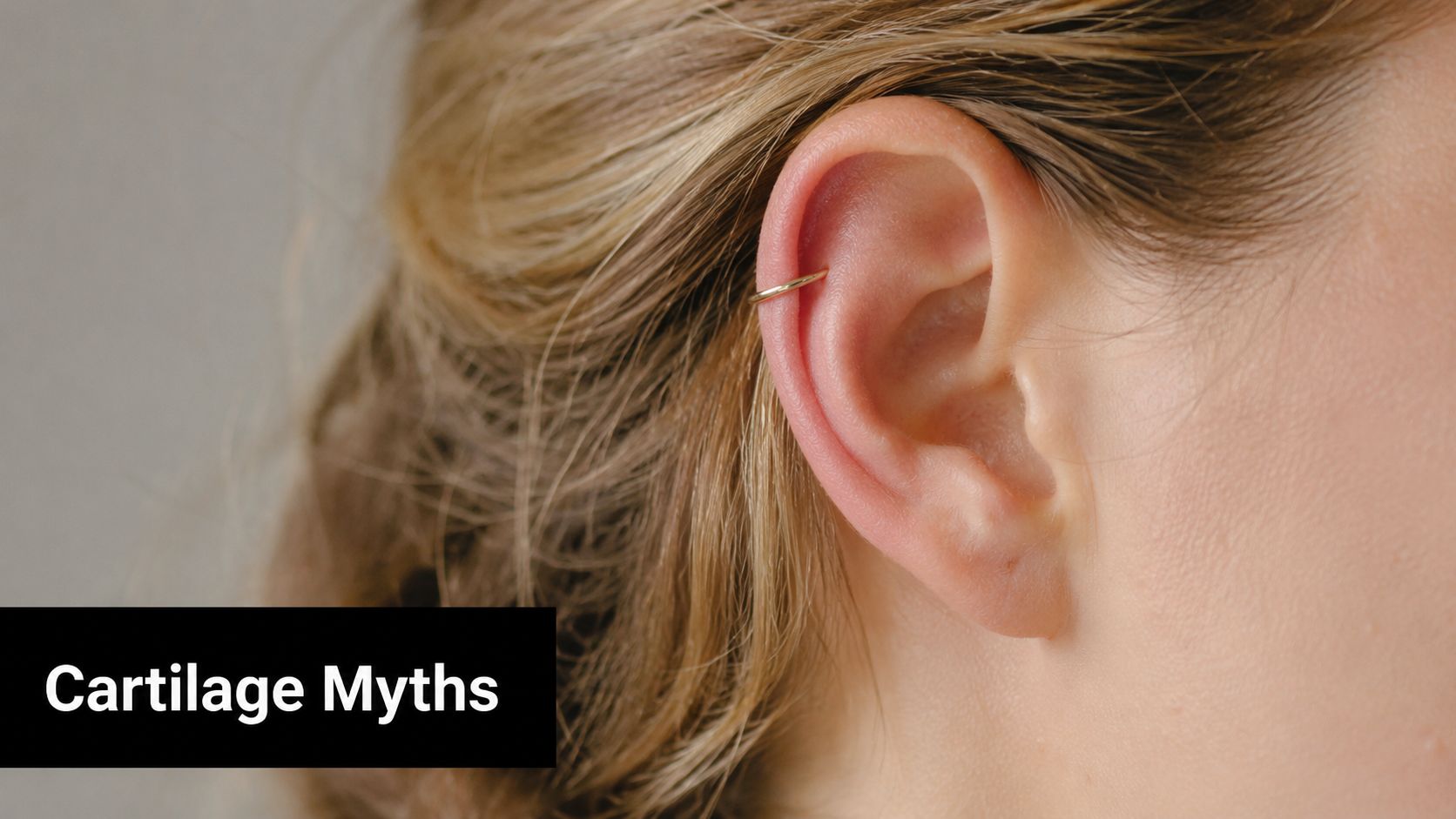
A helix sits on the outer rim of the ear. That placement makes it simple to style, but it also leaves it exposed. Hair catches it. Phones press against it. Sleep can irritate it. Even when the initial piercing is manageable, healing can feel fussier than expected.
By contrast, tragus and rook piercings are often more protected by the structure of the ear itself. They're not immune to swelling or tenderness, but they can be less vulnerable to the daily knocks that make a helix feel temperamental.
The overlooked low-pain cartilage options
The common claim that helix is always the least painful cartilage piercing doesn't line up with every client experience. User data has challenged that assumption. Pain is personal, and some people find a rook less painful than a helix.
That doesn't mean rook is universally easier. It means anatomy matters, and broad rankings don't tell the whole story.
Comparing helix, tragus, and rook
| Placement | Initial feel | Healing trade-off | Who it often suits |
|---|---|---|---|
| Helix | Sharp, quick cartilage pinch | Easy to bump and sleep on | Clients who want visible outer-ear styling |
| Tragus | Focused pressure in a small area | Earbuds and headphones become a factor | Clients wanting a discreet cartilage option |
| Rook | Deep cartilage pressure | Jewellery choice and anatomy are crucial | Clients with suitable folds who want a tucked-away placement |
A tragus often surprises first-timers. Because the area is compact, the procedure can feel more contained than they expected. A rook can also feel calmer during healing for the right ear because it sits inward rather than on the exposed outer edge.
Don't ask which cartilage piercing is easiest in general. Ask which cartilage piercing is easiest for your ear.
What works and what doesn't
Some choices make cartilage healing easier. Others create problems quickly.
- What works: A placement chosen for your actual anatomy, not a trend photo.
- What works: Implant-grade titanium fitted with enough room for early swelling.
- What works: Avoiding pressure from sleeping, helmets, or over-ear items when possible.
- What doesn't: Starting with a ring in a placement that would heal more calmly with a stud.
- What doesn't: Assuming “common” means “low-maintenance”.
- What doesn't: Forcing a rook or tragus when the fold or tissue doesn't support it well.
For many clients, the least painful ear piercings in cartilage aren't the most obvious ones. They're the ones that match the ear properly and avoid constant irritation once you leave the studio.
How Technique and Preparation Influence Piercing Pain
A well-chosen placement helps, but technique changes the whole experience. Two clients can get the same piercing and describe it very differently if one appointment is calm, precise, and properly set up while the other feels rushed.
That's why pain should never be treated as a fixed number. It's affected by the tool, the jewellery, the planning, and your own physical state on the day.
Needle, jewellery, and piercer skill
A single-use sterile needle creates a clean channel. A piercing gun forces blunt pressure through tissue and gives the piercer far less control, especially on anything beyond basic lobes. If you want to understand why professionals are so firm on this point, read this guide on piercing gun versus needle.
Jewellery choice matters too. Implant-grade titanium is dependable for fresh piercings because it's lightweight, stable, and less likely to add unnecessary irritation. Poor-quality jewellery can turn a manageable piercing into an angry one very quickly.
The piercer's handling is just as important. Clean marking, steady hand positioning, suitable angles, and properly fitted jewellery all reduce avoidable trauma.
The rise of anatomy-specific pain advice
Clients are asking more detailed questions than they used to. More first-time clients now ask about pain levels for specific placements before they book.
That shift makes sense. Generic pain charts often create more confusion than clarity. A proper consultation lets the piercer assess cartilage thickness, fold shape, existing jewellery spacing, and whether a placement is likely to heal smoothly or become a nuisance.
Clients usually feel calmer once someone looks at their actual ear and explains what will work, what won't, and why.
How to prepare before your appointment
Preparation won't remove sensation, but it often makes the appointment smoother.
- Eat properly: Don't arrive on an empty stomach, especially if you're nervous.
- Drink water: Being hydrated helps you feel steadier during the appointment.
- Wear practical clothing: Keep hair and collars out of the way if you're getting cartilage done.
- Skip last-minute panic research: Too many conflicting pain charts tend to increase tension.
- Tell your piercer if you're anxious: A good studio will slow the pace, explain each step, and coach your breathing.
If you'd like a personalised pain consultation before booking, call 01202 900050 (Bournemouth) / 020 8686 7730 (Croydon) or message 07752 913846 (Bournemouth) / 07902 490584 (Croydon) on WhatsApp. That's often the easiest way to turn a vague worry into a clear plan.
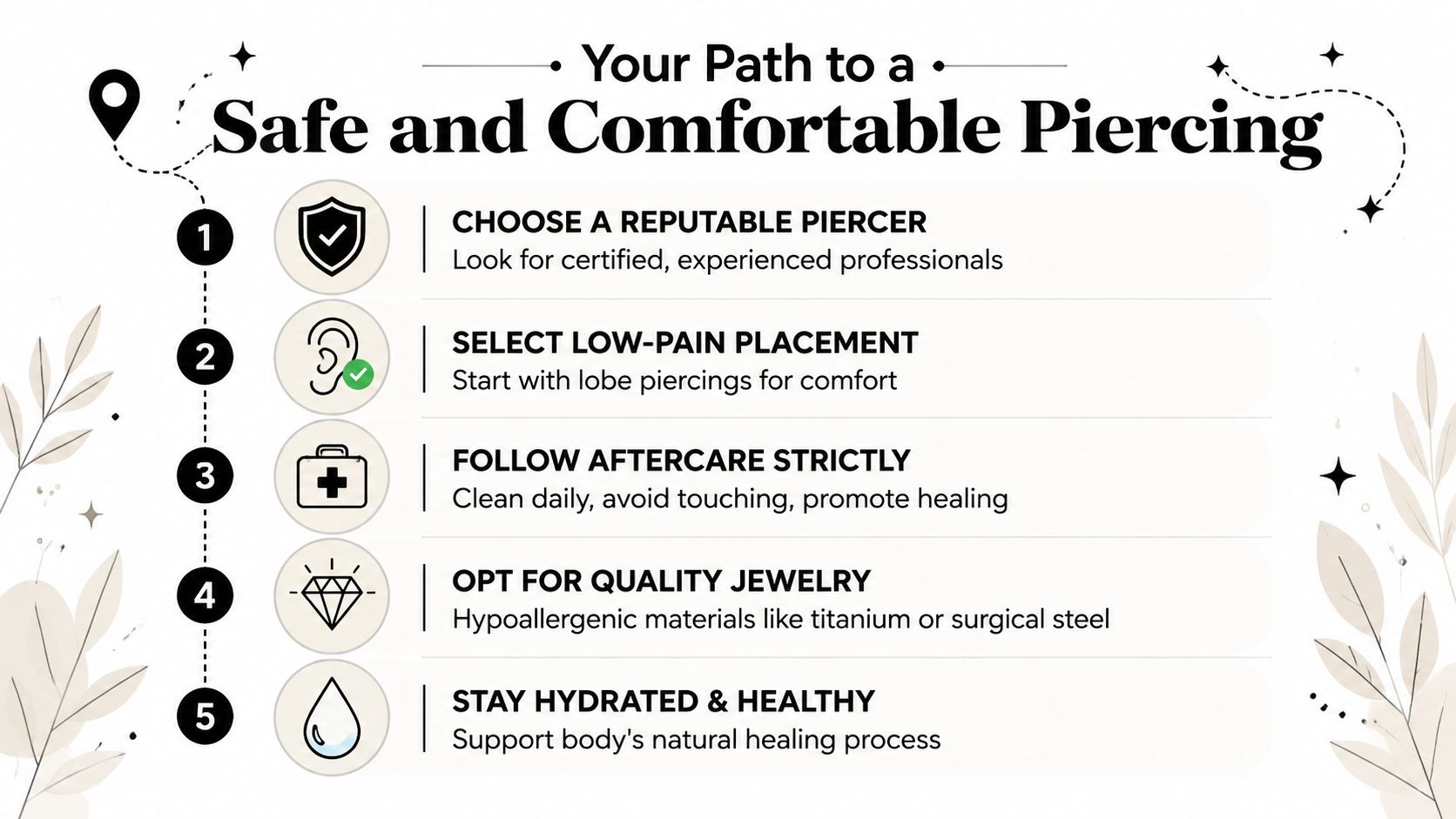
Your Path to a Safe and Comfortable Piercing
The least painful ear piercings are usually the ones chosen with restraint, not bravado. Start with tissue that suits your comfort level, choose jewellery that supports healing, and don't let a trend push you into a placement your ear isn't built for.
For first-timers, a simple checklist keeps the whole thing grounded. The best appointments are rarely dramatic. They're clean, careful, and well explained.
A practical checklist before you book
- Choose placement sensibly: If you're anxious, start with a lobe or a low-stress cartilage option suited to your anatomy.
- Prioritise professional technique: Look for single-use sterile needles, careful marking, and proper jewellery fitting.
- Pick implant-grade jewellery: Fresh piercings usually settle better with quality titanium.
- Plan your healing: Think about sleeping position, headphones, sport, and hair care before choosing the site.
- Ask for aftercare clearly: You should leave knowing exactly how to clean it and what irritation signs to watch.
The main trade-off to remember
The easiest piercing to receive isn't always the easiest piercing to heal. That's why the best decision combines both sides of the question. You want a placement that feels manageable in the chair and stays manageable in normal life.
Studios that use single-use sterile needles, implant-grade jewellery, and detailed aftercare guidance give you the best chance of that outcome. Calm communication matters too. A client who understands the process almost always handles it better than a client left to guess.
If you're in Bournemouth or Croydon and want advice before committing, call 01202 900050 (Bournemouth) / 020 8686 7730 (Croydon) or send a WhatsApp message to 07752 913846 (Bournemouth) / 07902 490584 (Croydon). A short consultation can save you from choosing the wrong placement and make the whole appointment feel far easier than you expected.
If you're ready to find a safe, professional studio, Piercing Near Me helps you explore trusted options, compare placements, and book with confidence. It's a straightforward place to start if you want expert-led ear piercing advice, quality jewellery, and supportive studios in Bournemouth and Croydon.
Trackbacks/Pingbacks