
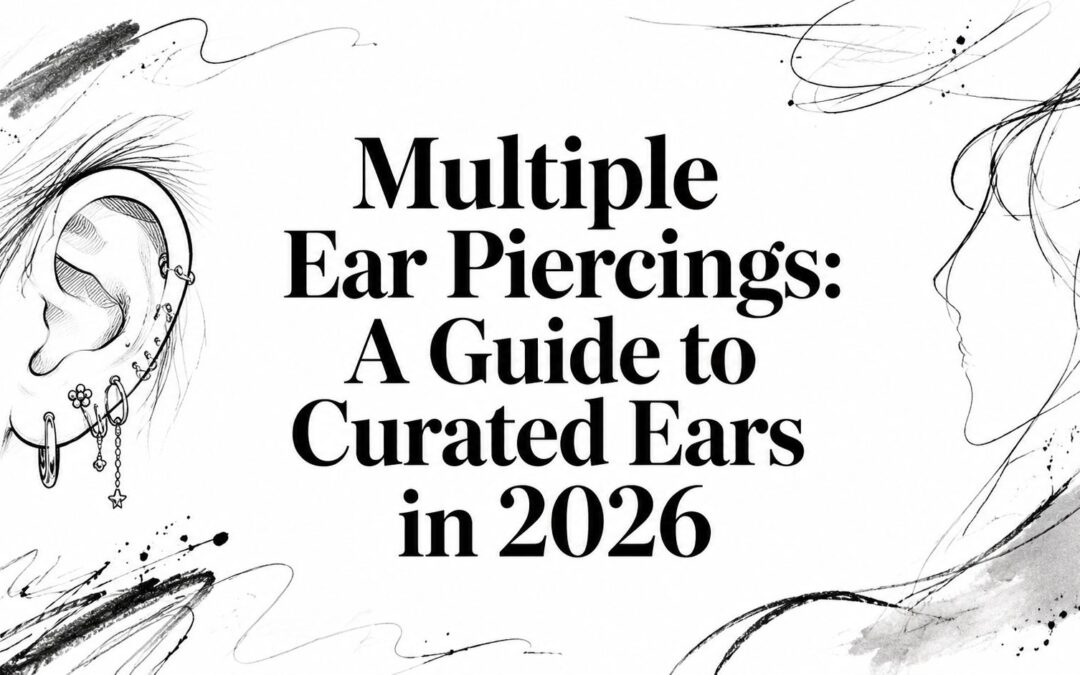
You've probably seen the look already. A neat stack of lobes, a helix or two, maybe a conch that ties everything together, and suddenly your simple earrings feel a bit unfinished. That's usually the moment people start thinking about multiple ear piercings.
Then the practical questions arrive. How many can you get in one sitting? Which side should you start with? Will your ear shape suit the placements you like? And how do you heal several piercings at once without making your life miserable?
A well-planned curated ear isn't built by luck. It's built the same way a good tattoo project or fine jewellery collection is built. With placement that suits you, a realistic healing plan, and jewellery that supports your body instead of fighting it. If you're in Croydon or Bournemouth and want guidance, you can call 01202 900050 (Bournemouth) / 020 8686 7730 (Croydon) or message 07752 913846 (Bournemouth) / 07902 490584 (Croydon) on WhatsApp.
Your Guide to a Curated Ear
Clients don't walk into the studio wanting “just anything”. They come in with screenshots, saved posts, and a rough idea of the mood they want. Maybe it's clean and minimal with stacked lobes. Maybe it's more sculptural, with cartilage placements that frame the ear like tiny points of light.
That look has become much more familiar in professional piercing. In a large studio report from 2020, ear piercings made up 71% of all piercings performed, with thousands of ear placements recorded, including large numbers of lobes and helix piercings, which shows how central ear styling has become in modern practice (2020 piercing statistics).
What often gets missed online is the journey between inspiration and a healed result. A beautiful finished ear doesn't usually happen in one afternoon. It's more like building a garden than buying a bouquet. You choose where each piece goes, you give it room, and you let it settle before adding more.
Practical rule: The best curated ears look effortless at the end, but they're usually planned in stages.
That's the part I want clients to feel confident about. Not just what looks nice in a photo, but what will still look nice after the swelling has gone down, after you've slept on it for weeks, and after each piercing has healed properly. Good planning saves you from irritation, crowding, and jewellery choices that seemed clever on day one and frustrating by week three.
Mapping Your Constellation of Piercings
A client often sits down with three saved photos and one question: “Can my ear do this?” The answer starts with mapping, not guessing. Two ears can suit the same overall style but need very different placements, spacing, and jewellery sizes to get there safely.
Your ear is made up of separate areas with different tissue, thickness, and curves. That matters because a piercing is not only a point on a photo. It is a wound that needs room to swell, jewellery that needs the correct angle, and a placement that has to stay comfortable while you sleep, work, wear headphones, or tie your hair back.
The main ear zones
The lobe is the soft lower section. It is usually the most flexible area for building a curated ear because it allows neat stacking, balanced symmetry, and easier jewellery changes once healed.
The helix runs along the outer rim. It adds height and outline, so even one well-placed helix can change the whole shape of the ear visually. Further inward, the conch creates a central focal point, while the tragus adds detail at the front of the ear. The daith sits in an inner fold and gives a more tucked-in, enclosed look.
If you want a broader overview before choosing placements, this guide to ear piercing types gives a helpful anatomy-based starting point.
Why anatomy changes the map
This is the part inspirational photos rarely explain well.
One client may have a broad conch that suits a larger stud with comfortable clearance. Another may have a shallower bowl, which means the same jewellery would sit awkwardly or catch more easily. A tragus can look prominent from the front but be too thin to support the style of jewellery someone has saved. A helix ridge might allow a clean line of two piercings, or only one with enough healing space between them.
A good consultation checks more than taste. We look at fold depth, tissue thickness, natural symmetry, available room for swelling, and whether your chosen placements will compete with each other once jewellery is in. It is similar to planning shelves on a wall. The pieces may be small, but spacing and support decide whether the final arrangement looks intentional or cramped.
Some ears suit a dense cluster. Others look better, and heal more quietly, with fewer placements and cleaner spacing.
Build the ear by role, not by random picks
Clients usually find planning easier once they stop viewing each piercing as a separate decision.
A balanced ear often combines a few different jobs:
- Foundation placements, such as first, second, or third lobes, create the base line
- Frame placements, such as helix piercings, shape the outer edge
- Feature placements, such as a conch or tragus, draw the eye inward
That simple framework helps you judge whether an ear feels balanced. If everything sits on the outer rim, the ear can look unfinished. If every piercing is clustered in the centre, it can feel crowded. The goal is not to fill space. The goal is to place each piercing where it has room to be seen and room to heal.
Healing and comfort at a glance
Healing speed and pain are never identical from one person to another, but broad patterns are consistent enough to help you plan realistically. Soft tissue usually settles faster. Cartilage usually needs more time and more patience.
| Piercing | Typical Healing Window | Relative Comfort During Healing |
|---|---|---|
| Lobe | Around 2 to 4 months | Usually the easiest to heal and sleep around |
| Helix | Around 6 to 12 months | Often tender for longer and easy to snag |
| Conch | Around 6 to 12 months | Usually manageable, but pressure from earbuds can be a problem |
| Tragus | Around 6 to 12 months | Small area, often fussy with headphones and phone use |
| Daith | Around 6 to 12 months | Inner placement, often less snagged but can feel quite sensitive early on |
Those are planning ranges, not promises. Your anatomy, jewellery fit, aftercare, and sleeping habits all affect how smoothly a piercing settles. The useful takeaway is simple. Lobes are usually the lighter part of the project. Cartilage is the long-term part of the project.
That is why mapping matters so much. A curated ear is not a shopping list. It is a sequence. The placements that look best at the end are usually the ones chosen with enough room, the right order, and a clear understanding of what your own ear can comfortably support.
Planning Your Piercing Journey
Clients often ask, “How many piercings can I get at once?” A better question is, “How many can I heal well at the same time?” Your ear may have room for several placements. Your body still has to repair each one, protect it from pressure, and cope with swelling day after day.
For that reason, many professional piercers keep a single appointment modest, especially if cartilage is involved. A couple of well-planned piercings usually heal more calmly than a larger set done all at once, because each fresh piercing adds swelling, cleaning, and more chances for irritation from sleep, hair, headphones, or clothing.
Plan for healing capacity
The appointment itself is the short part. Healing is the main project.
Fresh piercings behave like several small building sites sharing one narrow road. Blood supply, swelling, and daily aftercare all have to move through the same area. Add too many sites at once and traffic slows down. Nothing may go dramatically wrong, but the ear often stays tender for longer, becomes harder to sleep on, and gets less forgiving if one piece is knocked or snagged.
That is why a curated ear is usually built in stages. Good planning protects the final look.
Why one side at a time often makes life easier
If you sleep on your side, one-ear-first planning can save you months of frustration. Keeping one ear untouched gives you a reliable side for sleep while the other heals. Clients who ignore that detail often struggle more with pressure bumps and lingering soreness than with the piercing itself.
A practical sequence often looks like this:
Start with foundation placements
Begin with lobes, or lobes plus one cartilage piercing, depending on your anatomy and routine.Give them time to settle
Wait until swelling is down, tenderness is manageable, and cleaning feels easy before adding more.Add statement piercings later
Conch, tragus, or other feature placements are easier to place well once you know how your ear heals and what jewellery style suits the space.
One calm stage is usually faster overall than several irritated piercings competing for attention.
How a piercer builds a realistic sequence
In the studio, I am usually weighing four things at once.
Your anatomy
The rim, folds, thickness of tissue, and available space all affect what can be pierced safely and what jewellery will sit properly.Your daily routine
Headphones, helmets, hair length, phone use, sport, and dress code can turn an attractive idea into a difficult heal if we ignore them.Your aftercare habits
Some clients are happy managing several cleaning points. Others want a lower-maintenance start. Both approaches are valid. They just need different plans.Your long-term design
We leave room for future pieces so the ear still looks balanced a year from now, not just on the day of the appointment.
Jewellery choice also affects the plan from day one. Starter pieces need enough room for swelling and need to be made from body-safe materials, which is why many studios begin with implant-grade options. If you want a clearer sense of why that matters, this guide to implant-grade titanium piercing jewellery explains the differences well.
A good roadmap should leave you feeling calm, not rushed. You should know what you are getting now, what can wait, and how each stage supports the next. If you want to talk through a sequence that suits your ear and routine, call 01202 900050 (Bournemouth) / 020 8686 7730 (Croydon) or WhatsApp 07752 913846 (Bournemouth) / 07902 490584 (Croydon).
Choosing Your Jewellery Implant Grade Materials
Starter jewellery isn't just decoration. For a fresh piercing, it functions like an implant sitting inside healing tissue. That's why material choice matters so much more than people expect.
If the jewellery is poor quality, the piercing may stay irritated even when the placement and aftercare are otherwise fine. Clients often blame themselves first. In reality, unsuitable metal can keep a piercing unsettled no matter how carefully you clean it.
Why the material matters
Think of fresh jewellery like the surface under a new plaster. If that surface is rough, unstable, or shedding, the wound doesn't get the calm environment it needs. Cheap plated pieces can wear down. Mystery metals can trigger reactions. Soft decorative materials can create problems before the piercing has even had a fair chance.
By contrast, implant-grade materials are chosen because they're made to sit in the body more predictably. That's why many professional studios recommend titanium and other body-safe options for initial piercings. If you want to understand the differences, this guide to titanium piercing jewellery explains why it's so commonly used for fresh work.
What to avoid for fresh piercings
Some jewellery is perfectly fine for occasional wear in a healed piercing and still a bad choice for a brand-new one.
- Plated jewellery can lose its surface finish over time.
- Fashion jewellery often doesn't give you clear information about what metal is touching your skin.
- Silver for initial healing can be troublesome in a fresh piercing environment.
What you want instead
The goal is simple. Choose jewellery that supports healing first and style second, because style lasts longer when the piercing heals well. Good jewellery fit matters too. Even excellent material won't help if the post is too short for swelling or the design catches on everything you wear.
A curated ear looks expensive when it heals cleanly. That starts with what goes into the piercing on day one.
If you're planning multiple ear piercings, keep the whole ear in mind. It's better to have a smaller number of well-chosen, body-safe pieces than a full stack of jewellery that keeps causing trouble.
Healing and Aftercare for Multiple Piercings
One new piercing is easy to remember. Three or four can turn into a routine that needs a bit of discipline. The biggest shift is mental. Stop thinking of them as accessories and start thinking of them as separate healing wounds sharing one small area.
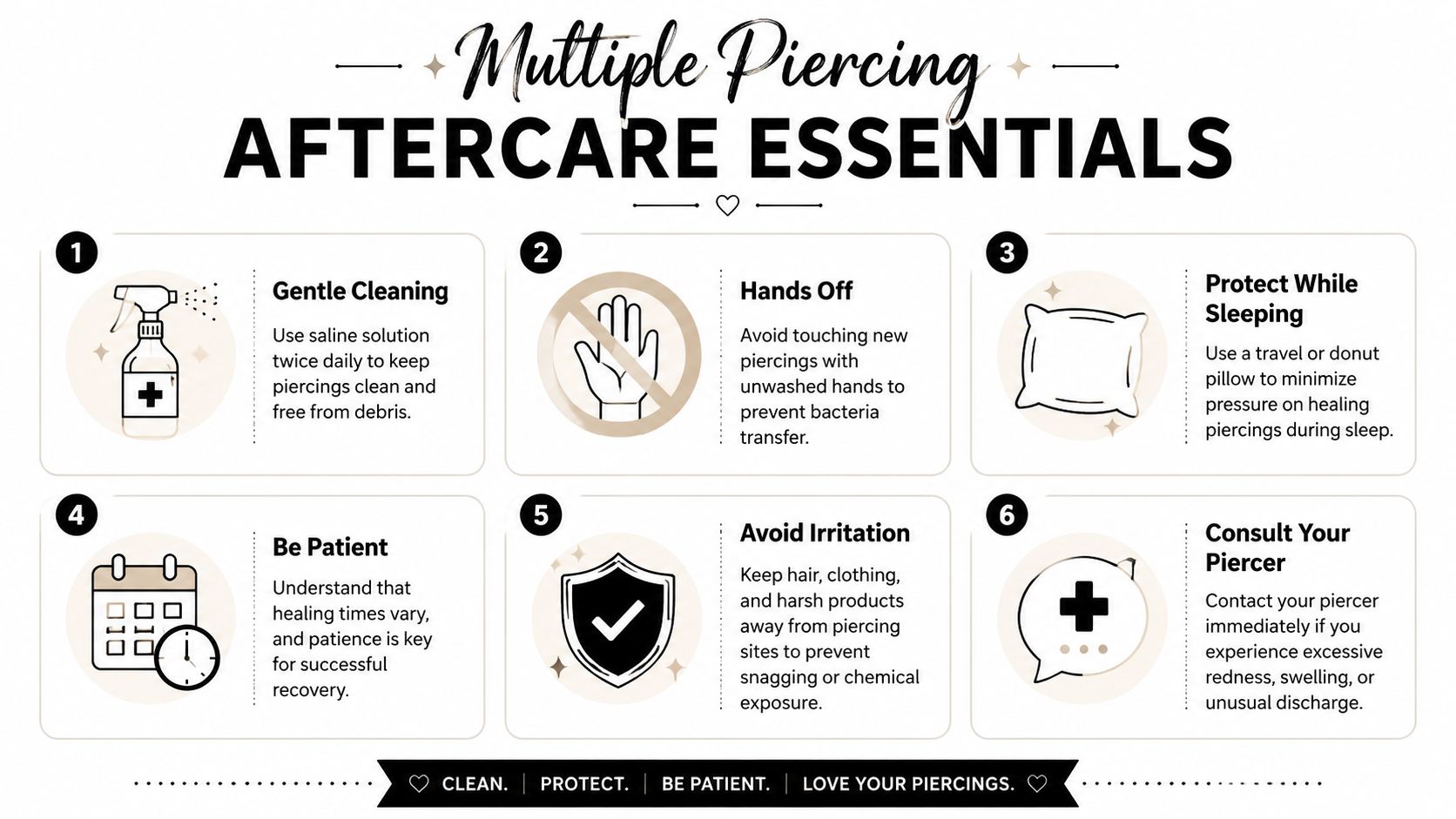
A calm aftercare routine doesn't need to be complicated, but it does need to be consistent. If you want a fuller breakdown, this page on after ear piercing care covers the basics in more detail.
The core routine
For most clients, the routine is straightforward:
Use sterile saline
Spray the front and back of each piercing twice a day.Leave the jewellery alone
Don't twist, turn, or slide it about to “help” it heal.Rinse gently in the shower
Let warm water run over the area without scrubbing.Dry with something clean and disposable
Non-woven gauze or paper towel is usually more practical than a fluffy bath towel.
That sounds almost too simple, which is why people often start adding unnecessary steps. They overclean. They use harsh products. They keep checking the jewellery. Fresh piercings rarely benefit from fussing.
What causes most irritation
In real life, healing usually gets disrupted by pressure and snagging more than by lack of effort.
Common culprits include:
- Sleeping on the piercing creates repeated pressure.
- Hair wrapping around backs or posts keeps the area tugged.
- Over-ear headphones and helmets compress healing cartilage.
- Changing jewellery too soon resets irritation.
A travel pillow or donut-style pillow can help if you can't reliably stay off one side. It gives the ear a space to sit without being crushed against the mattress.
If a piercing feels fine in the morning and sore by evening, look at friction first.
What's normal and what isn't
Some swelling, tenderness, and dried lymph are expected. Those little crusts aren't automatically a sign that something is wrong. They're often just part of healing.
Pay closer attention if you notice:
- Pain that keeps building instead of easing
- Discharge that looks green or yellow
- A rash that spreads around the area
- Swelling that makes the jewellery feel too tight
If that happens, contact your piercer promptly. Don't remove jewellery on a whim, and don't start self-treating with random internet remedies. A quick professional check can prevent a small issue from becoming a drawn-out one.
Healing multiple ear piercings is mostly about patience. Not glamorous, but true. The people who heal well usually aren't the ones doing the most. They're the ones doing the sensible basics every day.
Safety First Your Piercing Environment
A safe piercing starts long before the needle touches your ear. It starts with the studio you choose and the standards that studio follows every day.
In the UK, skin-piercing activities are regulated through local council licensing systems rather than a single national law, so clients need to check a studio's compliance history, hygiene controls, and sterile technique because the quality of the studio is their main safeguard (UK skin-piercing guidance).
What to look for in a studio
The good signs are practical, not flashy.
Single-use needles
A fresh needle should be opened for your piercing. Cartilage should not be done with a gun.Sterile handling
Jewellery for the procedure should be handled in a way that protects sterility.A visibly organised workspace
Clean surfaces, proper setup, and no sense of rushing.Clear answers to normal questions
Your piercer should be comfortable explaining process, aftercare, and what they're using.
Why this matters more with multiple ear piercings
Every extra piercing in a session adds another site that must be performed cleanly and placed accurately. If spacing is poor or technique is sloppy, those problems multiply. A rushed studio might still produce a piercing. That doesn't mean it produces a result you'll enjoy healing.
Clients sometimes focus so much on jewellery style that they forget the environment is the foundation. The jewellery can be beautiful, but if the setup is poor, you're starting from the wrong place.
Booking Your Piercings at Timebomb Tattoo
When you're ready to begin, the smoothest first step is usually a consultation. That gives your piercer time to assess anatomy, talk through your ideas, and plan a sequence that suits your sleep habits, work, and jewellery preferences. It also helps you avoid booking too much at once and regretting it halfway through healing.
For a curated ear, I'd always rather see a client start with a smart plan than chase a finished look too fast. A good appointment should leave you knowing what you're doing now, what can wait, and what may not suit your ear at all.
Timebomb Tattoo & Piercing welcomes appointments and walk-ins, but booking ahead makes things easier if you want proper time for placement planning and jewellery selection. If you're choosing between Croydon and Bournemouth, or you've got questions before committing, just get in touch directly.
Here's the simplest way to do that:
- Call the studio on 01202 900050 (Bournemouth) / 020 8686 7730 (Croydon)
- Message on WhatsApp at 07752 913846 (Bournemouth) / 07902 490584 (Croydon)
- Ask for a consultation if you want help mapping a full ear project
- Bring your inspiration so your piercer can translate ideas into placements that work
You don't need to have the whole ear figured out before you book. That's part of the job. If you're unsure where to start, call 01202 900050 (Bournemouth) / 020 8686 7730 (Croydon) or send a WhatsApp message to 07752 913846 (Bournemouth) / 07902 490584 (Croydon), and talk it through with the studio.
If you're comparing placements, aftercare advice, or booking options before your appointment, Piercing Near Me is a practical place to browse ear piercing information and connect with Timebomb Tattoo & Piercing in Croydon and Bournemouth.