
You've probably seen a clean little hoop sitting perfectly in the upper ear and thought, that's exactly what I want. It suits almost everyone, works with both minimal and stacked looks, and it feels like one of those piercings that's always in style rather than tied to one short trend cycle.
That instinct is sound. Helix piercings have had staying power for years, and a studio-based piercing report found that helix piercings ranked third overall with 2,066 piercings in 2019 in the dataset reported by Infinite Body's 2020 piercing statistics. So if you're considering a ring helix piercing, you're not choosing something obscure. You're looking at one of the most established cartilage placements people ask for.
The catch is simple. The jewellery you want to wear long term isn't always the jewellery that gives you the best start. Individuals inquiring about a ring helix piercing are often asking two separate questions at once. They want to know whether the placement will suit them, and whether they can begin with a hoop straight away.
Your Guide to the Perfect Helix Piercing
A good helix piercing should look right, heal well, and still sit properly months later. That sounds obvious, but a lot of disappointment comes from rushing the first jewellery choice to match the finished look.
The helix has earned its place as a classic. In the same studio-based report, helix piercings sat near the top of overall requests, which supports what most experienced piercers already see day to day: clients keep coming back to this placement because it works with a huge range of ear shapes and styling choices. If you want a ring helix piercing, you're aiming for a very normal, very wearable end result.
The question most clients really mean
When someone says “I want a ring helix piercing”, they usually mean one of these:
- They love the hoop look and want that as the final healed style.
- They assume ring and helix are one package rather than separate decisions.
- They want to avoid changing jewellery later because they're worried about the swap.
All of that is understandable. What matters is knowing that the safest route to a hoop often starts with something that doesn't look like the final plan.
Practical rule: If your goal is a neat ring, the best way to get there is usually to heal the placement first, then style it second.
That approach isn't about being overly cautious for the sake of it. It's about protecting the angle, reducing irritation, and giving the piercing the best chance to settle cleanly.
Understanding Helix Piercing Placement
The helix is the upper outer rim of the ear. It's cartilage, not soft lobe tissue, which is why it behaves differently once pierced.
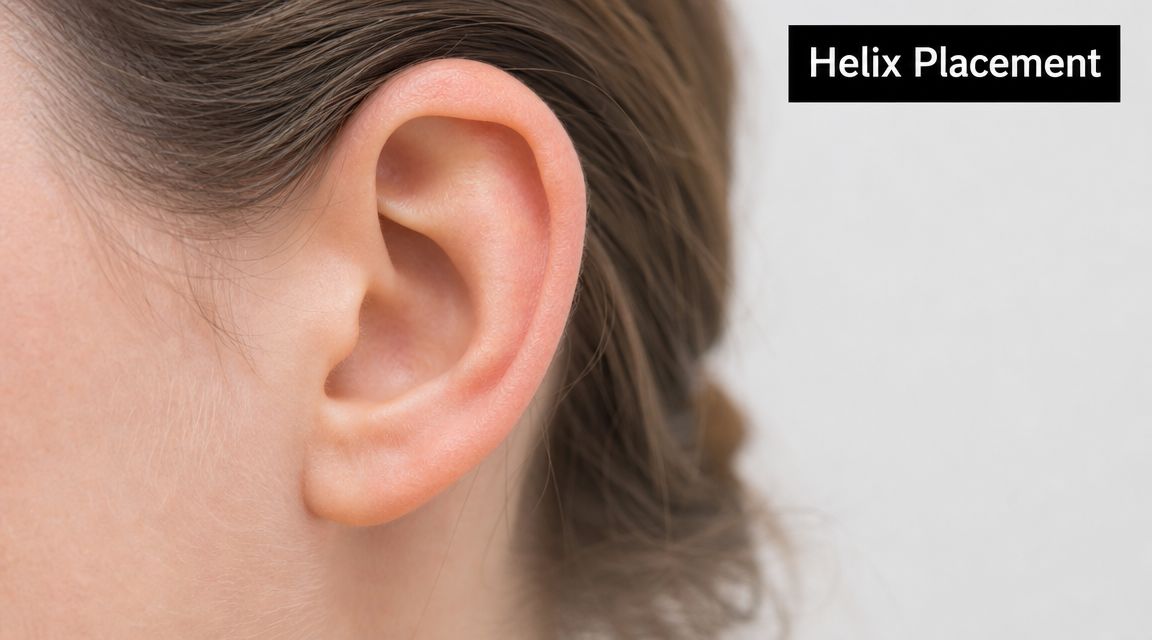
Think of the helix as the curved edge of the ear's outline. A piercer chooses the exact point on that rim based on your anatomy, the fold of the cartilage, and how the jewellery will sit once healed. Small differences in placement matter. A millimetre too shallow or too deep can affect comfort and appearance.
Placement and jewellery aren't the same thing
This is the part many first-time clients don't get told clearly enough. A ring helix piercing isn't a separate category of piercing. It's still a helix piercing. The ring is one jewellery style that can be worn in that placement.
That distinction matters because the placement has one job and the jewellery has another:
| Part | What it means |
|---|---|
| Helix | The location in the upper ear cartilage |
| Ring | The jewellery style, such as a hoop or captive ring |
| Stud | Another jewellery style, often used for healing |
If you hear a piercer talk about angle, tissue depth, or room for swelling, they're talking about the placement and healing plan. If you hear terms like hoop, labret, bead ring, or flat-back, they're talking about the jewellery choice.
A helix piercing can wear a ring later without needing to be pierced “as a ring”.
That sounds like a small point, but it helps avoid a lot of confusion. Once clients separate placement from jewellery, the rest of the advice makes much more sense.
The Ring vs Stud Debate for a New Helix Piercing
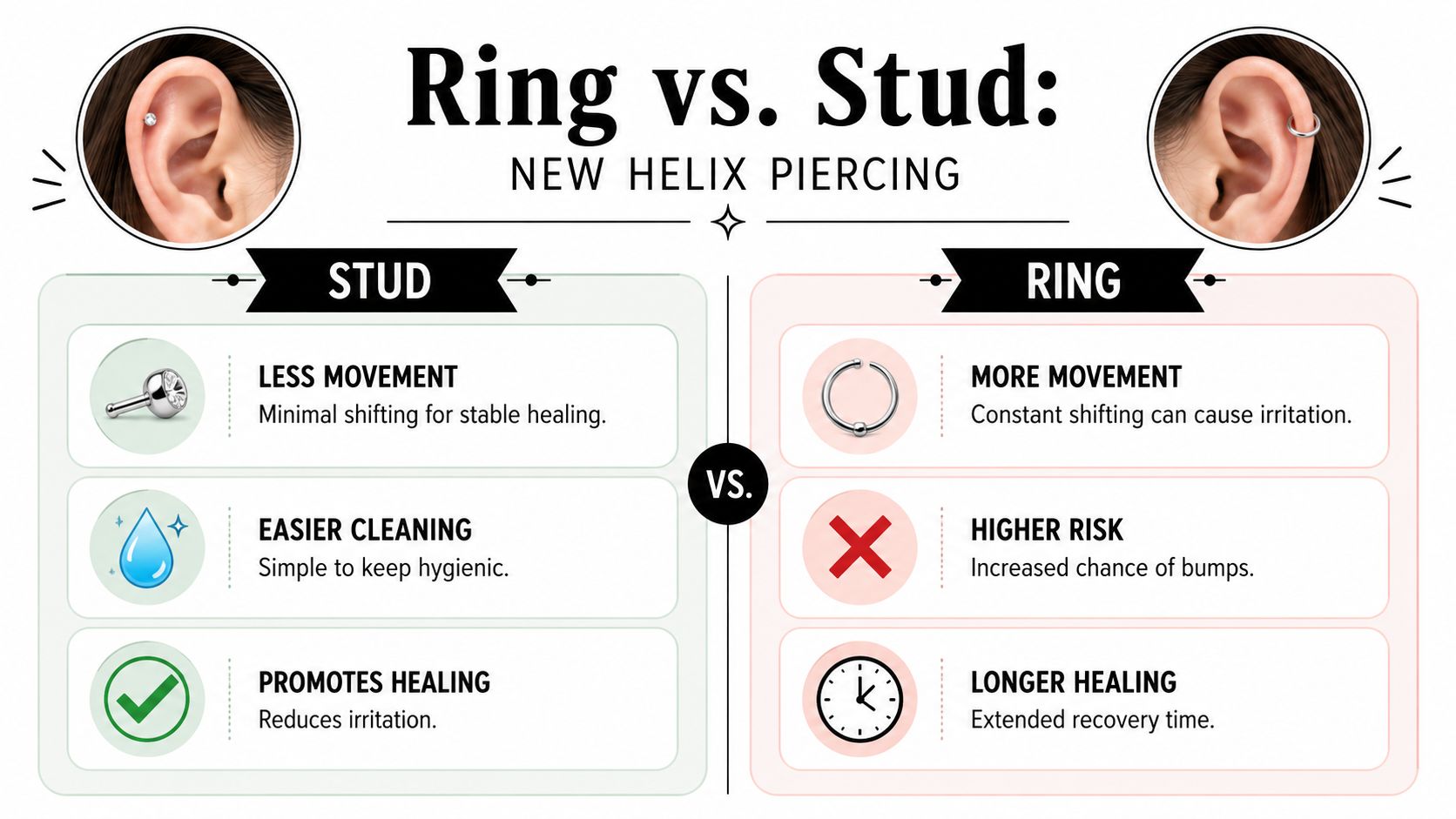
The short answer is that a stud is usually the better starting choice for a fresh helix.
That's not because rings look worse. It's because fresh cartilage needs stability. A ring introduces movement from the first day, and movement is one of the biggest things that slows cartilage down.
Why rings are harder on fresh cartilage
A curved piece of jewellery doesn't sit still in the same way a well-fitted flat-back stud does. Guidance discussed in Urban Body Jewelry's hidden helix article notes that curved jewellery can move more, snag more, and is harder to keep stable in fresh cartilage. That movement can contribute to irritation and migration.
In practical studio terms, that means:
- More shifting when you clean around it, dry your hair, pull a top over your head, or catch it with a towel
- More rotational pressure because a ring naturally wants to turn through the channel
- More snagging points on headphones, hats, hairbrushes and pillowcases
- More chance of bumps when the piercing is repeatedly annoyed instead of left calm
A fresh helix with a ring is a bit like trying to support healing with a wobbly splint. It can be done in limited cases, but it doesn't typically provide the easiest healing experience.
Why a stud gives better healing conditions
A straight labret or similar flat-back stud is mainly a healing tool at first. It keeps the channel steadier, gives the ear room for initial swelling, and tends to stay where it's placed.
That doesn't mean it's boring. It means it does its job.
Here's what usually works better with a stud:
- Stable angle: The piercing stays aligned while the tissue settles.
- Lower daily friction: There's less loose movement against the entry and exit points.
- Simpler cleaning: You can clean around a flat-back setup without a hoop rolling through the site.
- Better chance of a smooth jewellery change later: A calm, well-healed channel handles a ring far better than an irritated one.
If you're weighing your options, it helps to compare your aesthetic goal with your healing goal. A ring suits the finished look. A stud usually suits the healing phase.
For a closer look at the style many piercers recommend first, see this guide to a stud helix piercing.
When clients still ask for a ring first
This comes up all the time, especially when someone has saved reference photos for weeks. The right answer isn't to dismiss the request. It's to explain the trade-off clearly.
A ring first may mean more fuss, more irritation, and a longer road to the same end point. A stud first usually means a smoother start and a better chance that the final hoop will sit neatly once the piercing is ready.
If your only goal is “I want a hoop today”, a ring can sound appealing. If your real goal is “I want this to heal properly and still look great later”, a stud makes more sense.
That's the difference between buying jewellery for day one and planning a piercing for the long run.
Your Helix Piercing Journey With Us
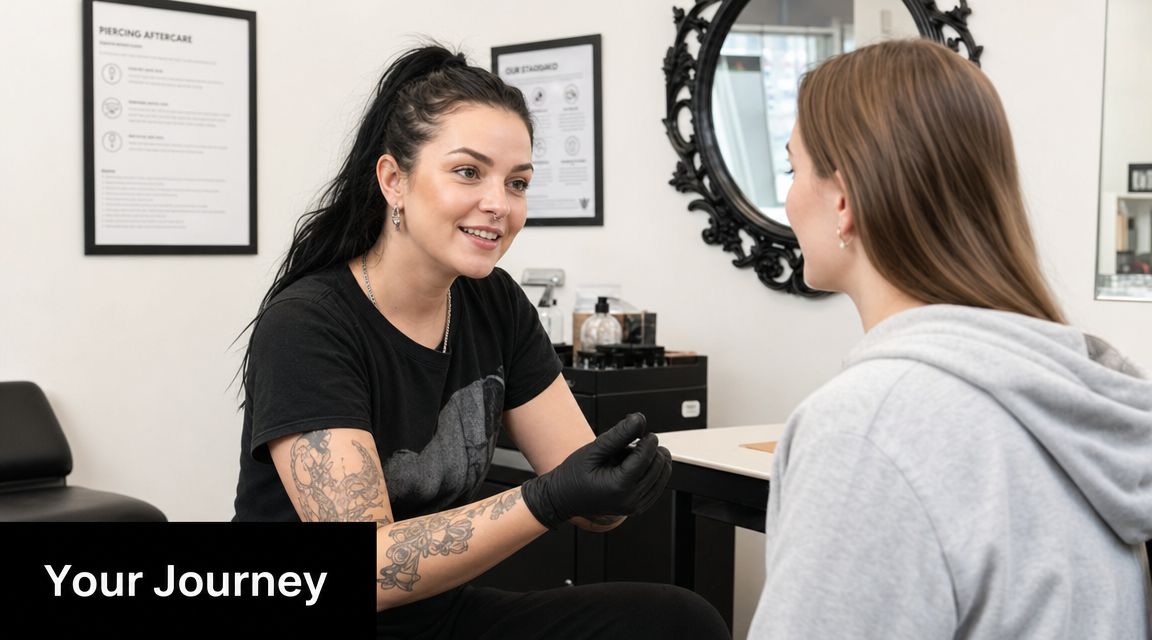
Walking into a good studio should feel calm, clear, and professional. You shouldn't be guessing what happens next or whether the person piercing you is rushing.
The consultation and placement check
A proper helix appointment starts with looking at your ear, not with opening jewellery trays straight away. The curve of the rim, how prominent the cartilage is, where you wear glasses, whether you sleep on that side, and the look you want later all affect the decision.
Experienced piercers slow things down. If the placement is slightly off, the jewellery can sit oddly from the start. If the angle isn't thought through, a future ring may never hang as neatly as you hoped.
Jewellery and sterile setup
For cartilage, reputable studios focus on implant-grade jewellery and a single-use sterile needle. Those aren't marketing words. They're part of reducing avoidable irritation and giving the piercing a clean start.
In a well-run appointment, you should expect:
- A sterile, single-use needle for the piercing itself
- High-quality initial jewellery chosen for healing, not just for photos
- A clean setup with proper handling of tools and jewellery
- Clear explanation before anything touches your ear
BABTAC-linked guidance described in Cosmopolitan's helix piercing coverage notes that the helix is upper ear cartilage and that cartilage piercings need more cautious aftercare than lobes because they heal more slowly and are more prone to irritation. That's exactly why strong studios don't treat cartilage as a quick add-on service.
The piercing itself and what clients usually notice
The actual piercing is fast. What clients notice most isn't the seconds of the procedure. It's whether they felt informed, whether the marking was discussed properly, and whether they leave understanding how to look after it.
A good appointment should leave you with confidence, not confusion.
The best piercings don't feel rushed. They feel deliberate.
That's especially true with cartilage. The skill isn't just putting jewellery in the ear. It's setting the piercing up so it still looks good once the initial excitement has worn off and real healing begins.
Healing Your Helix Piercing Properly
You leave the studio pleased with how your new helix looks. A few weeks later, the front looks tidy, the swelling has eased, and it starts to feel like the hard part is over. That is the point where many cartilage piercings get irritated, because the outside can look far more settled than the inside actually is.
Helix healing is slow. Cartilage has a poorer blood supply than lobe tissue, so it usually takes months to calm down fully and build a stable channel. In practice, I tell clients to expect a long healing period and to judge progress by how the piercing behaves over time, not by how neat it looks in the mirror.
What actually helps it settle
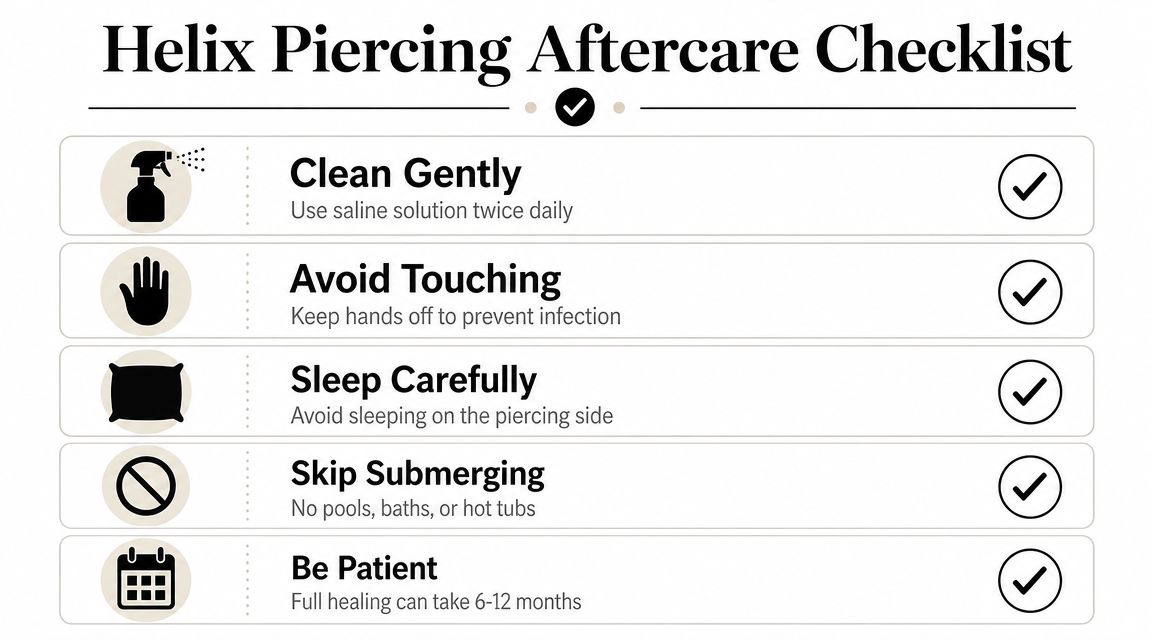
Good aftercare is boring on purpose. The clients who heal best usually keep the routine simple and stop giving the piercing extra reasons to stay inflamed.
- Clean with sterile saline gently: Once or twice a day is usually enough.
- Keep your hands off it: Twisting and checking it slows things down.
- Avoid pressure: Sleeping on that side can keep a helix sore for weeks.
- Be careful with hair, headphones, hats, and towels: Repeated snags matter.
- Leave jewellery changes to your piercer until it is ready: Early swaps often restart irritation.
If you want the routine set out clearly, this guide to aftercare for helix piercing covers the practical steps.
What slows healing down
The main problem with helix piercings is usually irritation from movement and pressure. That is one of the big reasons experienced piercers are cautious about rings in fresh cartilage. A ring moves more, catches more easily, and puts changing pressure on the angle of the piercing. If your goal is a healed ring, protecting the piercing early gives you a better chance of wearing one later without bumps or ongoing soreness.
Common setbacks include:
- Sleeping on the piercing
- Changing jewellery because the outside looks healed
- Using strong antiseptics, tea tree oil, or homemade mixes
- Knocking it with glasses, brushes, or clothing
- Trying to start with a hoop for the look, even when the tissue is still reactive
A helix can also have good weeks and bad weeks. Mild crusting, tenderness after a knock, or a temporary flare-up does not always mean infection. It often means the piercing has been disturbed and needs less handling, less pressure, and more time.
When a ring is actually a good idea
A ring belongs in a helix when the piercing is calm, durable, and uneventful. Calendar dates help a bit, but behaviour matters more.
A piercer will usually want to see:
| Good sign | Why it matters |
|---|---|
| No tenderness in day-to-day life | The tissue is coping without reacting |
| No recurring bumps | The angle and jewellery have settled well |
| Little to no crusting | Active healing has reduced |
| A stable piercing over time | A jewellery change is less likely to trigger a setback |
If you want the hoop look, patience usually gives the better result. Starting safely, healing fully, and fitting the ring at the right stage is what gets that look to last.
Ready for Your Helix Piercing? Book With a Pro
A successful ring helix piercing usually starts with accepting one simple truth. The jewellery that heals best is often not the jewellery you plan to wear forever.
If you want the hoop look, aim for the hoop. Just don't skip the part that gets you there safely. Starting with a well-fitted stud, giving the cartilage proper time, and changing to a ring only when the piercing is ready usually leads to the cleaner result.
What to look for in a studio
Before you book anywhere, check for the basics that matter:
- Implant-grade jewellery: Good materials make healing easier to manage.
- Single-use sterile needles: Cartilage should be pierced with precision and hygiene in mind.
- A clean, organised environment: You should feel comfortable the moment you walk in.
- A piercer who explains the trade-offs: If someone promises the look without discussing healing, be cautious.
- Healed work, not just fresh photos: Fresh piercings are easy to photograph. Healed results reflect the actual performance.
If you're still deciding where to go, this page on where to get a helix piercing can help you compare what a professional setup should look like.
For bookings or questions, call 01202 900050 (Bournemouth) / 020 8686 7730 (Croydon) or message WhatsApp 07752 913846 (Bournemouth) / 07902 490584 (Croydon). If you're torn between a ring and a stud, ask before you book. A short conversation now can save you months of irritation later.
If you're ready to find a reputable studio and book with confidence, Piercing Near Me makes it easy to explore trusted options, learn what to expect, and take the next step towards a safe, well-planned helix piercing.