
You look at your new piercing in the mirror, and there it is. A small bump that wasn't there a few days ago. It's easy to jump straight to panic, assume something has gone badly wrong, or start searching for quick fixes that promise to make it vanish overnight.
Most of the time, the right first step is slower and calmer than that. Piercings heal by creating scar tissue as part of the normal process, so the question usually isn't “Is there scar tissue?” but “Is this healing as expected, or is the tissue overreacting?”
That distinction matters. Some bumps settle once irritation is removed. Some need a jewellery adjustment. Some need medical treatment, especially if you're prone to keloids. If you're worried about scar tissue from piercing, you're asking the right question.
That Unwanted Bump on Your New Piercing
A bump beside a fresh stud or ring can feel alarming because it changes the look of the piercing and makes every bit of redness seem suspicious. Clients often tell me they're scared they've “ruined” the piercing. In most cases, that fear comes before understanding what the tissue is doing.
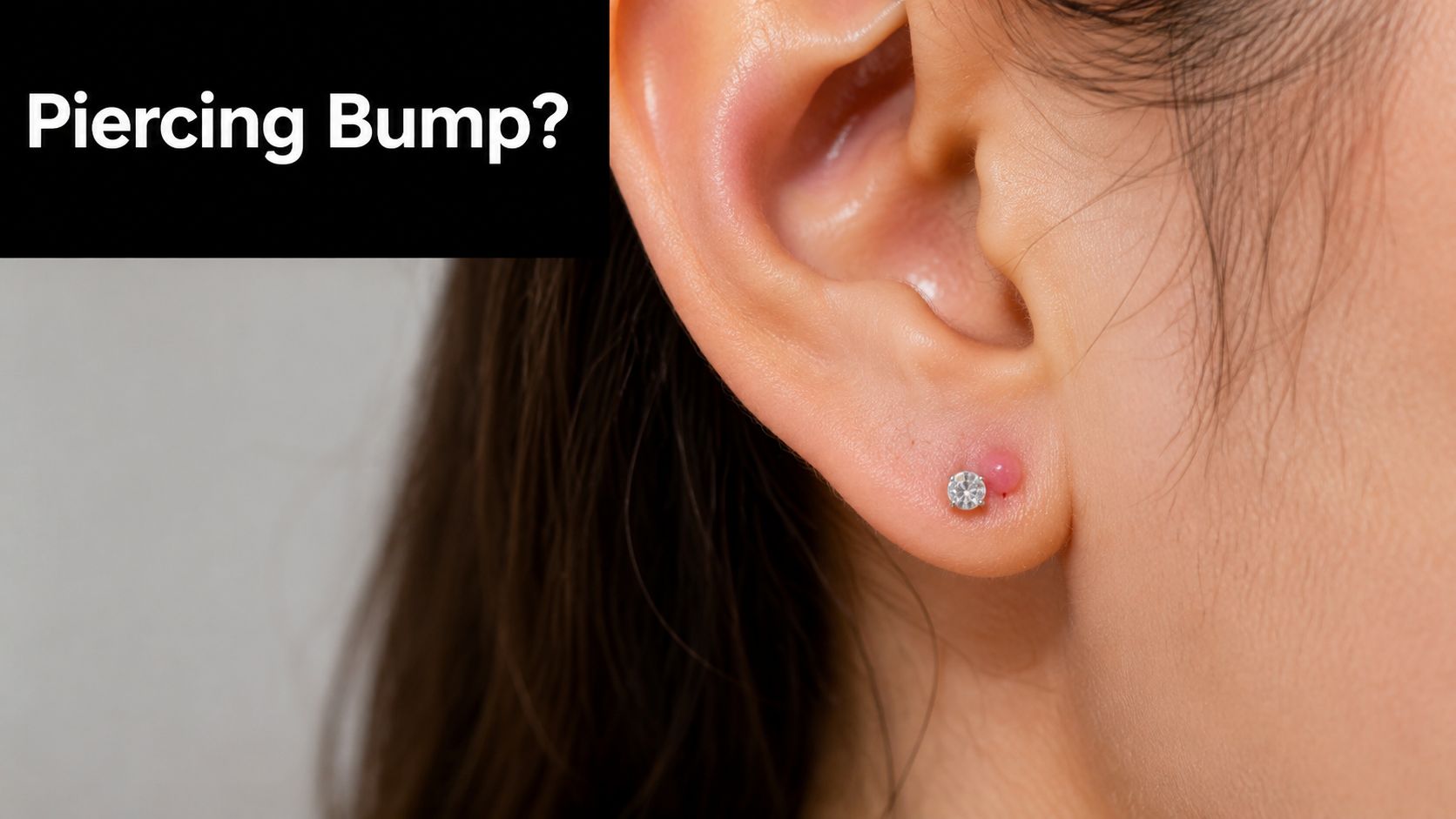
In the UK, scar tissue is a documented side effect of body piercing procedures, occurring in 4% of respondents surveyed in a UK-specific study on skin procedures, according to the Royal Society for Public Health report on skin procedures. That doesn't mean every bump is permanent scarring. It does mean scarring is a real, recognised complication rather than something rare or imaginary.
What usually confuses people
The word scar sounds dramatic, but every healing piercing involves tissue repair. Your body is trying to stabilise a channel around the jewellery. A little swelling, tenderness, and local redness can be part of that process.
Trouble starts when the healing response becomes excessive or keeps getting triggered. That's when you may see a raised bump, thickening, or tissue that seems to stay angry rather than gradually settling.
Practical rule: A bump is a sign to slow down and assess the cause, not a sign to start experimenting with harsh home remedies.
What to do first
Before you assume the worst, check the basics:
- Location: Is the bump tight to the entry or exit point?
- Pressure: Are you sleeping on it, knocking it, or wearing headphones over it?
- Jewellery fit: Does the jewellery look too short, too tight, or angled oddly?
- Timing: Did the bump appear after snagging, changing jewellery, or over-cleaning?
Those details often explain more than the bump itself. The good news is that many piercing bumps improve once the source of irritation is identified and removed.
Normal Healing vs Problematic Scarring
Healthy healing isn't the absence of scar tissue. A piercing needs it. During healing, the body forms a tunnel of scar tissue called a fistula around the jewellery. The body piercing healing overview describes this as part of the proliferative phase, and notes that this stage can last weeks to over a year before the tissue matures and stabilises.
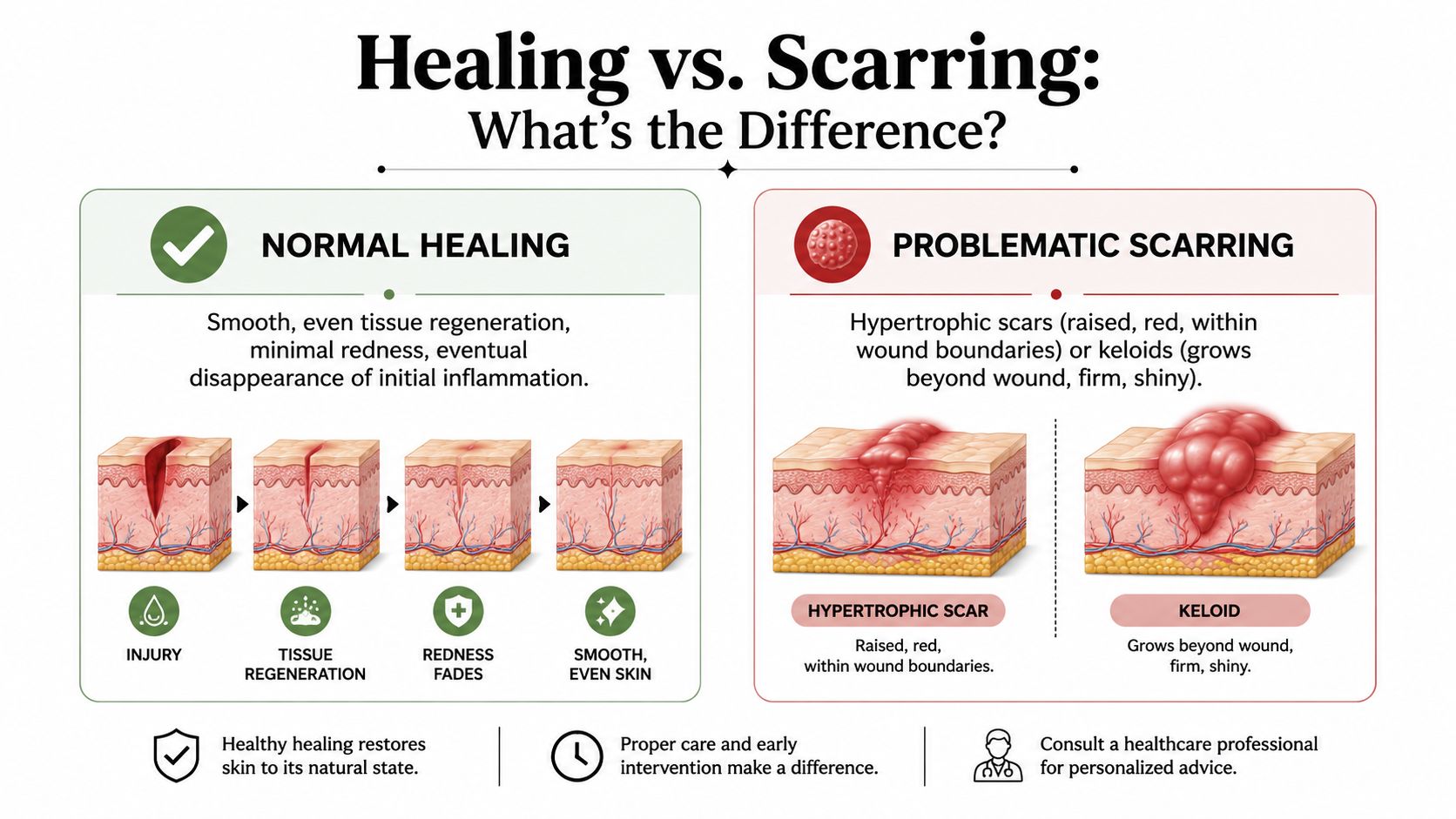
If that sounds strange, think of the fistula as the body building a neat little lining for the piercing. That lining is supposed to be there. The problem is when the body builds too much of it, or builds the wrong kind.
What normal healing looks like
A healing piercing tends to move through a predictable pattern:
- Early inflammation: warmth, mild swelling, and sensitivity
- Active repair: the channel strengthens around the jewellery
- Maturation: the piercing becomes calmer, more stable, and less reactive
That path isn't always smooth. Piercings can have good weeks and bad weeks, especially if they're bumped or slept on. A temporary flare-up doesn't automatically mean a serious scar is forming.
The two scar types people mix up
The most common confusion is between hypertrophic scars and keloids.
A useful way to picture it is this. A hypertrophic scar is like a scaffold that was built a bit too thick, but still stays on your property. A keloid is the growth that spreads beyond the original boundary.
| Characteristic | Hypertrophic Scar | Keloid Scar |
|---|---|---|
| Where it grows | Stays within the original wound area | Extends beyond the original wound area |
| Typical look | Raised, often red or firm | Raised, firm, often shiny |
| Main driver | Ongoing irritation and excess collagen during healing | Genetic predisposition and abnormal scar growth |
| Chance of settling | May improve when irritation is removed | Doesn't usually resolve on its own |
| Best next step | Reduce irritation and monitor healing | Seek medical assessment |
Hypertrophic scars
Hypertrophic scarring is usually linked to irritation. The tissue is producing excess collagen because something keeps aggravating the site. That “something” might be pressure, friction, poor jewellery fit, or repeated trauma.
These bumps are often localised right around the piercing channel. They can look red, pink, or flesh-coloured, and they usually stay close to the hole itself.
A raised bump beside a piercing is often an irritation issue first, and a scar diagnosis second.
Keloids
Keloids are different. They grow beyond the original injury margins and are tied much more closely to personal and family tendency. If you've had keloids before, or strong family history of them, that changes how carefully a piercer should assess your placement options.
A hypertrophic bump may respond to simple changes in care, while a keloid usually needs medical treatment. If you use the wrong label, you can waste time on the wrong plan.
Why Piercing Scars Form and How to Prevent Them
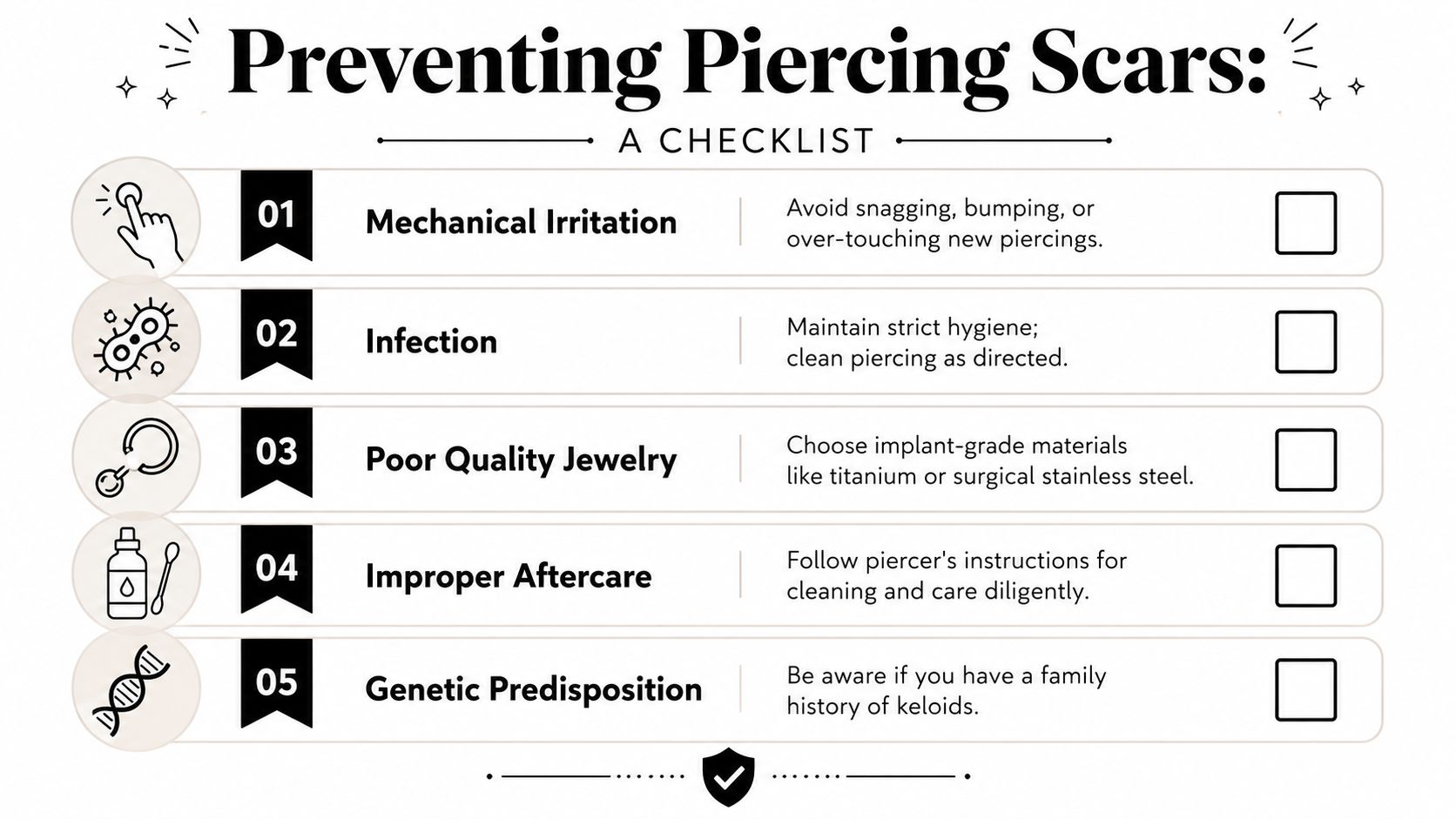
Scar tissue from piercing doesn't appear out of nowhere. The body usually has a reason for overproducing collagen, and the reason is often mechanical irritation. In practical terms, that means repeated stress on a wound that hasn't finished settling.
For cartilage, the risks are greater. In England, body piercings at sites other than the earlobe experienced health problems in approximately 33% of cases, according to the BMJ review of body piercing complications. That source also notes that cartilage has poorer blood flow and slower healing, which extends the period where irritation can turn into a lingering bump or scar problem.
The biggest triggers
Some causes are obvious once you know what to look for.
- Pressure while sleeping: A helix or conch can look fine during the day and stay irritated for weeks because you're lying on it every night.
- Snagging and friction: Hairbrushes, hoodies, towels, helmets, and over-ear headphones all create repeat trauma.
- Poor jewellery choice: Jewellery that's too short, too heavy, or made from low-quality material can keep tissue inflamed.
- Over-cleaning: A piercing can become drier and angrier when people keep twisting, soaking, or applying too many products.
- Anatomical risk: Some placements heal harder than others, especially cartilage.
Why cartilage bumps are so common
Cartilage doesn't have the same healing environment as soft lobe tissue. Blood supply is poorer, which means the tissue is slower to recover after every minor knock or pressure point. A nostril or upper ear piercing may look small, but it can remain vulnerable for a long time.
That's why tiny habits matter. One tight hat, one awkward night's sleep, one too-early jewellery change. Each one can push a healing piercing back into inflammation.
Prevention that actually helps
If you want to reduce the chance of problematic scarring, keep the routine simple and consistent.
- Choose stable jewellery: Implant-grade titanium is a strong option for fresh piercings because it's widely used for sensitive healing.
- Protect the angle: Don't rotate, twist, or “check” the jewellery.
- Reduce pressure: Use a travel pillow or a piercing pillow so the ear isn't compressed while you sleep.
- Keep aftercare plain: Sterile saline and clean hands are more useful than a bathroom shelf full of potions.
- Discuss personal scar history: If you or close relatives form raised scars, say so before the piercing.
For more focused guidance on scar-prone clients, this guide on how to avoid keloids from piercings is worth reading.
The safest healing plan is usually the least dramatic one. Good jewellery, low irritation, and patient aftercare beat “miracle” treatments every time.
Safe Home Care for Piercing Bumps
Once a bump appears, many people make the same mistake. They throw too much at it. Tea tree oil, aspirin paste, alcohol, peroxide, ointments, hot compresses, squeezing. That usually adds chemical or physical irritation to tissue that's already struggling.
If the bump is a hypertrophic scar or irritation bump, the aim at home is to calm the site down, not attack it.
What not to put on it
Avoid home remedies that burn, dry, or coat the wound. A fresh or irritated piercing needs a clean healing environment. It doesn't need caustic products or pressure.
Don't try to drain it yourself. Don't cut it. Don't compress jewellery into the tissue to “flatten” the bump. Those approaches often make scar tissue from piercing worse.
A safer approach
The Medical News Today guidance on piercing bumps notes that hypertrophic scars can often be managed by removing the source of irritation and using saline soaks made with 1/4 teaspoon iodine-free salt per 8 ounces of warm water, applied twice daily for 5–10 minutes. That advice is for hypertrophic scarring, not for keloids.
Here's the simple version:
- Wash your hands well.
- Mix the saline correctly if you're not using sterile saline.
- Soak the area gently for the recommended time.
- Pat dry with clean disposable paper, not a reused towel.
- Leave the jewellery alone afterwards.
What to change around the piercing
Home care works better when you remove the trigger.
- If you sleep on it: change your sleep setup tonight, not next week.
- If the jewellery catches: review clothing, headphones, hats, and hair routines.
- If it feels tight: stop waiting for it to “settle” and have the fit checked.
- If you're unsure about cleaning: use a straightforward new piercing cleaning guide rather than random social media advice.
If a bump improves when pressure and friction stop, that tells you a lot about what caused it.
The limit of DIY care
Home care is sensible for mild irritation. It isn't the answer for every growth around a piercing. If the tissue is spreading beyond the wound, becoming increasingly firm, or looking unlike a typical irritation bump, you need an in-person assessment rather than a stronger home remedy.
When to See Your Piercer or a Doctor
A good rule is this. If the problem looks mechanical, start with your piercer. If it looks medical, start with a doctor. Sometimes you need both.
That split matters because many piercing problems come from angle, jewellery length, jewellery material, or pressure patterns. A piercer can assess those. A doctor can diagnose infection, prescribe treatment, or manage keloid scarring.
See your piercer when the problem looks like irritation
Book a piercing review if the bump appeared after snagging, sleeping on the piercing, changing jewellery, or noticing that the jewellery sits too tightly. A skilled piercer can check whether the bar length is suitable, whether the placement angle is stressing the tissue, and whether the jewellery material is appropriate.
If you're not sure whether what you're seeing is irritation or infection, this guide on how to tell if a piercing is infected can help you sort the signs more clearly.
See a GP or dermatologist when the problem looks medical
Medical input matters when the area is worsening, the scar is extending beyond the original wound, or you suspect a keloid. That's especially important if you've had keloids before.
According to the UK keloid overview from Rejuvence Clinic, keloids are more common in people with darker skin, including Afro-Caribbean and Asian communities. If you're in a higher-risk group, don't dismiss a growing scar as “just a bump.”
A simple decision guide
- Piercer first: pressure, snagging, jewellery fit, placement angle, persistent irritation bump
- Doctor first: scar extending past the piercing site, severe swelling, spreading redness, symptoms that suggest infection, known keloid history
- Urgent medical care: fever, marked worsening, or a piercing area that looks seriously unwell
For a consultation about piercing-related irritation or jewellery fit, call 01202 900050 (Bournemouth) / 020 8686 7730 (Croydon) or send a WhatsApp message to 07752 913846 (Bournemouth) / 07902 490584 (Croydon).
A piercer can troubleshoot the hardware and healing environment. A doctor treats disease and abnormal scar growth. Knowing the difference saves time.
Can You Re-Pierce a Scarred Area
Yes, sometimes. But “possible” and “wise” aren't the same thing.
Re-piercing through old scar tissue is one of the most misunderstood topics in piercing. People often assume that if the skin looks closed on the surface, the area is ready. That isn't enough information. Old piercing channels can leave behind dense, altered tissue under the surface, and that changes how a new piercing behaves.
The challenge is simple biology. Scarred tissue can have reduced blood flow and reduced sensitivity, and the discussion of piercing through scar tissue by Lynn Loheide notes that there's no UK data clearly quantifying healing success or failure rates for re-piercing scarred areas. That lack of hard guidance is exactly why this decision needs careful in-person judgement.
When a scarred area may be workable
A scarred site may still be a candidate if the tissue feels relatively soft, the old placement was good, and there's no sign of thick, active, or extensive scarring. In those cases, an experienced piercer may choose the same spot or a slightly adjusted placement to avoid the densest tissue.
When it usually isn't a good idea
Re-piercing becomes much less sensible when the scar is thick, ropey, visibly raised, distorted, or still reactive. It's also a poor idea if the original piercing had a bad angle, migrated, repeatedly became irritated, or closed with heavy scar build-up.
A history of keloids changes the calculation further. That doesn't automatically mean “never”, but it does mean the threshold for saying “no” should be much lower.
What a skilled piercer is assessing
They're not just looking at the mark on the skin. They're assessing:
- Tissue texture: soft and pliable versus dense and fibrotic
- Blood supply clues: how healthy the area appears
- Placement quality: whether the old position should be repeated at all
- Scar behaviour history: whether your body tends to over-scar
- Safety margin: whether fresh placement nearby would heal better than forcing the old route
If you want an honest assessment of a previously pierced area, call 01202 900050 (Bournemouth) / 020 8686 7730 (Croydon) or message 07752 913846 (Bournemouth) / 07902 490584 (Croydon) on WhatsApp before booking. Re-piercing scar tissue should never be a casual walk-in decision based only on how the outside looks.
If you're looking for calm, safety-focused advice and reputable studios in the UK, Piercing Near Me helps you find professional piercing services, clear aftercare guidance, and trusted support for everything from first piercings to tricky healing questions.