
You've either just had your septum pierced and you're checking it every few hours, or you're still deciding and trying to work out what “heals in a few months” means. That confusion is normal. People are often told one broad timeline, then panic when their own nose doesn't seem to follow it exactly.
The big truth is simple. Septum piercing healing time isn't one single path. It depends heavily on where the piercing sits. A well-placed piercing through the soft sweet spot can settle far faster than one that goes through cartilage, and that one detail changes what you should expect from week to week.
Understanding Your Septum Piercing Healing Journey
A fresh septum piercing usually feels dramatic at first, then oddly manageable, then occasionally annoying again. That up-and-down pattern catches people out. They think, “It felt fine last week, so it must be healed,” then a snagged towel or a cold makes it sore again.
That's because healing happens in layers. The outside can calm down long before the deeper tissue has finished strengthening. In ideal UK clinical conditions, septum piercings heal in 2 to 4 months, with most tenderness settling within 6 to 8 weeks. But if the piercing goes through cartilage, healing can stretch to 6 to 14 months, as noted in this Legit Piercing discussion on septum healing time.
Initial healing isn't the same as full healing
When people say a piercing is “healed”, they often mean it no longer hurts much. That's only part of the story. Your body first closes and lines the channel. After that, it continues to strengthen and settle the tissue.
Practical rule: If your septum piercing feels comfortable, that's a good sign. It doesn't automatically mean it's ready for jewellery changes, flipping, or rough handling.
What changes your timeline most
A few things affect recovery, but one matters more than the rest:
- Placement: A piercing in the sweet spot usually behaves very differently from one through cartilage.
- Movement: Twisting, flipping, and snagging can keep the tissue irritated.
- Aftercare consistency: Gentle saline care helps. Over-cleaning and harsh products don't.
- Your daily life: Colds, allergies, nose blowing, and accidental bumps can all slow things down.
If you keep those four points in mind, the whole process makes much more sense. You stop asking, “Why isn't mine healing like someone else's?” and start asking the better question. “Which healing path am I on?”
The Septum Healing Timeline Week by Week
Healing doesn't move in one straight line. It starts with inflammation, then settles into a quieter repair phase, then keeps maturing long after it looks mostly normal.
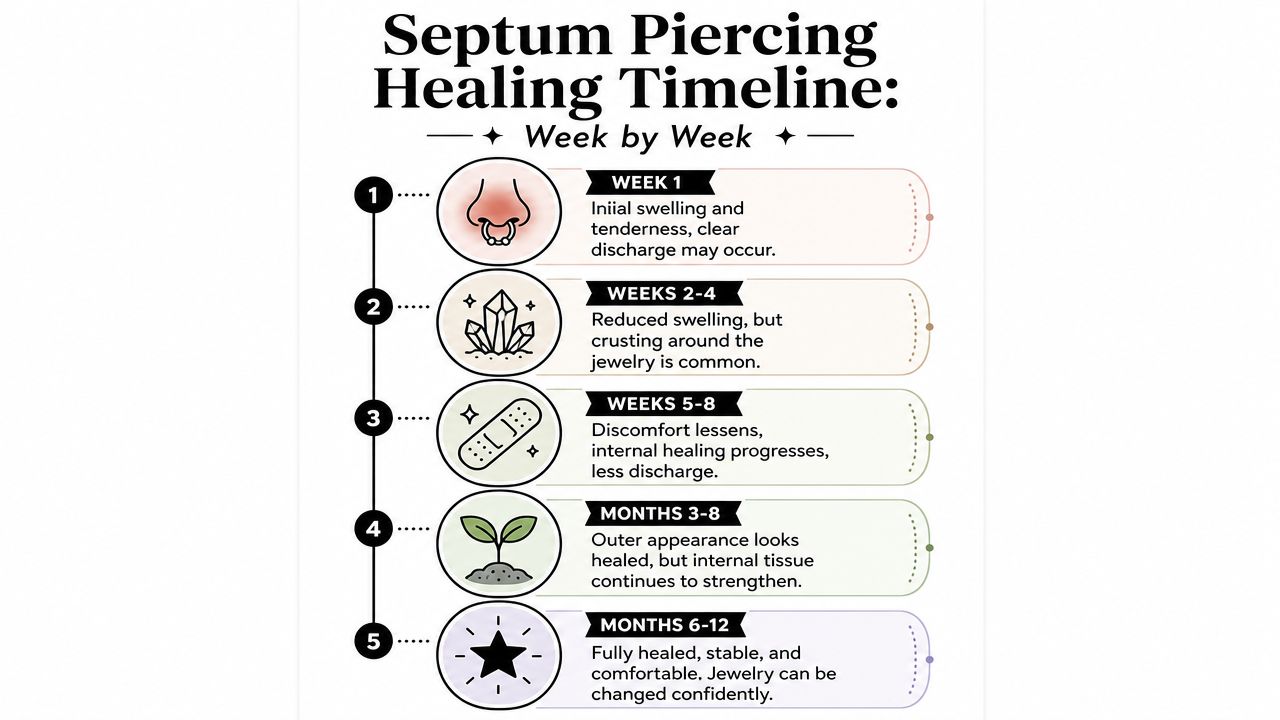
According to Plug Your Holes on septum healing, full biological healing and stabilisation spans 6 to 8 months, while initial tenderness and weeping often stop around 6 to 8 weeks. That's the point where many people relax too early.
Week 1
This is the fresh wound stage. Expect tenderness, light swelling, and clear discharge that dries into crusties. Your nose may feel sore when you smile, yawn, or accidentally nudge the jewellery.
Keep things simple. Clean gently, keep your hands off it, and don't test it by moving it.
Weeks 2 to 4
This phase usually feels less intense, but the piercing is still easy to irritate. Swelling tends to reduce. Crusting is still common, especially in the morning or after you've been outside in dry air.
A lot of first-time clients think crusties mean something is wrong. Usually, they don't. They're just dried healing fluid.
Most healthy septum piercings look better before they're actually stable. That mismatch is why so many people set themselves back in the first month.
Weeks 5 to 8
By now, many people notice a big drop in day-to-day discomfort. The piercing often feels calmer unless it gets knocked. Increased confidence can lead to a decrease in patience.
That's the danger point. The channel is still immature. If you twist the jewellery, change it too soon, or keep flipping it, you can stir up irritation that feels like healing has gone backwards.
Months 3 to 6
This is the quiet strengthening stage. The outside may look healed. Internally, the tissue is still organising and toughening up. You may have days where it feels completely fine, then a cold or awkward bump makes it tender again.
That doesn't always mean you've done damage. It often means the tissue is still maturing and reacts quickly to friction.
Months 6 to 12
For many people, this is when the piercing finally feels settled, predictable, and easy to live with. No random tenderness. No recurring crusting. No nervousness when cleaning or changing jewellery.
A simple way to think about the timeline is this:
| Stage | What you usually notice | What it means |
|---|---|---|
| Week 1 | Swelling, tenderness, discharge | Your body has started active repair |
| Weeks 2 to 4 | Less swelling, crusting remains | The piercing is calmer but fragile |
| Weeks 5 to 8 | Less soreness, fewer flare-ups | Surface healing has improved |
| Months 3 to 6 | Looks healed, occasional sensitivity | Internal tissue is still strengthening |
| Months 6 to 12 | Stable and comfortable | The piercing is much more mature |
The mistake people make at the halfway point
People often treat “not painful” as “fully healed”. That's the fastest way to create avoidable irritation. A septum piercing rewards boring care. Leave it alone, clean it properly, and give it longer than you think it needs.
Why Placement Is Everything Sweet Spot vs Cartilage
If you only remember one thing from this guide, make it this. Placement decides the pace. Two septum piercings can look similar from the outside and heal very differently because one sits in soft tissue and the other involves cartilage.
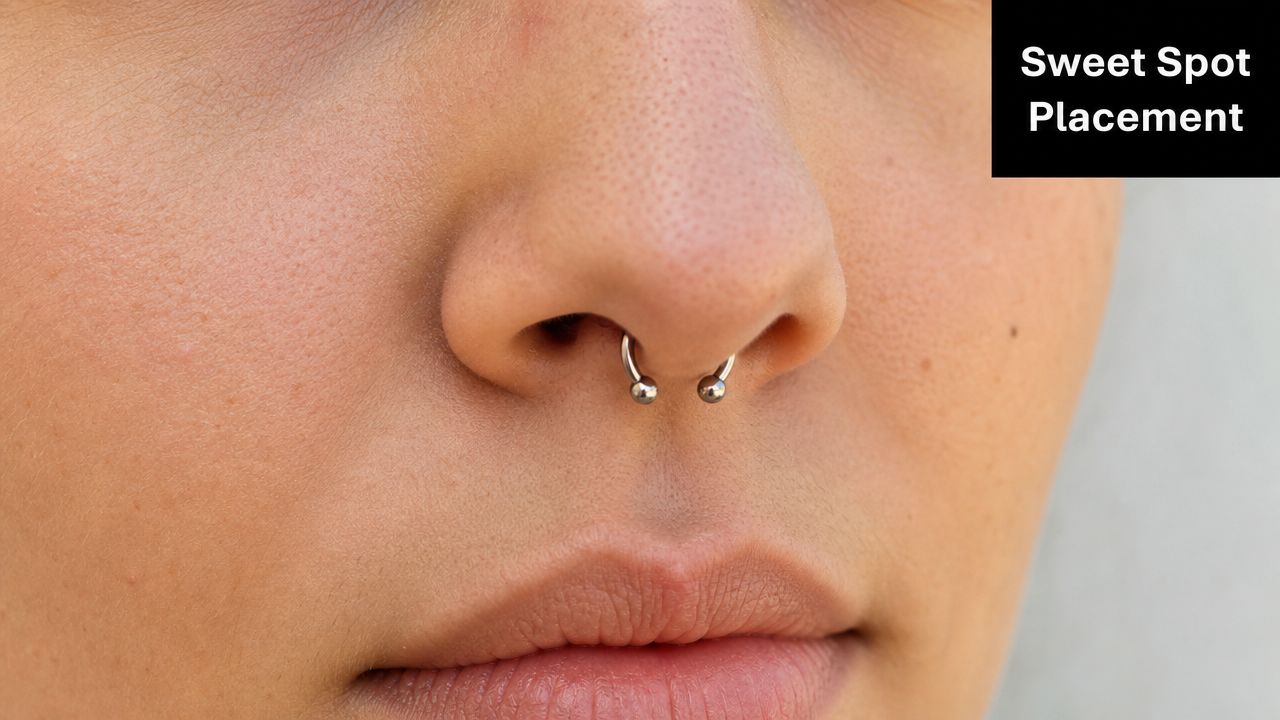
The key difference is explained well in this guide to septum piercing placement. The ideal placement is the sweet spot, a thin area of softer tissue near the front underside of the septum. That area usually heals more smoothly than cartilage.
The sweet spot path
A piercing in the sweet spot commonly heals on the faster track. The distinction matters because the sweet spot can settle in 4 to 8 weeks, while cartilage placement can take 6 to 9+ months. Data cited by Monster Piercing's discussion of septum placement and healing says cartilage piercings heal 3 to 6x slower because of denser tissue and poorer circulation.
In plain language, soft tissue usually gets the support it needs to calm down and repair more efficiently. Cartilage is less forgiving.
The cartilage path
When cartilage is involved, clients often describe a different experience. The piercing stays sharp or stingy for longer. Smiling can make it ache. Small knocks feel much worse. Healing also tends to plateau, where it seems fine for a bit, then flares up again.
That doesn't always mean the piercer did something careless. Anatomy varies. Some noses have a very small sweet spot or one that's harder to access. But it does mean the generic “just wait a couple of months” advice may not fit your situation.
If your septum remains distinctly sore with routine facial movement long after the early stage, it's worth having the placement checked by an experienced piercer.
How to tell which path you're on
You can't diagnose placement perfectly at home, but these clues help:
- Likely sweet spot: Early tenderness fades steadily, cleaning gets easier, and the piercing doesn't feel unduly pressured.
- Possible cartilage involvement: Ongoing sharp pain, strong discomfort when the nose moves, and repeated flare-ups without obvious cause.
- Worth checking: Jewellery that feels too tight, sits oddly, or seems to press when you smile.
This is why one person says their septum was easy and another says it took forever. They may not have had the same piercing experience at all, even though both were called a septum.
Your Daily Aftercare Plan for a Fast and Safe Heal
You wake up on day three, glance in the mirror, and wonder if you should clean the piercing again because there is a little crust on the jewellery. That moment is where good aftercare usually goes right or wrong. A healing septum does best with calm, predictable care, not constant checking.
Your job is simple. Keep the area clean, keep your hands off it, and avoid anything that makes the jewellery move more than it has to. If your piercing sits in the sweet spot, this routine often feels fairly manageable. If cartilage is involved, the same routine matters even more because irritated cartilage tends to stay grumpy longer after every bump or twist.
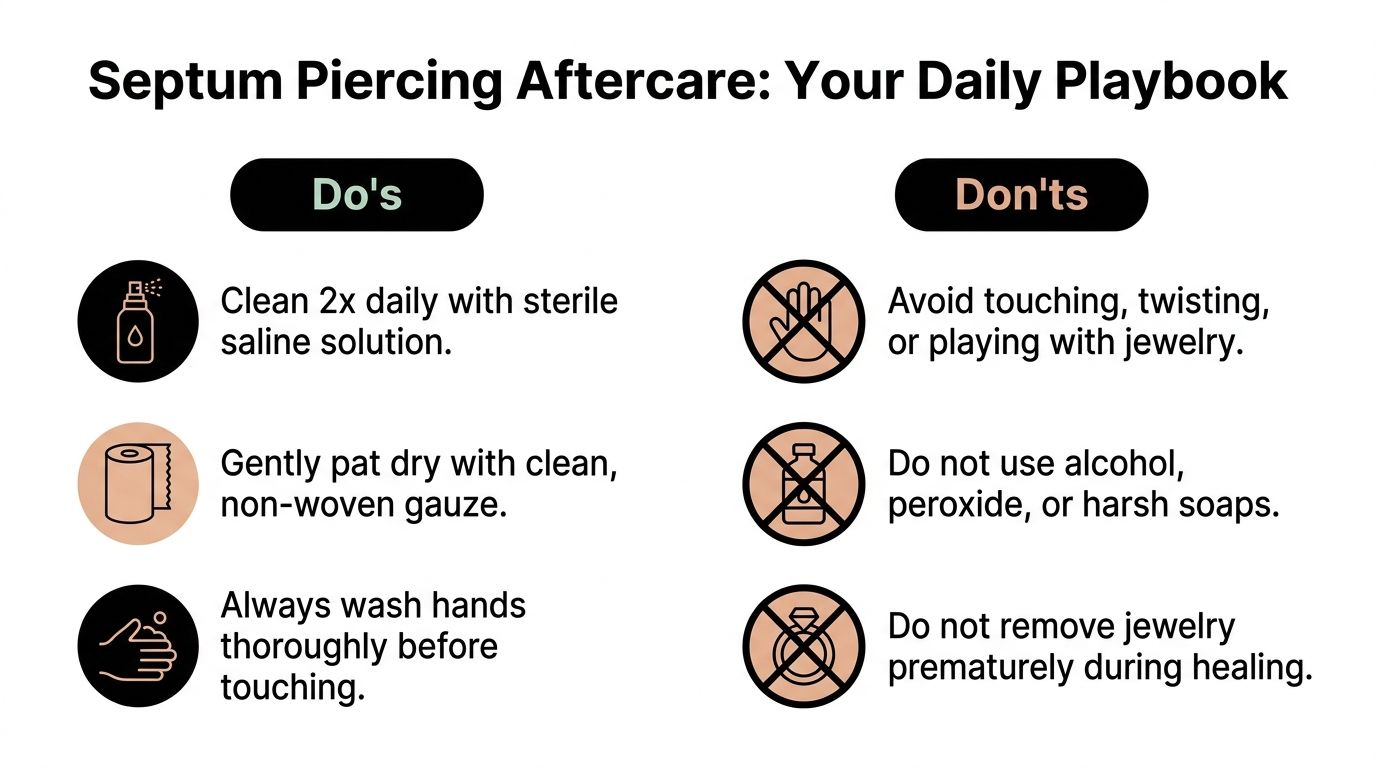
Here's a helpful visual summary to keep in mind each day.
For cleaning, stick with a sterile saline product like the options covered in this guide to saline spray for piercing aftercare. A steady routine beats aggressive cleaning every time.
What to do every day
Treat aftercare like looking after a small scrape inside the nose. The tissue needs moisture, cleanliness, and as little disturbance as possible.
- Wash your hands first. Your fingers are the fastest way to transfer dirt and bacteria to a fresh piercing.
- Use sterile saline twice a day. Spray or soak gently and let any crust soften on its own.
- Dry the area carefully. Clean non-woven gauze or another disposable lint-free option works well if the area needs patting dry.
- Leave the jewellery alone afterward. Do not rotate, spin, or test whether it moves easily.
If dried discharge is stuck, give it time to soften. Pulling it off dry is like picking a scab before the skin underneath is ready.
What slows healing down
The biggest problems usually come from movement. People touch the ring to check whether it is straight, flip it up and down, or nudge it while washing their face. Each little movement can irritate the channel again, especially if your piercing is already healing along the slower cartilage path.
Healthline explains in its septum piercing aftercare article that flipping jewellery during healing can add extra healing time because it disrupts fragile tissue and brings in bacteria. If you need the piercing hidden for work or family reasons, it is much better to discuss that with your piercer from the start.
Keep the jewellery in one position during healing unless your piercer has told you otherwise.
That one habit makes a bigger difference than many first-time clients expect.
What to avoid completely
- Alcohol or peroxide. These can dry out and irritate healing tissue.
- Harsh soaps. They can sting and leave the area feeling stripped.
- Twisting or spinning the ring. Movement reopens tissue that is trying to settle.
- Removing jewellery too soon. The channel can shrink quickly, even if it looks calmer from the outside.
- Picking at crusties. Soften first, then clean gently.
If you feel unsure, ask. Good aftercare advice can prevent a small irritation from turning into a long delay. You can call 01202 900050 (Bournemouth) / 020 8686 7730 (Croydon) or message 07752 913846 (Bournemouth) / 07902 490584 (Croydon) on WhatsApp for aftercare support.
Normal Healing Symptoms vs Signs of Infection
A healing septum piercing can look a bit unpleasant at times. That alone doesn't mean infection. Mild swelling, tenderness, and clear or whitish crusting are common. The trick is knowing when normal irritation stops looking normal.
If you're not sure, comparing symptoms side by side helps more than guessing.
Healing vs Infection Symptoms
| Symptom | Normal Healing | Potential Sign of Infection |
|---|---|---|
| Tenderness | Mild to moderate, improves over time | Strong pain that worsens instead of settling |
| Swelling | Light swelling, especially early on | Increasing swelling, especially with heat |
| Discharge | Clear or whitish fluid that dries into crusties | Thick yellow or green pus |
| Redness | Mild redness close to the piercing | Redness that spreads or looks increasingly angry |
| Heat | Slight warmth early on can happen | Noticeably hot area with worsening discomfort |
| Daily pattern | Good days and bad days, especially after a bump | Steady deterioration with no obvious trigger |
What usually isn't an emergency
A little soreness after catching the jewellery on a towel is frustrating, but it's common. The same goes for crusting after a cold, seasonal irritation, or a day of lots of nose blowing. That's usually a healing piercing reacting to stress.
When you should act quickly
If you have thick coloured discharge, marked heat, spreading redness, or pain that's getting stronger rather than weaker, stop trying to troubleshoot it yourself. Get it checked by a professional. This guide on how to tell if a piercing is infected can help you judge what you're seeing more clearly.
Worsening symptoms matter more than a single symptom on its own. A piercing that's healing normally tends to settle overall, even if it has occasional flare-ups.
If you're concerned, call 01202 900050 (Bournemouth) / 020 8686 7730 (Croydon) for a professional consultation at Piercing Near Me / Timebomb Tattoo & Piercing in Croydon or Bournemouth.
Changing Jewellery and Maintaining Your Healed Piercing
You wake up one morning, your septum feels fine, and the temptation kicks in. Maybe you want a smaller ring, a clicker, or a different colour. That feeling is common. The tricky part is that a septum can seem settled before the inside of the channel is ready for extra movement.
As noted earlier, many piercers treat the first jewellery change as something to consider after the early healing phase has passed, not the moment tenderness fades. For a piercing in the sweet spot, that may be sooner than a piercing that sits in cartilage. That difference matters here just as much as it did during healing. A sweet spot piercing often becomes easy to change once it is fully calm. Cartilage usually stays fussier for longer and reacts more strongly to being disturbed.
When it's reasonable to consider a change
Use your day-to-day experience as the test.
A piercing that is ready for a first change usually feels boring. No stinging when you clean around it. No surprise crusting. No soreness after normal facial movement. No cycle of two calm days followed by one irritated day.
Look for these signs:
- It feels neutral: You are no longer aware of it most of the time.
- Handling doesn't trigger sharp tenderness: Gentle movement should not make your eyes water.
- Crusting has stopped or become very occasional: Ongoing crusties often mean the tissue is still settling.
- It has been stable for a while: You want a pattern of comfort, not one good weekend.
- Your placement has been checked: If your piercing is through cartilage or close to it, waiting longer is usually the safer call.
If you are unsure which healing path you are on, use a simple comparison. A sweet spot piercing is like a soft path through skin. A cartilage piercing is more like asking the jewellery to pass through a firmer doorway. Both can heal, but the second one usually needs more time and gentler handling.
Why the first change should be done professionally
The first swap causes trouble more often than the piercing itself. The channel can be healed enough to wear jewellery, but still delicate enough to get scraped, stretched, or irritated during a home change.
A professional piercer can see whether the tissue is ready, match the gauge correctly, and fit jewellery with less friction. They can also spot a common problem first-time clients miss. The new piece may look cute, but if the diameter is too tight or the hinge is rough, it can start a fresh round of irritation.
That is especially helpful if your healing has been slow, your anatomy is a bit tight, or cartilage may be involved. In those cases, one awkward jewellery change can set you back.
Long-term care after healing
A healed septum should be low-maintenance, but "healed" does not mean "indestructible." Old piercings can still get grumpy if the jewellery is poor quality, the ring is too snug, or you have been rubbing your nose a lot during a cold.
Keep maintenance simple:
- Clean away build-up gently: Warm water and careful wiping are usually enough.
- Choose well-made jewellery: Smooth, implant-grade materials are kinder to the channel.
- Pay attention to fit: A ring that pinches or presses can irritate even a healed piercing.
- Stop if there is resistance: Jewellery should slide through comfortably. If it does not, get help instead of forcing it.
A well-placed, fully healed septum usually becomes one of the easiest piercings to live with. If yours still feels temperamental long after it should have settled, placement is worth revisiting.
If you're looking for trusted aftercare advice, placement guidance, or a professional jewellery change, Piercing Near Me helps you find experienced UK piercers, including Timebomb Tattoo & Piercing in Croydon and Bournemouth. For questions or support, call 01202 900050 (Bournemouth) / 020 8686 7730 (Croydon) or message 07752 913846 (Bournemouth) / 07902 490584 (Croydon) on WhatsApp.
Trackbacks/Pingbacks