
A septum piercing goes through the soft “sweet spot” just below the cartilage between your nostrils, not through cartilage itself, and it's a regulated facial piercing in the UK. UK guidance places the piercing in the non-cartilage septum area, while healing advice ranges from 8 to 12 weeks to 4 to 6 months, depending on anatomy, irritation and aftercare.
You may be looking at yourself in the mirror, holding a fake ring beneath your nose, and wondering whether a real septum piercing would hurt, heal properly or be easy to hide at work. Those are sensible questions, especially because people often use “septum piercing” as if it means piercing through the firm wall in the centre of the nose. In professional piercing, correct placement is usually in the softer tissue beneath that cartilage.
That small distinction affects almost everything, including comfort, jewellery fit, cleaning and healing. A well-placed piercing can be a subtle silver ring, a visible statement piece or a retainer that sits discreetly inside the nose. A poorly placed piercing can irritate tissue and take longer to settle.
Introduction to Septum Piercings
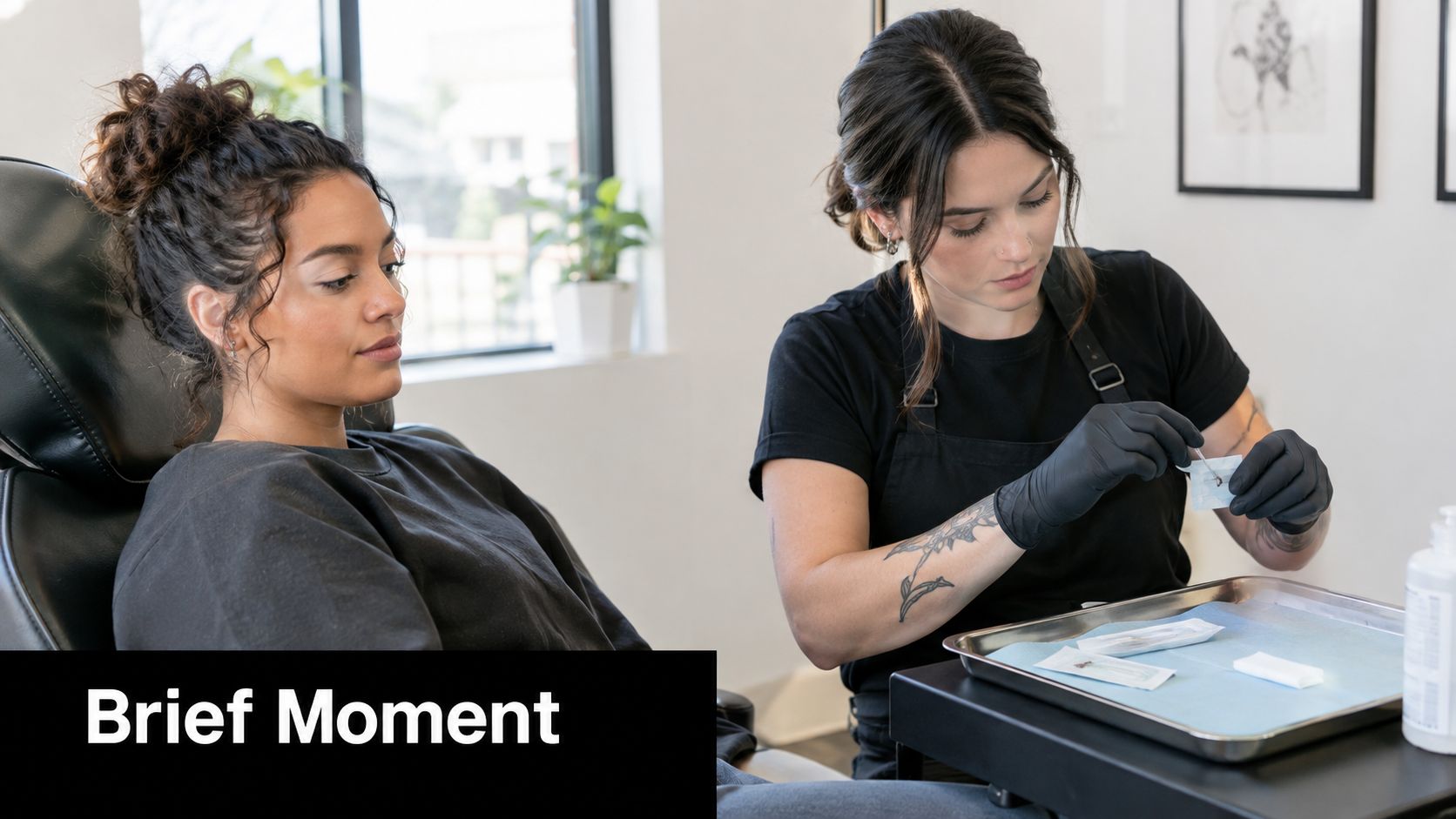
If you're a first-timer, the appointment can sound more dramatic than it usually is. You'll discuss your anatomy and jewellery with the piercer, the area will be prepared using appropriate hygiene procedures, and a sterile single-use needle will pass through the soft tissue at the base of the septum. The sensation is brief, although watery eyes, tenderness and a little swelling afterwards are common experiences.
Body piercing is no longer treated in England as an obscure practice limited to a small subculture. A published survey found that about one in 10 adults had experienced a body piercing somewhere other than the earlobe, placing non-ear piercings within a relatively familiar UK context. You can read the underlying survey in this published study of body piercing in England.

The practical question behind “what is a septum piercing” is often, “What will this involve for me?” You'll want to know where the needle goes, how to choose jewellery, what healing feels like and whether you can conceal the piercing when needed. You'll also need aftercare that suits the delicate tissue inside the nose, rather than copying instructions for a nostril piercing.
This guide follows those decisions in order. By the end, you should be able to identify the correct placement, ask useful questions about materials and sizing, recognise normal healing and understand when symptoms need medical attention.
Where a Septum Piercing Sits and Why Placement Matters
The nasal septum is the structure that separates the two nostrils. For piercing purposes, the target is usually the soft tissue just below the cartilage at the base of the septum, an area commonly called the sweet spot. The needle should pass through that flexible tissue, not through the harder cartilage higher up.
A simple analogy is a thin fabric membrane held between two firmer walls. The membrane has some flexibility and offers less resistance, while the firm walls are denser and more vulnerable to irritation. The sweet spot works in a similar way. Piercing the softer area is why septum work is often described as technically easier and generally quicker to heal than piercings that pass through substantial cartilage. The septum placement guide illustrates this soft-tissue position.
Why a piercer checks your nose first
Not every nose has the same internal shape. A professional piercer should assess the available tissue, the position of the cartilage and the way the jewellery will sit before marking the entry points. They're checking more than whether a ring looks centred from the front. They're also considering comfort, symmetry and whether the jewellery will press against the surrounding tissue.
UK local authority guidance makes the safety boundary clear. The septum is the area between the nostrils, and piercing is permitted only to the nose septum excluding the cartilage. That means correct placement is an anatomical and public-health issue, not merely a matter of visual preference. UK infection-prevention guidance for tattooing and body piercing is issued through government channels to encourage consistency across the industry.
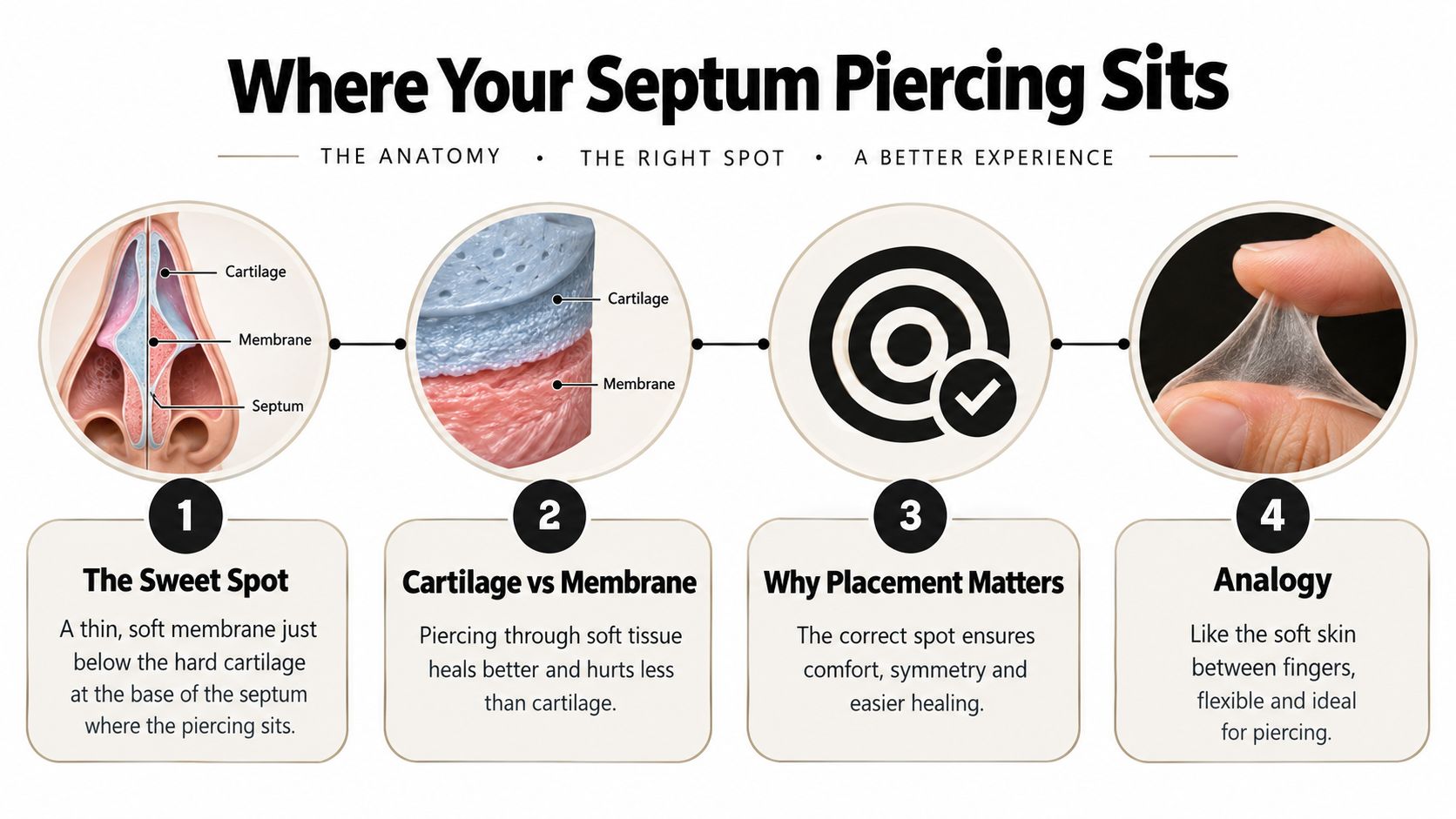
A useful consultation should leave you understanding where the piercing will sit and why. If you're unsure whether the mark is in the soft area, ask the piercer to explain the anatomy before they begin. You can also review this septum piercing placement resource before booking, so you know which questions to raise.
Practical rule: A septum piercing shouldn't be treated as a shortcut through the firm centre of the nose. The non-cartilage placement is part of what makes the procedure appropriate.
Septum Jewellery Types and Materials Explained
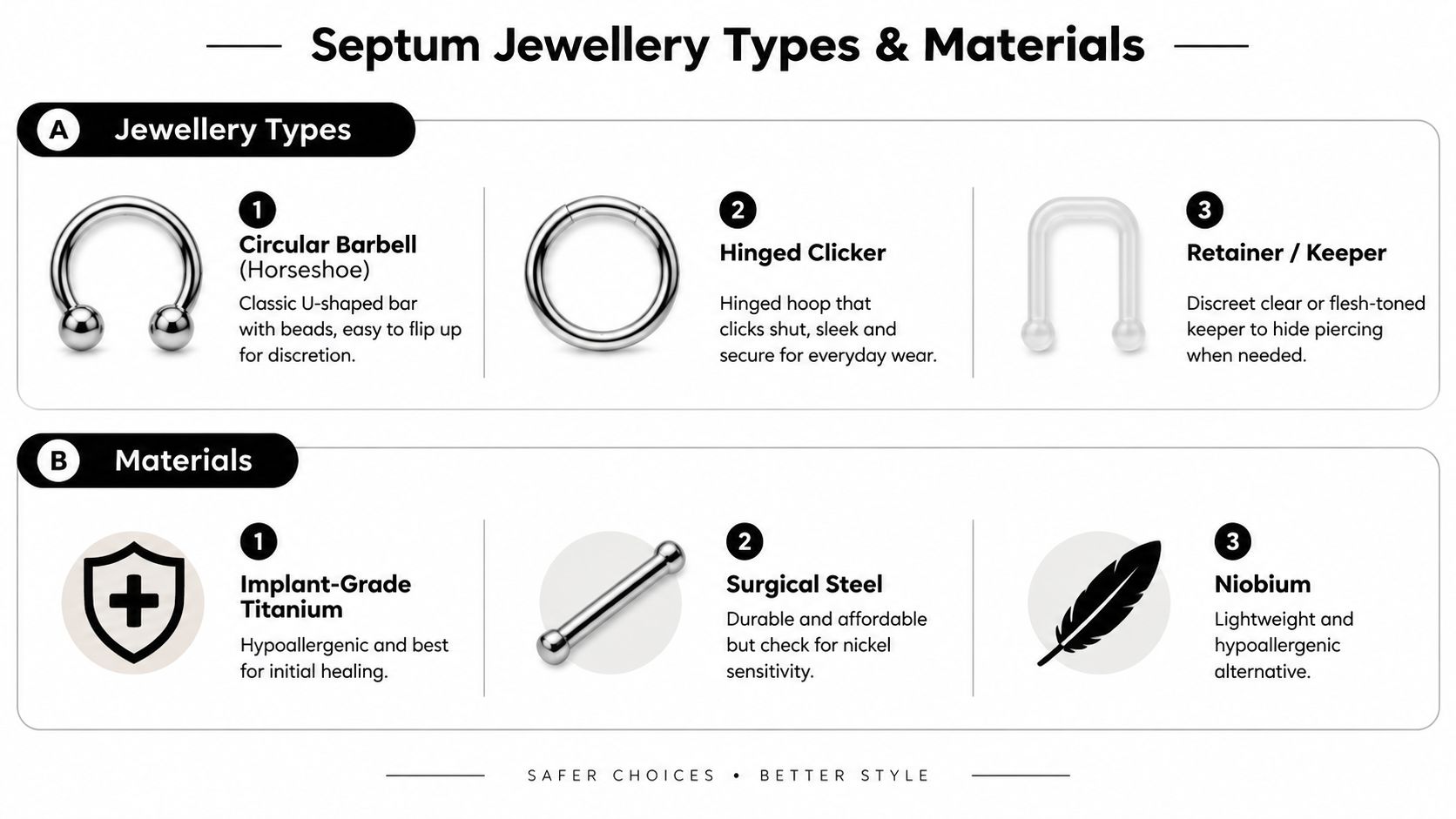
Septum jewellery changes the look, the way the piercing can be concealed and how easily you can clean around it. The three familiar options are circular barbells, hinged clickers and retainers or keepers. Each can work well, but the right choice depends on your anatomy, the stage of healing and how much movement the design creates.
| Jewellery type | What it looks like | Practical consideration |
|---|---|---|
| Circular barbell | A U-shaped horseshoe with beads or ends | It can often be flipped upwards for discretion, but the piercer must select a comfortable diameter |
| Hinged clicker | A ring with a hinged section that clicks shut | It gives a sleek, secure appearance once the piercing is ready for that style |
| Retainer or keeper | A discreet piece designed to sit inside the nose | It can make the piercing less visible when workplace or personal circumstances require it |
Thickness, diameter and comfort
UK jewellery guidance commonly identifies 1.2 mm as a typical wearable thickness for septum jewellery, with 1.6 mm needles also commonly used for an initial piercing. The diameter is separate from thickness. Thickness describes the size of the bar passing through the tissue, while diameter describes how wide a circular piece sits around the base of the nose.
A ring that's too tight can press on the tissue. One that's too large may catch more easily and move when you talk, wipe your nose or sleep. Your piercer should measure and choose jewellery for your anatomy rather than selecting a size from a photograph.
Material matters during healing
For initial jewellery, UK-facing sources commonly recommend biocompatible options such as ASTM F-136 titanium, 316 surgical steel and higher-karat gold. Titanium is often chosen when reducing irritation is a priority. Surgical steel can be durable, but anyone with nickel sensitivity should discuss the material carefully with the piercer. The UK septum jewellery material guide explains why specifications matter.
Seam-heavy or rotating jewellery can rub fresh tissue as it moves. A clicker may look beautifully minimal, but a hinged seam needs to be positioned carefully and is usually better considered once the piercing is sufficiently healed. During the early stage, a simple, well-fitted piece can make cleaning and daily life less troublesome.
What Getting a Septum Piercing Feels Like
Most nervous clients want a practical description, not an abstract pain score. A correctly placed septum piercing usually involves a quick pinch or sharp pressure, followed by watering eyes and a short period of tenderness. Your eyes may water because the nose and tear ducts share nearby nerve pathways, so that reaction doesn't automatically mean something has gone wrong.
Before the needle
A good appointment starts with conversation. Tell the piercer if you're anxious, ask to see the proposed placement and discuss whether you need jewellery that can be hidden. The piercer should examine your anatomy, explain the selected piece and prepare the area using hygienic procedures and a sterile, single-use needle.
Breathing is still possible, although you may feel pressure while the piercer works. Try to keep your face relaxed and follow their breathing instructions. Tensing your upper lip or pulling away at the important moment can make accurate placement harder.
What affects comfort
Placement is the biggest factor. The sweet spot contains softer tissue, whereas cartilage creates more resistance and can lead to a more uncomfortable experience. Jewellery size and weight also matter after the piercing. A piece that hangs heavily or catches repeatedly can keep the area sore even if the original procedure was straightforward.
The septum piercing pain guide covers the sensation and short-term soreness in more detail, but remember that individual experiences vary. A brief sting doesn't predict your entire healing period, and watery eyes are a common immediate response.
You may notice tenderness, slight swelling or a small amount of crusting during the early stage. Don't judge the final position while the tissue is swollen. Leave the jewellery alone, follow the cleaning advice and contact the studio if the appearance or symptoms concern you.
Healing Time and Aftercare That Protects Delicate Tissue
Septum healing doesn't fit neatly into one universal number. UK-facing advice gives a typical range of 8 to 12 weeks, while other UK guidance describes healing as taking 4 to 6 months. Jewellery changes may sometimes be considered after 6 to 8 weeks when a piercing appears well healed, but a shorter-looking recovery doesn't prove that the internal channel has finished healing. These ranges are reflected in UK guidance on septum healing.
Anatomy, placement, jewellery, friction and aftercare all influence the process. A piercing can look calm on the outside while delicate tissue inside remains vulnerable. That's why changing jewellery based only on appearance can cause setbacks.
A gentle routine
Septum care differs from nostril care because the tissue sits inside the nose and is more delicate. Birmingham and Bradford-style council advice specifically states that antibacterial wash isn't suitable for septum piercings. Saline-based care is the safer focus, with no harsh scrubbing or aggressive products.
- Wash your hands first. Clean hands reduce the chance of transferring dirt and bacteria when contact is unavoidable.
- Use sterile saline when cleaning is needed. Follow your piercer's product advice, and apply it gently rather than soaking the area in unsuitable solutions. This saline spray guidance for piercings explains the role of saline-based care.
- Don't twist or flip the jewellery. Movement can drag crusting through the channel and irritate fresh tissue.
- Clean only when necessary. One UK aftercare guide advises cleaning when you notice a build-up, rather than handling the piercing constantly. Over-cleaning can leave the tissue dry and irritated.
- Keep everyday friction low. Be careful when blowing your nose, changing clothes or sleeping, because catching the jewellery can prolong soreness.
Some UK-facing advice recommends saline cleaning two to three times a day for the first eight weeks, while other guidance stresses cleaning only when build-up is present. The sensible approach is to avoid both neglect and obsessive handling. Use gentle saline when needed, keep your hands clean and follow the individual plan supplied by your professional piercer.
When symptoms need attention
Mild tenderness and limited swelling can occur after piercing. Seek medical advice from an NHS service or your GP if you develop persistent severe pain, swelling that lasts more than a few days or thick yellow or green discharge. Those signs are listed as infection warnings in piercing-safety guidance on septum risks.
Don't apply alcohol, hydrogen peroxide or antibacterial ointments unless a clinician specifically tells you to. These products can irritate healing tissue. If you suspect infection, don't remove the jewellery without professional or medical advice, because closing the channel can complicate drainage.
Is a Septum Piercing Right for You
A septum piercing suits people who want facial jewellery with several styling options. You can choose a visible horseshoe, a refined clicker once healed or a keeper for situations where the piercing needs to be discreet. That flexibility can be useful for someone who enjoys changing their look without committing to a permanently visible piece.
It still requires patience. You'll need to protect the jewellery from catching, resist the urge to flip it repeatedly and accept that healing can take longer than the piercing looks from the outside. Workplace rules, uniform policies and personal comfort also deserve consideration before you book.
A quick lifestyle check
| Your priority | How a septum piercing may fit |
|---|---|
| You want a changeable look | Different ring shapes and finishes can create subtle or more expressive styles |
| You need discretion | A suitable keeper or carefully positioned circular barbell may help conceal the jewellery |
| You dislike lengthy routines | The aftercare is simple, but you still need consistent, gentle care and minimal handling |
| You're nervous about cartilage | Correct septum placement targets soft tissue rather than the cartilage itself |
| Your workplace has restrictions | Check the policy before booking and discuss concealment options with the piercer |
The piercing can be relatively forgiving compared with cartilage-heavy placements when it is correctly positioned, but that doesn't make it maintenance-free. Delicate nasal tissue still reacts to pressure, unsuitable products and repeated movement.
“The best jewellery choice is the one that fits your anatomy and your routine, not simply the one that looks most striking in a photograph.”
If you're unsure, book a consultation rather than treating the piercing as an impulse purchase. A piercer can assess whether your sweet spot offers a comfortable, even placement and explain which jewellery will be practical during healing.
Your Next Steps to a Safe Stylish Result
Start with the anatomy. Ask the piercer to show you where the soft tissue sits and confirm that the planned placement avoids cartilage. That conversation should happen before the needle is opened, not after the jewellery has been fitted.
Then make three decisions with professional help:
- Choose appropriate initial jewellery. Discuss implant-grade titanium, suitable surgical steel or higher-karat gold, along with the thickness and diameter that fit your nose.
- Plan for the healing window. Expect recovery to vary, and don't schedule an early jewellery change because the outside looks settled.
- Keep aftercare gentle. Wash your hands, use saline when necessary, avoid twisting or flipping and seek NHS or GP advice if severe or worsening symptoms appear.
A reputable studio should explain its hygiene process, use a sterile single-use needle and give you personalised aftercare. If you're in Croydon, Bournemouth or nearby, you can contact the team for advice before deciding whether a septum piercing suits your anatomy and routine. Phone 01202 900050 (Bournemouth) / 020 8686 7730 (Croydon) or WhatsApp 07752 913846 (Bournemouth) / 07902 490584 (Croydon).
Piercing Near Me helps you find professional piercing services and arrange consultations for septum placement, jewellery selection and aftercare. Visit Piercing Near Me to explore your options, then contact the team on 01202 900050 (Bournemouth) / 020 8686 7730 (Croydon) or WhatsApp 07752 913846 (Bournemouth) / 07902 490584 (Croydon) to discuss a safe, stylish result.